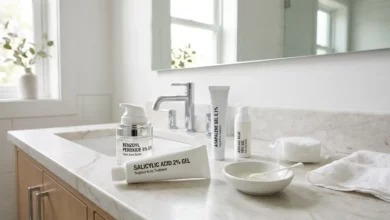
Adult Acne on Chin and Jawline: Root Causes and Mechanisms
Table of content
- Hormonal Drivers of Adult Acne in the Lower Face
- Stress and Cortisol as Acne Triggers for Lower Face
- Lifestyle and Environmental Factors in Jawline Acne
- Physical Occlusion and Friction-Related Causes
- Medical Conditions Associated with Persistent Adult Chin Acne
- Differential Diagnosis: When Adult Acne Mimics Other Conditions
- Diagnostic Approach for Recalcitrant Chin and Jawline Acne
- Frequently Asked Questions on Cause-Specific Management
Adult acne that concentrates along the chin and jawline is a distinct and often stubborn condition that differs markedly from the adolescent breakouts most people associate with oily T-zones. While teenagers frequently experience dispersed comedones and pustules across the forehead and cheeks, adult-onset or persistent acne in the lower face signals a deeper interplay of hormones, stress responses, and lifestyle factors. The skin in this region contains a high density of androgen-sensitive sebaceous glands, making it uniquely vulnerable to internal fluctuations. Beyond cosmetic distress, painful cystic nodules and recurring inflammation in this area can cause post-inflammatory hyperpigmentation and scarring that linger long after the pimple heals. Unraveling the precise drivers is essential for targeted management rather than relying on generic acne treatments that often fail for this pattern.
| Factor | Mechanism | Common Presentation | Diagnostic Clues |
|---|---|---|---|
| Hormonal Shifts | Androgens (testosterone, DHEA) stimulate sebaceous glands to produce excess sebum; cyclical drops in estrogen unmask androgen effects | Deep, tender cysts appearing premenstrually or irregularly, concentrated on lower third of face | Breakouts align with menstrual cycle, perimenopause, or clinical signs of hyperandrogenism (hirsutism, hair thinning) |
| Chronic Stress | Elevated cortisol triggers adrenal androgen release, fueling sebum production and inflammation | Corticotropin-releasing hormone (CRH) increase worsens existing acne, often with visible redness | Simultaneous presence of stress-related symptoms: poor sleep, tension, cravings for high-glycemic foods |
| Diet and Gut Health | High-glycemic-index meals and dairy raise insulin and IGF-1, promoting sebocyte activity and comedogenesis | Multiple small pustules or inflamed papules along jawline after dietary indiscretions | Improvement on low-glycemic, dairy-free diet; possible coexistence of bloating or digestive complaints |
| Comedogenic Products | Occlusive ingredients in makeup, moisturizers, or hair products block follicles | Small, uniform closed comedones and whiteheads near product application sites | Lesions resolve after discontinuing suspected product; recurrence with reintroduction |
| Physical Occlusion | Masks, helmet straps, cell phones, and pillowcases trap heat, moisture, and friction, causing mechanical follicular plugging | Linear or patterned papules and pustules where the occlusive object sits; maskne shows exact mask line | History of prolonged mask use, sports helmet gear, or frequent phone pressing; improves with barrier methods and cleansing |
| Underlying Medical Conditions | PCOS, adrenal hyperplasia, or medication side effects sustain high androgen levels or follicular inflammation | Recalcitrant cystic acne unresponsive to topicals, often with irregular menses, weight changes, or other systemic signs | Lab testing reveals elevated free testosterone, DHEAS, or insulin resistance; medication review identifies triggers like corticosteroids or anabolic steroids |
Hormonal Drivers of Adult Acne in the Lower Face
Hormonal irregularities are the most frequently cited culprits behind stubborn chin and jawline acne in adults, especially in women over the age of 25. Unlike the general pubertal surge that affects the entire face, the lower face is particularly sensitive to androgens because the sebaceous glands in this zone possess a higher density of androgen receptors. Estrogen and progesterone fluctuations also reset the balance, causing periodic spikes in sebum production and follicular hyperkeratinization. Understanding how these hormones operate at the cellular level reveals why outbreaks can emerge suddenly in the 30s, 40s, or even during menopause, and why they may resist topical treatments alone.
Androgen Influence on Sebaceous Glands in the Jawline
Androgens such as testosterone and dehydroepiandrosterone (DHEA) directly bind to receptors on sebocytes, the oil-producing cells within sebaceous glands. Once activated, these cells accelerate lipid synthesis and increase overall sebum output. The chin and jawline possess a proportionally greater number of androgen-sensitive glands compared to the cheeks or forehead, which makes this region a hotspot for hormonally driven breakouts. It is not necessarily the absolute circulating androgen level that dictates acne severity; rather, it is the skin’s inherent androgen sensitivity—some individuals have more active enzyme conversion within the follicle, turning weak androgens into potent dihydrotestosterone locally. This explains why a person with normal blood testosterone can still develop deep, nodular acne confined to the jawline. The resulting excess sebum mixes with dead keratinocytes and creates an ideal anaerobic environment for Cutibacterium acnes proliferation, triggering inflammation.
The cascade from elevated androgens to visible lesions involves follicular occlusion and subsequent rupture. As sebum accumulates, the follicular canal becomes distended, forming microcomedones that later evolve into closed comedones or, if bacteria proliferate, inflamed papules and cysts. Dermatologists note that the anatomical structure of the lower face supports these deeper lesions because the follicular ostia are often narrower and the supportive dermal tissue is denser, making drainage more difficult. According to the American Academy of Dermatology, adult hormonal acne often manifests as tender, deep-seated lesions that can persist for weeks without coming to a head. This prolonged inflammation damages the dermal matrix and increases the risk of scarring, which underscores the need for early, mechanism-specific intervention rather than simple over-the-counter drying agents.
Menstrual Cycle Fluctuations and Chin Breakouts
For menstruating individuals, the chin and jawline often serve as a monthly barometer of hormonal shifts. In the second half of the cycle—the luteal phase—levels of estrogen drop while progesterone rises. Progesterone can stimulate sebaceous gland activity and also promote fluid retention, which physically compresses the follicular canal and exacerbates blockage. Concurrently, the relative decline in estrogen allows androgenic influences to become more pronounced, leading to an uptick in sebum production about five to ten days before menstruation. The timing is so predictable that many dermatologists use a diary to correlate acne flares with menstrual cyclicity as a diagnostic clue for hormonal acne.
The premenstrual window is often marked by the sudden appearance of one or two deep, painful cysts on the chin or along the jawline, coining the term “cyclic jawline acne.” These lesions are notoriously resistant to topical spot treatments because they originate deep in the dermis. The inflammatory response is fueled by prostaglandins and other immune mediators that are also up-regulated during the perimenstrual period. While some improvement occurs once menstruation begins and estrogen levels climb again, repeated monthly inflammation prompts progressive collagen damage. Resource: Cleveland Clinic confirms that this pattern is highly suggestive of hormonal triggers, and when acne persists beyond the typical age of adolescent acne, a detailed hormonal evaluation can reveal subclinical imbalances that extend well beyond the menstrual cycle.
Stress and Cortisol as Acne Triggers for Lower Face
Chronic stress is more than a psychological burden; it has a measurable physiological impact on the skin through the hypothalamic-pituitary-adrenal axis. When an individual is under sustained pressure, the body releases corticotropin-releasing hormone (CRH), which not only stimulates cortisol production but also directly acts on sebaceous glands via CRH receptors. This dual pathway initiates a cascade that raises sebum output, alters skin barrier integrity, and promotes local inflammation, all of which preferentially affect the androgen-sensitive zones of the chin and jawline. Many adults notice that their worst breakouts coincide with periods of intense work deadlines, sleep deprivation, or emotional upheaval.
How Chronic Stress Elevates Androgen Levels
Acute stress triggers a transient spike in cortisol, but chronic stress leads to a sustained elevation of both cortisol and adrenal-derived androgens. The adrenal cortex produces androgens like DHEA-S in parallel with cortisol when adrenocorticotropic hormone (ACTH) is secreted from the pituitary. Over time, this steady stream of adrenal androgens sensitizes sebaceous glands and amplifies the baseline level of oil production. Moreover, CRH itself has been found to promote sebaceous lipid synthesis and even encourage inflammatory cytokine release within the pilosebaceous unit. In individuals predisposed to acne, this creates a pro-inflammatory milieu in the chin area where sebaceous glands are already active, making the skin constantly primed for a breakout.
The connection between stress and androgens goes beyond simple production figures. Stress also modulates the local metabolism of hormones within the skin itself. Sebocytes express enzymes such as 5α-reductase, which converts testosterone to the more potent dihydrotestosterone; under conditions of elevated cortisol, the activity of this enzyme can be up-regulated. This means that even a moderate increase in circulating testosterone can have a disproportionate effect on the jawline’s follicles. The result is a cascade of accelerated comedogenesis, increased bacterial adherence, and heightened inflammation. Dermatologists frequently observe that patients with high-pressure lifestyles exhibit more recalcitrant acne that improves only when stress management becomes part of the treatment plan.
The Cortisol-Sebum Feedback Loop in the Chin Area
Cortisol does not merely stimulate oil glands in a one-way direction; it actively participates in a self-reinforcing loop. Chronic cortisol elevation compromises the skin’s barrier function, leading to transepidermal water loss and subclinical irritation. The skin responds by ramping up lipid production as a protective measure, which inadvertently creates more sebum and worsens follicular plugging. This feedback mechanism is especially pronounced in the chin and perioral region because the skin here is already rich in sebaceous glands and is constantly subjected to mechanical movements (talking, eating) that disturb the barrier. The enlarged pores and thicker epidermis in this area trap the excess oil, promoting the proliferation of C. acnes and other microorganisms.
Breaking this loop requires addressing both the systemic stressor and the local skin response. While stress reduction techniques like mindfulness and adequate sleep lower cortisol output, topical ingredients such as niacinamide and ceramides can help repair the barrier and reduce the signaling that tells glands to overproduce. Without intervention, the chin becomes a reservoir of inflammation: each stress-induced flare-begets further follicular damage, which in turn invites more intense immune reactions. The American Academy of Dermatology acknowledges that stress management is a valid adjunct to acne therapy, noting that patients who incorporate relaxation practices often see a reduction in the frequency and severity of their jawline breakouts over time.
Lifestyle and Environmental Factors in Jawline Acne
While hormones and stress set the stage, daily habits and environmental exposures can either mitigate or magnify acne on the chin and jawline. Dietary patterns, the products applied to the face, and even sleep quality influence the microclimate of the skin and the body’s inflammatory status. Unlike the endogenous hormonal drivers, these factors are often within a person’s control, offering a powerful lever for improvement. Identifying which lifestyle element is contributing to persistent lower-face acne requires careful observation and elimination trials, but the evidence linking certain dietary and cosmetic triggers to adult acne is robust.
Dietary Patterns: High Glycemic Load and Dairy Consumption
Foods with a high glycemic index—such as white bread, sugary snacks, and soft drinks—cause rapid spikes in blood glucose, which in turn prompt the pancreas to release large amounts of insulin. Elevated insulin levels stimulate the liver and other tissues to produce insulin-like growth factor 1 (IGF-1), a hormone that directly promotes sebocyte proliferation and lipid synthesis. In parallel, IGF-1 up-regulates androgen production in the ovaries and adrenal glands, hitting the same pathways that make the chin and jawline susceptible. Clinical studies have demonstrated that individuals who adopt a low-glycemic-load diet experience reduced acne lesion counts and lower free androgen indices compared to those on high-glycemic diets.
Dairy products, particularly skim milk, have been implicated in acne exacerbation through several mechanisms. Milk contains bioactive molecules, including whey protein and casein, that raise IGF-1 levels beyond what a person’s baseline genetics might dictate. Additionally, milk naturally harbors bovine hormones and can amplify mammalian target of rapamycin complex 1 (mTORC1) signaling, a key regulator of cell growth and lipid production in the pilosebaceous unit. The effect appears most pronounced for low-fat dairy, possibly because the removal of fat alters the hormonal delivery or absorption. When a patient notices deep chin pustules that clear after eliminating dairy, the connection becomes clinically significant, and many dermatologists now routinely recommend a four- to six-week dairy-free trial for persistent adult acne in the jawline region.
Cosmetic and Skincare Product Congestion (Comedogenicity)
The term comedogenic refers to an ingredient’s potential to clog pores and foster the formation of microcomedones, the earliest precursor to acne lesions. Oils like coconut oil, isopropyl myristate, and certain lanolin derivatives have a high comedogenic rating, while non-comedogenic alternatives are less likely to block follicles. However, comedogenicity is not solely determined by a single rating scale; it also depends on formulation, concentration, and the user’s individual skin reactivity. The chin and jawline, being a high-density oil zone, can quickly become congested when heavy foundations, primers, or even certain sunscreens are applied daily without thorough removal.
Mechanical congestion from makeup and skincare products often manifests as small, flesh-colored closed comedones (whiteheads) scattered along the jawline and chin. These differ from the deep, inflamed cysts of hormonal acne but can evolve into inflammatory pimples if bacteria multiply within the trapped sebum. Double cleansing—using an oil-based cleanser followed by a water-based one—can help dissolve occlusive residues before they initiate follicular plugs. Moreover, individuals with adult acne should scrutinize product labels for acnegenic substances and favor formulations labeled “oil-free” or “non-comedogenic,” although these claims are not strictly regulated. Regular cleaning of makeup brushes and avoiding the habit of resting the chin on hands further reduce the external contribution to jawline breakouts.
Physical Occlusion and Friction-Related Causes
External physical forces can directly compromise the follicular unit, a phenomenon known as acne mechanica. When the skin of the chin and jawline is repeatedly rubbed, squeezed, or occluded, the stratum corneum thickens and the follicular openings become distorted, trapping sebum and bacteria inside. This type of acne surged during the COVID-19 pandemic with widespread mask usage but also affects athletes, musicians, and anyone who wears equipment that sits on the lower face. Recognizing these triggers can lead to simple behavioral adjustments that dramatically improve lower-face breakouts without altering internal physiology.
Mask Acne (Maskne) and Chin/Jawline Contact Points
Prolonged mask wearing creates a warm, humid micro-environment that softens the stratum corneum and promotes the growth of C. acnes and other opportunistic flora. The constant friction of the mask edge against the chin and jaw disrupts the protective barrier, causing microscopic breaks where bacteria can infiltrate. The term maskne encompasses a spectrum of lesions, from superficial red papules to deeper pustules, that faithfully trace the mask’s contact outline. Healthcare workers and individuals who wear N95 respirators or surgical masks for extended periods are particularly susceptible because synthetic materials can trap exhaled moisture and increase skin pH, further facilitating bacterial overgrowth.
Preventing maskne involves a dual strategy: minimizing friction and managing the skin’s microclimate. Using a soft, breathable mask material, applying a barrier cream or silicone-based balm along the contact points, and changing masks frequently can reduce physical irritation. Topical treatments containing salicylic acid or benzoyl peroxide help keep pores clear, but they must be balanced with gentle moisturization to avoid stripping the barrier and triggering a rebound oil surge. After mask use, cleansing with a mild, pH-balanced face wash removes accumulated sweat and bacteria. For individuals whose occupations demand continuous masking, dermatologists may recommend intermittent use of topical clindamycin or prescription azelaic acid to keep bacterial counts low.
Helmets, Phones, and Pillowcase Friction
Athletic helmets with chin straps, violin chin rests, and even habitual cell phone pressing against the jaw can all induce acne mechanica. The pressure and rubbing inflame the follicular epithelium, leading to hyperkeratinization. When combined with sweat and heat, the occluded pores swell and form papules that can become secondarily infected. The distribution is often linear or localized to the exact site of contact—for example, a row of pimples exactly where a football helmet strap crosses the mandible. Recognizing this pattern is key to source control.
Fabric surfaces that touch the chin and jawline, especially pillowcases, can accumulate oils, dead skin cells, and bacteria over several nights. Dirty pillowcases not only reapply these substances to facial skin but also create a mild frictional environment during sleep. Changing pillowcases at least twice a week and selecting silk or smooth cotton materials reduces this irritation. Similarly, cleaning phone screens with alcohol wipes daily and using earbuds or speakerphone to avoid direct cheek-to-phone contact are simple interventions that yield noticeable improvement. While these mechanical factors are rarely the sole cause of adult chin acne, they can perpetuate a cycle of inflammation that prevents true clearing even when hormonal treatments are in place.
Medical Conditions Associated with Persistent Adult Chin Acne
Sometimes, what appears to be routine adult acne on the chin and jawline is actually a cutaneous sign of an underlying endocrine or systemic disorder. In such cases, failing to investigate the root medical condition leads to frustration, as topical creams and even standard oral medications provide only temporary relief. Two of the most clinically relevant conditions are polycystic ovary syndrome and drug-induced acne, both of which produce a distinct acne morphologies and warrant further diagnostic workup. Timely identification not only clears the skin but often addresses broader health risks.
Polycystic Ovary Syndrome (PCOS) and Hormonal Markers
PCOS is one of the most common endocrine disorders in women of reproductive age, and acne along the chin, jawline, and neck is a classical dermatological manifestation. The syndrome is characterized by hyperandrogenism—either biochemical (elevated free testosterone, DHEA-S) or clinical (hirsutism, androgenic alopecia)—along with ovulatory dysfunction and polycystic ovarian morphology on ultrasound. The elevated androgens directly drive excessive sebum production in androgen-sensitive regions, leading to deep, cystic, and often scarring lesions that remain active well into the 40s. Unlike ordinary menstrual-related breakouts, PCOS-associated acne tends to be persistent throughout the month and markedly resistant to over-the-counter remedies.
Diagnosis requires a thorough history and laboratory evaluation. A comprehensive androgen panel (total testosterone, free testosterone, DHEA-S, androstenedione) is typically drawn, ideally during the early follicular phase of the menstrual cycle. Many women with PCOS also exhibit insulin resistance, and fasting glucose and insulin levels help assess that component. According to the Endocrine Society, treating the underlying hormonal imbalance is paramount; therapies often include combined oral contraceptives to suppress ovarian androgen production or spironolactone to block androgen receptors at the sebaceous gland. Lifestyle modifications such as a low-glycemic diet and regular exercise further reduce insulin levels and complement pharmacotherapy, leading to substantial improvement in chin acne.
Medication-Induced Acne (Corticosteroids, Hormonal Therapies)
The sudden onset of monomorphic papules and pustules on the jawline and chin in an adult with no prior history of severe acne should raise suspicion for medication-induced acneiform eruptions. Systemic or even high-potency topical corticosteroids are classic culprits, producing steroid acne characterized by small, uniform, inflamed papules that lack true comedones. Anabolic steroids, testosterone replacement therapy, and certain progestin-only contraceptives can similarly trigger an androgen-driven acne flare on the lower face. These eruptions often develop within weeks of starting the medication and may be accompanied by increased facial oiliness.
Distinguishing drug-induced acne from traditional adult acne is critical because treatment hinges on discontinuing or substituting the offending agent—a decision that must be coordinated with the prescribing physician. In some cases, such as medically necessary testosterone therapy, the acne may be managed with topical retinoids and benzoyl peroxide, but the response can be incomplete until the hormonal stimulation ceases. Detailed medication history, including over-the-counter supplements and injectable hormones, is essential. A dermatologist may collaborate with an endocrinologist to balance the therapeutic benefits of the medication against its cutaneous side effects, possibly adjusting the dosage or adding an anti-androgen like spironolactone to counter sebaceous overactivity.
Differential Diagnosis: When Adult Acne Mimics Other Conditions
Not every red bump on the chin is truly acne vulgaris. Several inflammatory skin conditions mimic acne and commonly arise in the perioral and jawline zones, leading to misdiagnosis and ineffective treatment. Accurately differentiating true adult chin acne from these impostors prevents prolonged suffering and avoids the pitfalls of using acne-focused products that may exacerbate the actual problem. Two of the most common look-alikes are perioral dermatitis and folliculitis/pseudofolliculitis barbae.
Perioral Dermatitis vs. Acne on Chin
Perioral dermatitis presents as grouped erythematous papules, tiny pustules, and fine scaling in the perioral region, often with a characteristic rim of unaffected skin immediately around the vermilion border. Unlike acne, true comedones are absent, and the lesions are often accompanied by a sensation of burning or itching rather than tenderness. The condition is frequently triggered by the prolonged use of topical corticosteroids, fluorinated toothpaste, occlusive moisturizers, or even certain cosmetic products. It can affect adults of any age, and because it localizes around the mouth and chin, it is easy to mistake for hormonal acne.
Management strategies diverge sharply: classic acne actives like benzoyl peroxide and salicylic acid can worsen perioral dermatitis by further disrupting the barrier. The cornerstone of treatment is stopping any topical steroids—a process known as zero therapy—and introducing oral tetracyclines (doxycycline) for their anti-inflammatory properties, along with gentle, fragrance-free skin care. Given that both conditions can coexist, a thorough dermatological examination is invaluable. Resource: Cleveland Clinic’s dermatology section highlights that misdiagnosis is common, and a trial off steroids plus a course of oral antibiotics often leads to resolution when the diagnosis is correct.
Folliculitis and Pseudofolliculitis Barbae in the Jawline
Folliculitis, a superficial infection of the hair follicle usually caused by Staphylococcus aureus, manifests as small, tender, pus-filled bumps centered around hair shafts. It can arise anywhere on the jawline and chin where terminal or vellus hairs are traumatized or occluded. In contrast, pseudofolliculitis barbae (PFB) is an inflammatory reaction to ingrown hairs that occurs predominantly in individuals with curly or coarse hair after shaving or tweezing. The sharp tip of a cut hair re-enters the skin, provoking a foreign-body reaction that produces flesh-colored or hyperpigmented papules and sometimes secondary bacterial infection. Both folliculitis and PFB can be mistaken for acne pustules, but they lack the characteristic comedonal evolution and respond poorly to acne-directed therapies.
Distinguishing these entities involves noting the location in relation to hair-bearing areas, the presence of pustules exactly at the follicular ostia, and a history of shaving or friction. Bacterial culture can confirm staphylococcal folliculitis, whereas the diagnostic key for PFB is the appearance of coiled hairs within the papules on dermoscopy. Treatment for folliculitis may include topical mupirocin or oral antibiotics, while PFB management centers on shaving avoidance, using clippers instead of razors, and chemical depilatories. In all cases, resisting the urge to pick or pop the lesions is vital to prevent secondary infection and scarring along the jawline.
Diagnostic Approach for Recalcitrant Chin and Jawline Acne
When adult acne on the chin and jawline fails to respond to standard topical regimens after three months, a structured diagnostic workup is indicated. The goal is to unmask any hidden endocrine, pharmacologic, or lifestyle drivers that sabotage improvement. A dermatologist will combine a detailed patient history, targeted laboratory testing, and skin analysis to craft a personalized cause-based plan. This methodical approach prevents the cycle of trial-and-error frustration that many patients experience.
Hormonal Testing (Androgen Panel, Free Testosterone)
Laboratory evaluation is especially valuable when there are clues suggesting systemic hyperandrogenism: irregular menstrual cycles, hirsutism, deepening voice, rapid-onset severe acne, or a preexisting diagnosis of PCOS. The initial panel typically includes total and free testosterone, DHEA-S, and sometimes androstenedione. It is important to draw these levels during the early follicular phase (days 2–5 of the menstrual cycle) when baseline hormones can be most reliably interpreted. Additionally, 17-hydroxyprogesterone may be ordered to screen for non-classic congenital adrenal hyperplasia, a less common but treatable cause of persistent androgen excess.
Interpreting the results requires looking beyond absolute numbers; free testosterone, which represents the bioactive fraction not bound to sex hormone-binding globulin (SHBG), often provides greater insight into tissue-level androgen exposure. Low SHBG, commonly seen in insulin-resistant states, can elevate free testosterone even when total testosterone is normal. When laboratory findings confirm hormonal dysregulation, targeted treatments such as combined oral contraceptives, anti-androgens (spironolactone), or insulin sensitizers (metformin) can be initiated. The American Academy of Dermatology recommends that dermatologists work in tandem with endocrinologists or gynecologists to manage complex hormonal acne, as systemic therapies may influence menstrual regularity and metabolic health.
Skin Type and Sebum Analysis for Personalized Causes
Beyond blood work, a thorough digital skin analysis can aid in confirming that the chin and jawline lesions are indeed driven by excess sebum and follicular plugging rather than an alternative diagnosis. Modern dermatology clinics employ tools such as sebumeters, which quantify surface oil levels, and high-resolution imaging that visualizes follicular casts and microcomedones invisible to the naked eye. Patients with true adult hormonal acne typically exhibit markedly elevated sebum excretion rates in the chin region compared to other facial zones, often two to three times higher.
This data assists in personalizing topical therapy: for instance, a patient with high sebum but minimal irritation might benefit from a salicylic acid or retinoid-based regimen, while someone with high sebum and a compromised barrier may need a combination of non-drying cleansers and barrier-repair moisturizers alongside their active treatment. Additionally, analyzing skin pH and hydration levels can help differentiate between acne that is primarily sebaceous versus that which is exacerbated by dehydration-induced oil rebound. When combined with a dietary and lifestyle assessment, this comprehensive profiling gives both the clinician and the patient a clear roadmap for addressing the multifactorial nature of adult chin acne rather than applying a one-size-fits-all solution.
Frequently Asked Questions on Cause-Specific Management
Why does adult acne persist in the chin area despite topical treatments?
Chin and jawline acne in adults is frequently driven by internal factors such as hormones, stress, or medication side effects that over-the-counter topicals cannot fully counteract. Topical agents like benzoyl peroxide or salicylic acid may clear surface bacteria and unclog pores temporarily, but they do not alter the upstream androgen signaling or cortisol-induced sebaceous hyperactivity. For true hormonal acne, the sebaceous glands continue to overproduce oil deep within the follicle, leading to recurrent deep cysts that topical products cannot penetrate. Furthermore, many patients unknowingly use occlusive moisturizers or heavy makeup that re-clog the very pores they are trying to clear, perpetuating the cycle. A sustained clearing usually requires a combination of oral agents such as spironolactone or oral contraceptives alongside non-comedogenic skin care and, when indicated, lifestyle adjustments to address the root cause.
Can dietary changes alone resolve hormonal chin acne?
For some individuals with mild to moderate chin acne linked to insulin surges and dairy sensitivity, a low-glycemic-load, dairy-free diet can lead to significant improvement—and occasionally complete remission—within a few months. This is because dietary modifications lower circulating insulin and IGF-1 levels, reducing the androgen stimulation and sebaceous lipogenesis that fuel jawline breakouts. However, in cases where there is a stronger underlying endocrine disorder such as PCOS or a genetically determined hypersensitivity to normal androgen levels, diet alone is rarely sufficient. Even with an ideal diet, stubborn cysts may persist and require pharmacotherapy. Diet should thus be viewed as a foundational pillar that enhances the efficacy of medical treatments and promotes overall skin health, but not always as a standalone cure for clinically significant adult hormonal acne. A collaborative approach involving a dermatologist, and possibly a registered dietitian, yields the most consistent results.
Related Articles: