Winter Hair Shedding: Why You Lose More Hair in February & How to Stop It
Table of contents
The February Slump: Why Your Hair Brush is Fuller This Month
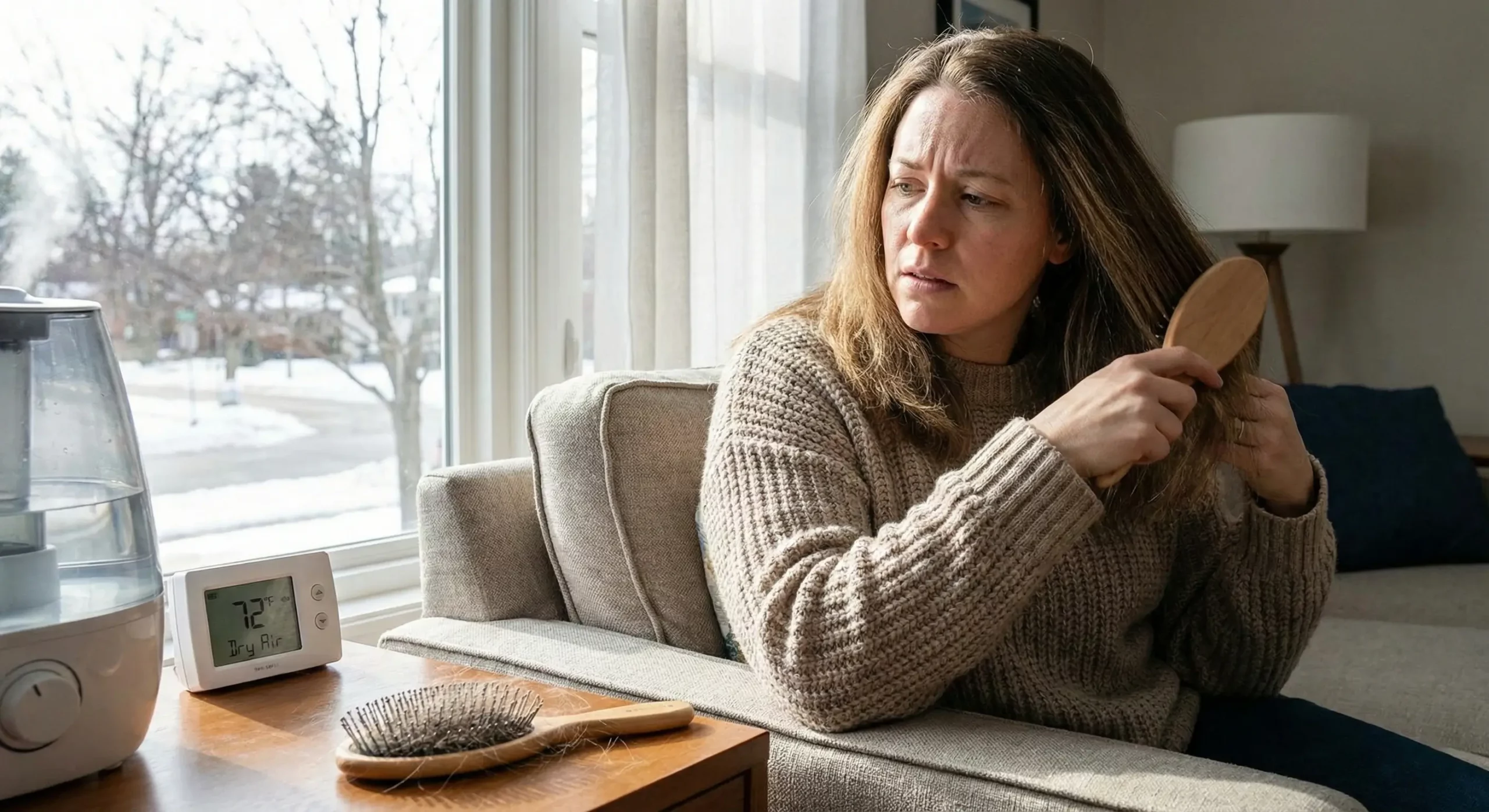
By the time February arrives, many women notice an alarming increase in daily hair fall. While we often blame “seasonal changes,” the culprit is frequently much closer to home—literally. The combination of freezing outdoor temperatures and the constant blast of Central Heating creates a biological crisis for your follicles.
In the wellness community, this is often referred to as Winter Hair Shedding. Unlike the natural “molting” that happens in the autumn, winter thinning is often a result of environmental dehydration that shocks the scalp into a premature resting phase. Understanding the Seasonal Shedding vs. Permanent Thinning distinction is the first step in protecting your volume during the year’s coldest month.
Outdoor Cold vs. Indoor Heat: The Comparison Table
The “thermal shock” your hair experiences as you move between environments is a primary driver of February hair loss.
| Feature | Outdoor Winter Air | Indoor Central Heating |
| Humidity Levels | Near zero; freezing moisture. | Extremely low; “parched” air. |
| Impact on Scalp | Constricts blood flow (vasoconstriction). | Dehydrates the Skin Barrier. |
| Impact on Hair Shaft | Makes hair brittle and prone to breakage. | Lifts the cuticle, leading to moisture loss. |
| Resulting Issue | Static and lack of shine. | Itchy Scalp and increased shedding. |
| Biological State | High Cortisol from cold stress. | Chronic dehydration of the follicle. |
The Science: How Dry Air Triggers the “Exogen” Phase
Hair growth follows a cycle: Anagen (growth), Catagen (transition), and Telogen (resting). The final part of the resting phase is Exogen, where the hair actually falls out.
1. The Scalp Moisture Crisis
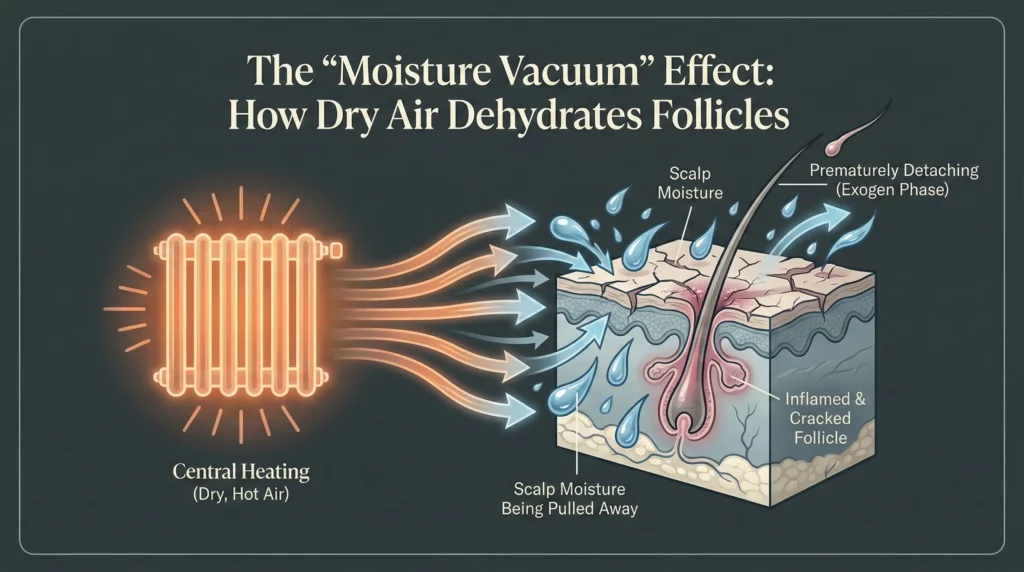
Central heating works by warming the air, but in the process, it strips it of all moisture. When the air around you is dry, it begins to draw moisture from the nearest available source: your skin and scalp. This leads to an “inflamed” scalp environment. As the Skin Barrier on your scalp weakens, the hair follicles become stressed, pushing them out of the growth phase and into the exogen phase prematurely.
2. The “Brittle Breakage” Illusion
Often, what looks like hair loss is actually severe breakage near the root. Dry indoor air sucks the “bound water” out of the hair fiber, destroying its elasticity. When you brush or style your hair in February, the friction is much higher, leading to increased snapping. This is why maintaining Scalp Health for Stronger Hair is more critical in February than in any other month.
According to a study published in the Journal of Investigative Dermatology, environmental stressors, including humidity fluctuations and temperature changes, can directly influence the metabolic activity of the hair follicle, potentially leading to telogen effluvium (temporary shedding).
3 Strategies to Stop the Winter Thinning
To save your hair from the “central heating trap,” you must address both the environment and your internal hydration.
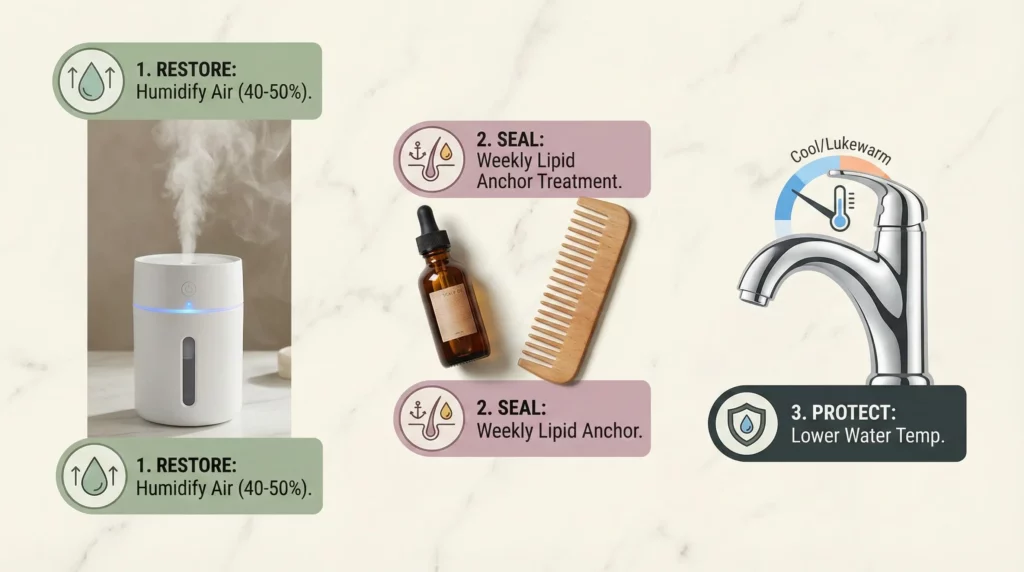
- Invest in a Humidifier: This is the single most effective tool for winter hair health. By keeping your indoor humidity between 40% and 50%, you stop the air from “stealing” moisture from your scalp. This also helps prevent Insomnia by keeping your nasal passages hydrated.
- The “Scalp Oil” Anchor: Once a week, apply a treatment rich in Ceramides or natural lipids to your scalp. This acts as a “sealant,” protecting the follicles from the drying effects of the heaters.
- Lower the Water Temp: It is tempting to take steaming hot showers in February, but hot water further strips the scalp’s protective oils. Use lukewarm water and finish with a cool rinse to “lock” the hair cuticle.
Expert Insight
“In the winter, we see a spike in patients worried about hair thinning. The truth is that central heating is like a vacuum for moisture. It dries out the scalp’s protective barrier, leading to micro-inflammation around the follicle. This inflammation is what triggers the hair to enter the shedding phase. If you want to keep your hair, you have to treat your scalp with the same moisturizing respect as you do your face.”
— Dr. Anabel Kingsley, world-renowned Trichologist and President of Philip Kingsley.
Conclusion: Reclaiming Your February Volume
February doesn’t have to be the month of thinning hair. By recognizing the impact of dry indoor air and adjusting your Night Routine to include scalp hydration and air humidification, you can bypass the winter shed. Remember, your hair is a reflection of its environment. Create a sanctuary for your follicles, and they will stay anchored and healthy.
Do you find more hair on your sweater or in your brush during the winter months? Have you ever tried using a humidifier to save your skin and hair? Share your memories and results in the comments below!
Show us your “Winter Hair-Care” sanctuary using #sylvaia_com on social media!


