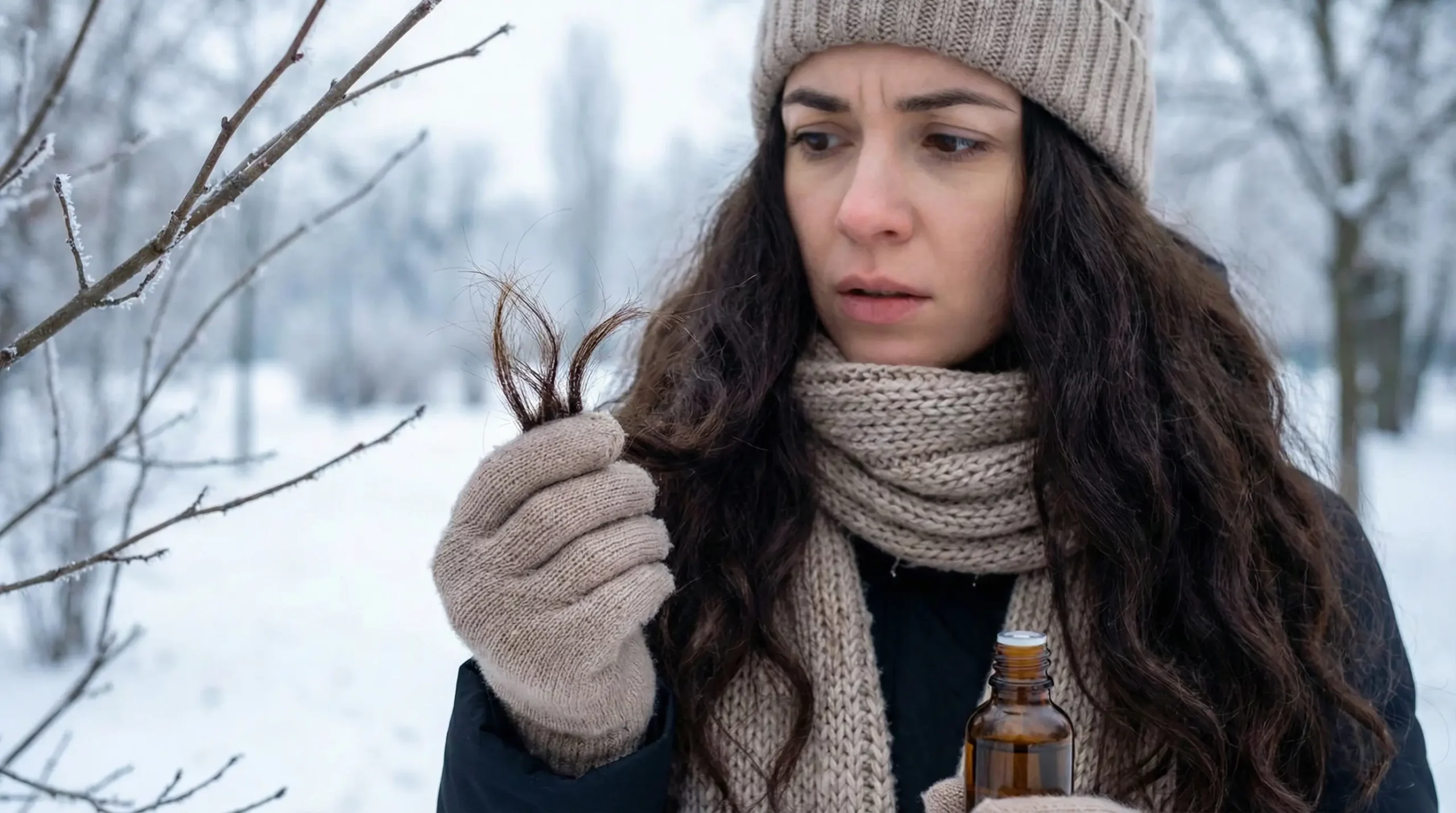
Winter Hair Breakage: 5 Reasons Your Hair Snaps More in the Cold
Table of contents
The Winter Snap: Why Your Hair is Losing Its Elasticity
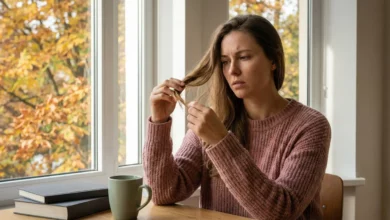
When the temperature drops, we often focus on our skin’s dehydration, but our hair is frequently the first to show signs of environmental stress. If you’ve noticed short, jagged strands on your shoulders or hair that seems to “snap” when you brush it, you are dealing with mechanical breakage rather than root shedding. While Seasonal Hair Loss is a biological process driven by light, winter breakage is a structural failure caused by a loss of tensile strength.
Winter air is notoriously dry, both indoors and out. This lack of humidity forces the hair shaft to give up its internal moisture to the environment, leaving the cortex brittle and the cuticle raised. Without its natural “stretch,” the hair becomes as fragile as glass.
Breakage vs. Shedding: Know the Difference
It is vital to distinguish between hair that is falling out from the root and hair that is simply snapping mid-shaft.
| Feature | Winter Breakage (The Snap) | Seasonal Shedding (The Fall) |
| Appearance | Short, uneven pieces; no white bulb at the end. | Full-length strands; often has a visible white bulb. |
| Primary Cause | Dehydration and physical friction. | Hormonal shifts and light sensitivity. |
| Location | Mid-lengths, ends, or around the face. | Sheds from the entire scalp. |
| Texture | Rough, frizzy, and prone to tangles. | Can appear healthy, but volume decreases. |
| Solution | Lipid replacement and friction reduction. | Scalp Health and nutrient support. |
5 Reasons Your Hair Snaps More in the Cold
1. The Low Dew Point Phenomenon
When the dew point is low, the air is “thirsty” for moisture. It pulls hydration directly from your hair’s Hydrogen Bonds. These bonds are responsible for the hair’s flexibility. When they are depleted, the hair loses its ability to bend and instead snaps under the slightest pressure from a brush or hair tie.
2. Friction from Winter Fabrics
Wool coats, acrylic scarves, and cotton pillowcases are the hidden enemies of winter hair. These materials are highly absorbent and create static electricity. As your hair rubs against these rough fibers, the cuticle is shredded, leading to immediate breakage at the nape of the neck. Swapping to silk or satin-lined accessories is a non-negotiable for Hair Strengthening.
3. The Hot Shower Trap
We often turn up the water temperature in winter, but scalding water strips the sebum (natural oils) from the hair shaft. These oils are the hair’s only defense against the dry winter air. Without this lipid layer, the hair becomes “porous,” meaning it absorbs moisture quickly but loses it even faster, leading to the The ‘Too-Clean’ Problem.
4. Compromised Scalp Health
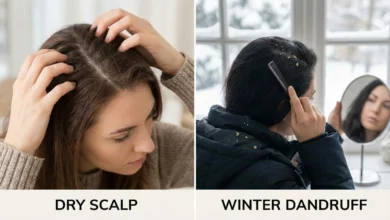
A healthy hair strand starts with a healthy environment. If you are struggling with Dry Scalp vs. Winter Dandruff, the inflammation at the root can weaken the hair as it emerges from the follicle. A dry, tight scalp often leads to scratching, which causes physical trauma to the new, fragile hairs.
5. Luteal Phase Fragility
Your internal hormones also play a role. During your Luteal Phase, your body’s increased Progesterone can lead to a shift in oil production that makes the scalp feel greasy but the ends feel extremely dry. This imbalance makes the hair more prone to snapping during the week before your period. Using Cycle Syncing for Skincare and Health can help you anticipate these brittle days.
The Fix: Restoring the Lipid Barrier
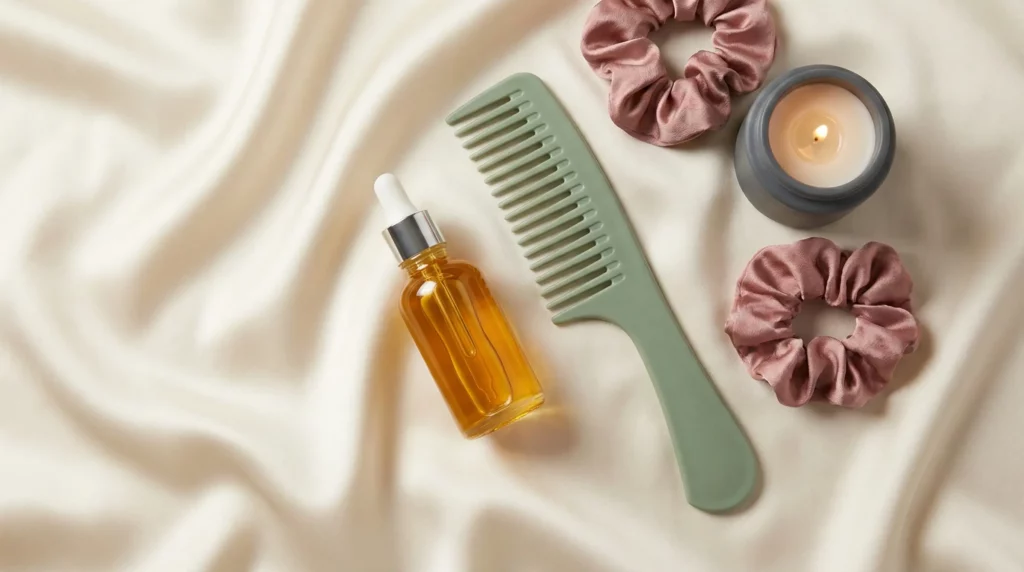
To stop the snap, you must move beyond simple “hydration” and focus on lipid replacement.
- Seal the Cuticle: Use a water-based leave-in conditioner followed by a light hair oil. This “LOC” (Liquid, Oil, Cream) method traps moisture inside the cortex.
- The “Cool Rinse” Rule: Always finish your shower with a 30-second cool rinse. This helps flatten the cuticle, making the hair smoother and more resistant to friction.
- Strategic Protective Styling: Keep your hair in low-tension braids or buns when wearing scarves or heavy coats to minimize fabric contact.
- Internal Support: Ensure you are getting enough Omega-3 fatty acids and Antioxidants to support hair elasticity from the inside out.
Expert Insight
According to a famous influencer who has spoken with our team regarding winter hair recovery:
“Most women think they need more protein when their hair breaks in winter, but they actually need more moisture and slip. Over-treating with protein in a dry environment can actually make the hair even more brittle. The secret is protecting the ‘stretch’ of the hair.”
Conclusion: Flexibility is Power
Winter hair breakage is a physical response to a harsh environment, but it is entirely preventable. By reducing friction, managing your shower temperature, and understanding how your Sun Damage Myths from the summer might have already weakened your strands, you can maintain a strong, glossy mane even in the frost.
Do you notice your hair snapping more when you wear certain scarves? Have you tried the “cool rinse” trick yet? Share your memories and winter hair tips in the comments below!
Show us your “winter-proof” hair setup using #sylvaia_com on social media!