The “Sulfate-Free” Lie: Why Your Expensive Shampoo Might Still Be Drying Out Your Hair
Table of contents
We have been trained to fear the word “Sulfate.”
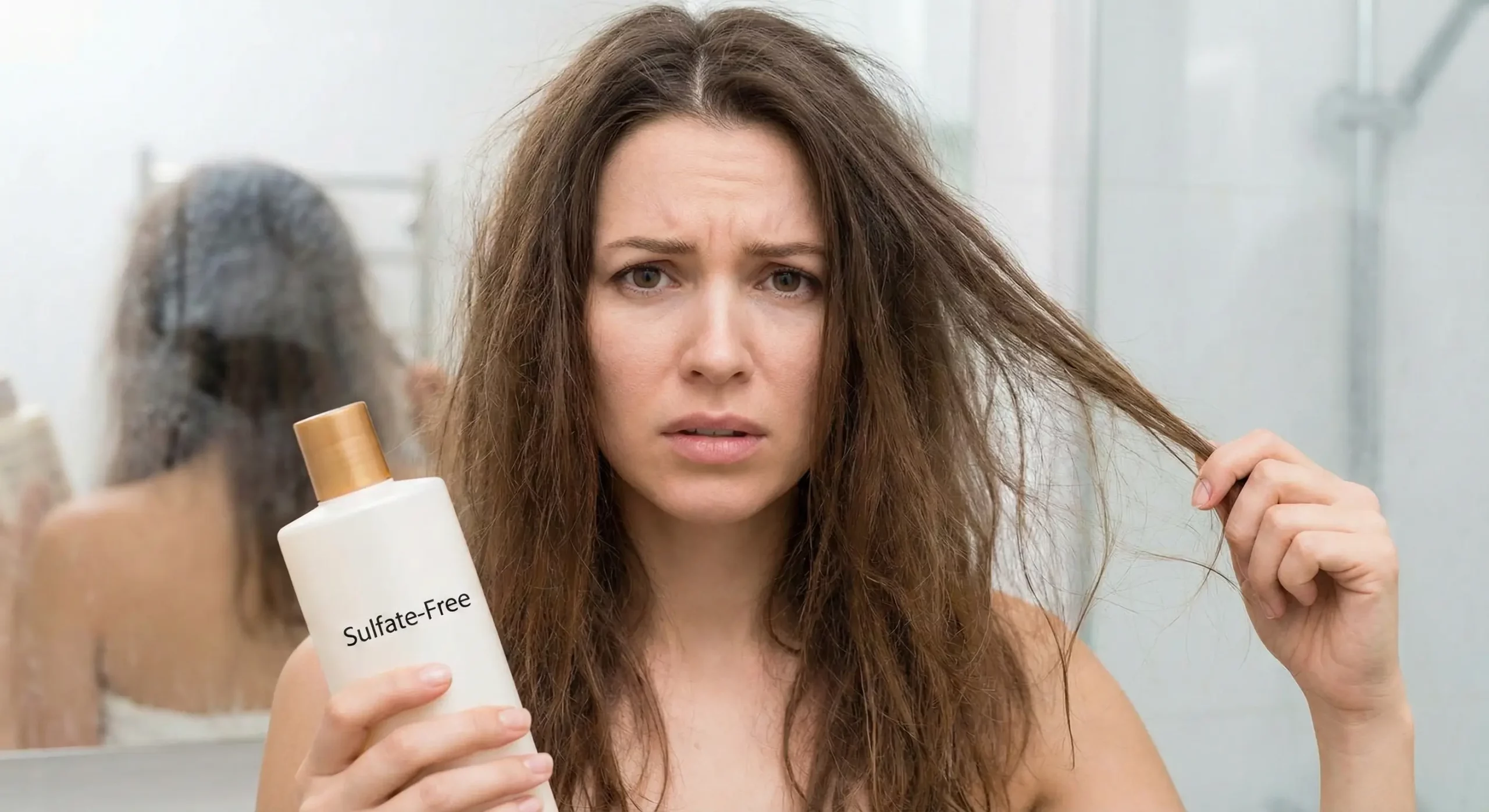
For years, marketing campaigns have told us that Sodium Lauryl Sulfate (SLS) is the enemy—stripping hair color, ruining keratin treatments, and turning healthy strands into straw. So, we dutifully switched to bottles stamped with the “Sulfate-Free” seal, expecting them to wash our hair with the gentleness of a lotion.
But then, a strange thing happened. Many users reported that their hair felt drier and more tangled after switching to these “clean” alternatives.
We decided to audit the ingredient labels of 5 top-selling “Sulfate-Free” shampoos, ranging from $8 drugstore favorites to $60 luxury bottles. The results were shocking: 3 out of the 5 contained a cleanser just as harsh as the one they removed.
The Science: Meet the “Imposter” Ingredient
To make shampoo foam, you need a Surfactant (a detergent that breaks down oil).
When brands remove Sulfates to meet a marketing trend, they still need the shampoo to foam (because consumers hate shampoos that don’t bubble). So, they often replace SLS with a chemical cousin called Sodium C14-16 Olefin Sulfonate.
Here is the catch: Sodium C14-16 Olefin Sulfonate is technically not a sulfate. It does not contain the specific sulfur-oxygen chemical group that defines a sulfate. Therefore, the brand can legally write “Sulfate-Free” on the front.
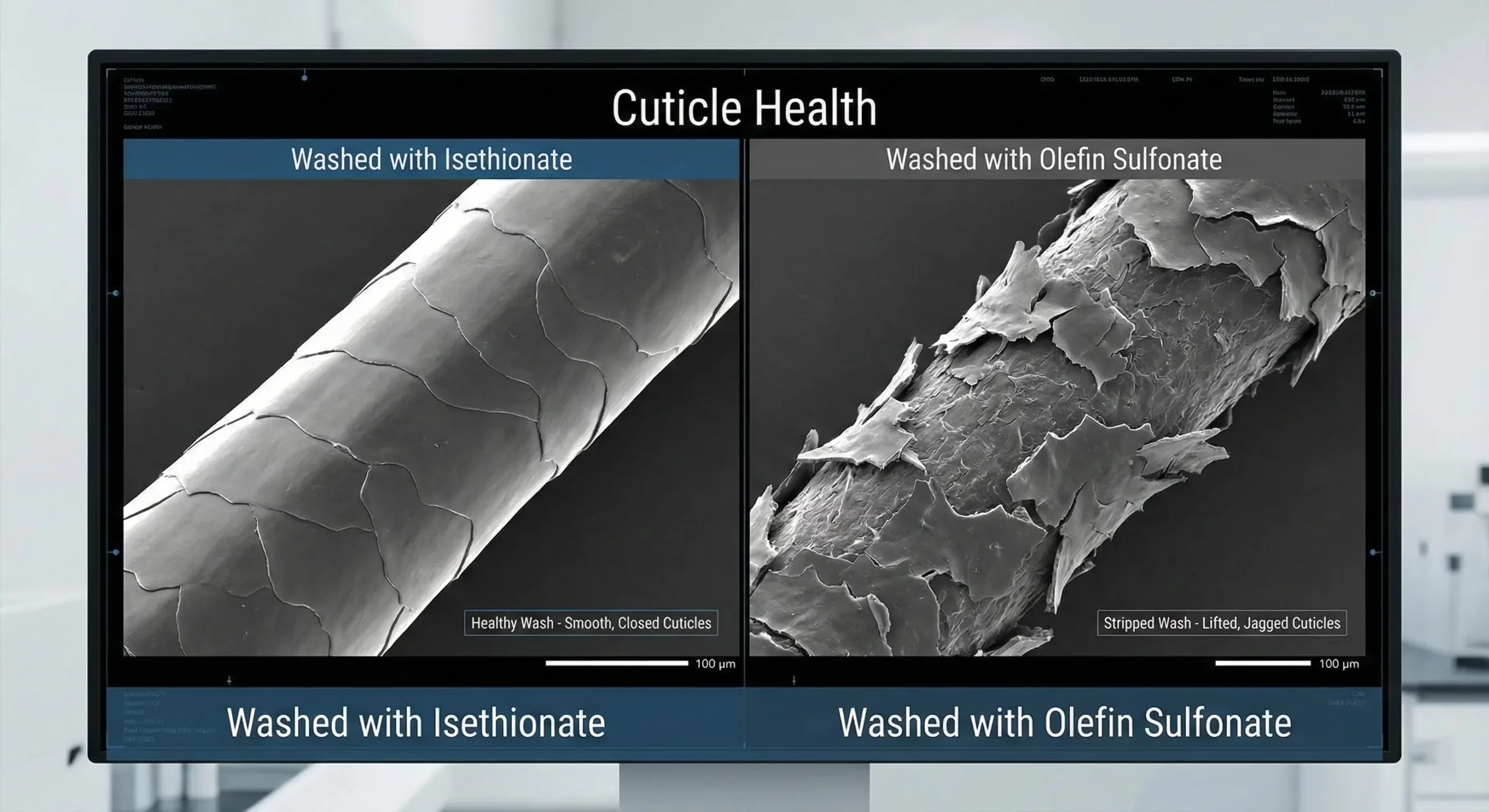
However, according to cosmetic science research published in the National Institutes of Health (NIH), Olefin Sulfonate is a powerful anionic surfactant. While it is slightly better than SLS, it is still highly effective at stripping oils—often too effective for dry or curly hair. It follows the letter of the law, but it breaks the spirit of “gentleness.”
Comparison: The Detergent Hierarchy
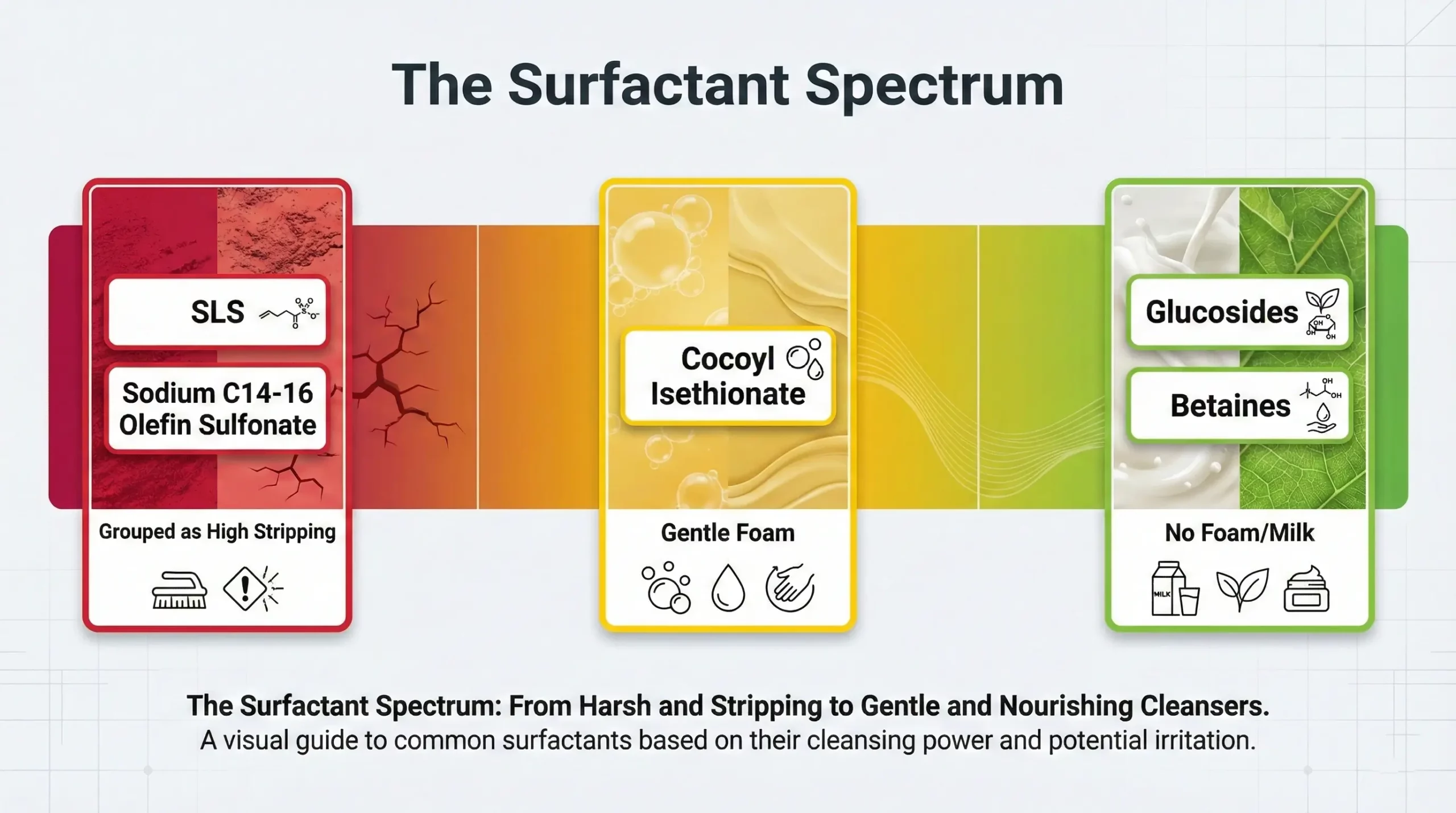
Not all “Sulfate-Free” shampoos are created equal. You need to know which cleaning agent is doing the heavy lifting.
| Ingredient Name | Type | Foam Level | Stripping Potential | The Verdict |
| Sodium Lauryl Sulfate (SLS) | Sulfate | High (Big Bubbles). | Extreme. | Avoid for colored/dry hair. |
| Sodium C14-16 Olefin Sulfonate | Anionic Surfactant | High (Big Bubbles). | High. | The “Imposter.” Great for oily scalps, bad for dry ends. |
| Sodium Cocoyl Isethionate | Mild Anionic | Medium (Creamy). | Low. | The “Gold Standard” for gentle cleansing. |
| Cocamidopropyl Betaine | Amphoteric | Low (Light Foam). | Very Low. | Very gentle, often used as a secondary helper. |
The Investigation Results (The 3 Categories)
We categorized the 5 shampoos we audited based on their primary surfactant. Here is how to spot them in the aisle:
1. The “Technicality” (High Stripping Risk)
- The Culprit: Many popular drugstore “Bond Repair” dupes and “Volumizing” shampoos.
- The Label: You will see Sodium C14-16 Olefin Sulfonate listed as the second ingredient (right after water).
- The Reality: If you have an oily scalp, these are actually great. But if you have dry, frizzy, or bleached hair, this ingredient can be incredibly drying. Just because it says “Sulfate-Free” doesn’t mean it’s moisturizing.
f you have been unknowingly using these harsh clarifiers, your scalp might be feeling the effects just as much as your ends. The stripping nature of these “imposter” ingredients can disrupt your microbiome, leading to itchiness and irritation. If you are looking to reset your scalp’s pH gently without spending a fortune, check out our investigation: ACV vs. The $40 Bottle: Can Kitchen Vinegar Actually Cure an Itchy Scalp?
2. The “Balanced” Blend (Safe for Color)
- The Culprit: Brands like L’Oreal EverPure or Olaplex No. 4.
- The Label: These usually rely on Sodium Cocoyl Isethionate or Sodium Lauroyl Methyl Isethionate.
- The Reality: This is the sweet spot. These ingredients are derived from coconut oil and create a dense, creamy lather rather than an airy, bubbly one. They clean the hair without disrupting the cuticle.
3. The “No-Foam” (True Gentle)
- The Culprit: Co-washes and specialized curl creams (e.g., Briogeo, Wen).
- The Label: These rely on Glucosides or strictly Betaines.
- The Reality: These will not foam. For many people, this feels like “it isn’t working,” but it is the healthiest option for Type 3 and 4 curly hair.
How to Read Your Bottle Right Now
Don’t trust the sticker on the front. Flip the bottle over and look at the first 3 ingredients.
Decoding these chemical names is the only way to protect your hair from marketing gimmicks. If you want to master the art of looking past the front label—not just for shampoo, but for your serums and creams too—we have a complete breakdown of how to audit your bathroom cabinet in our guide: How to Read Skincare & Beauty Labels.
- If you see Sodium Lauryl Sulfate: It’s a harsh clarifier.
- If you see Sodium C14-16 Olefin Sulfonate: It is a “Sulfate-Free” clarifier (still strong!).
- If you see Cocoyl Isethionate: It is a gentle, color-safe wash.
Go check your shower right now.
Does your “Hydrating” shampoo actually contain the harsh Olefin Sulfonate? Tell us what you find in the comments below!