Why Dandruff Shows Up in One Spot (Front Hairline, Crown, or Behind Ears)—And What That Usually Means
Table of contents
The Geography of the Scalp: Understanding Localized Flaking
When flakes appear on the scalp, the immediate assumption is often a generalized fungal issue. However, dandruff is not always a “global” condition. The scalp is a complex landscape with varying levels of oil production, sensitivity, and environmental exposure. When flaking is restricted to a specific zone, it serves as a biological map of your lifestyle habits and physiological imbalances.
Identifying the “geography” of your flakes is the most efficient way to stop the cycle of unnecessary, aggressive treatments. By decoding these hotspots, you can move away from a one-size-fits-all approach and achieve true Scalp Health by identifying your specific scalp profile.
Before assuming you need a medical-grade treatment, it is essential to determine if these hotspots are simply a characteristic of your overall biology. Evaluating your roots through a comprehensive scalp-type checklist can help you understand if your “hotspots” are actually a sign of a combination scalp profile that requires a multi-zone washing strategy.
The Three Most Common Scalp “Hotspots”
1. The Frontal Hairline: The Product & Makeup Buffer
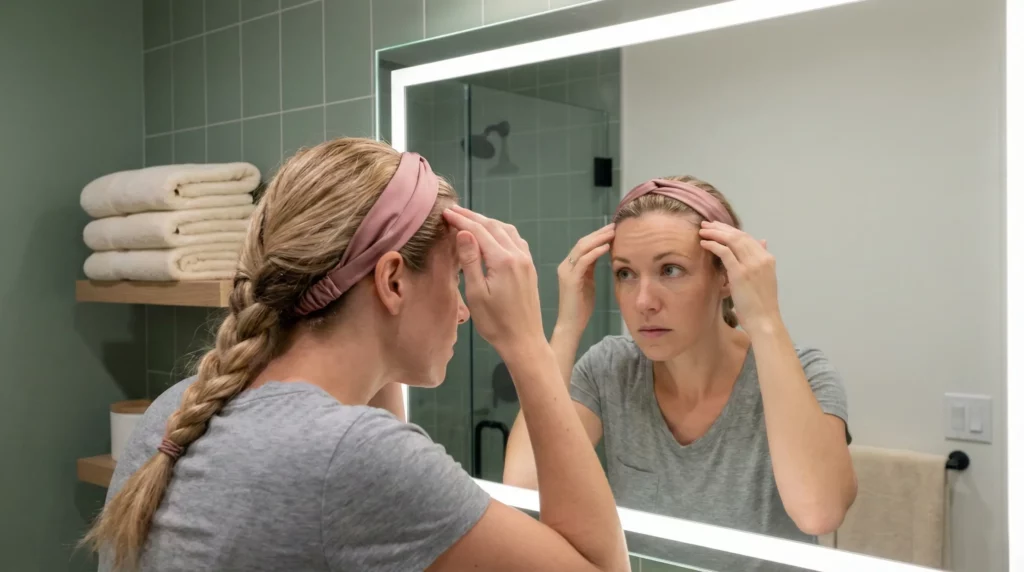
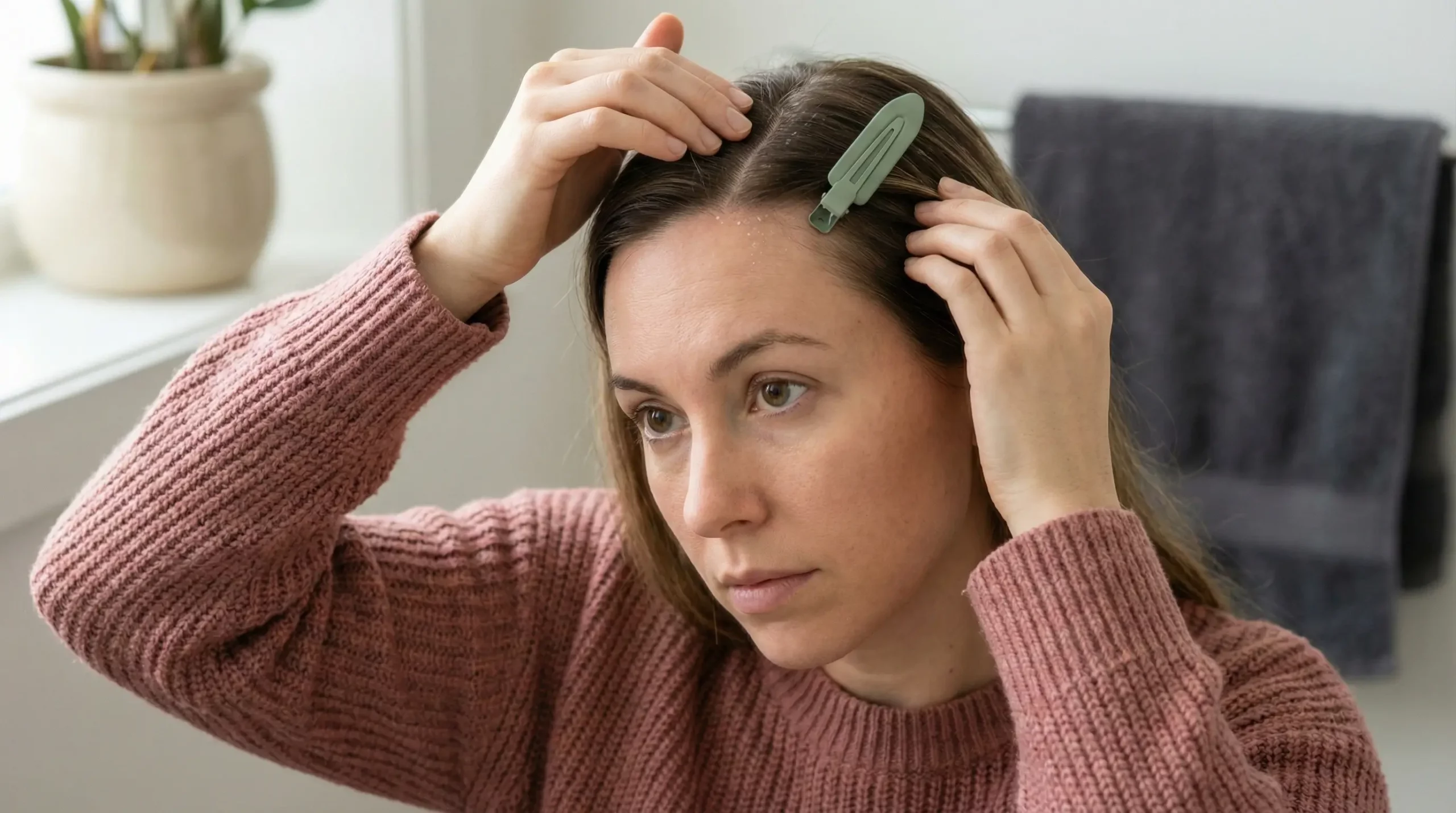
The hairline is a high-traffic area where skincare and haircare overlap. Flaking in this zone is frequently a sign of contact dermatitis or product buildup. Foundations, heavy moisturizers, and styling sprays can migrate to the roots, creating a film that traps sebum and dead skin cells. This environment becomes a breeding ground for the Malassezia fungus, which triggers localized flaking.
2. The Crown: UV Exposure and Sweat Collection
The crown of the head is the most exposed to environmental stressors. UV radiation can damage the moisture barrier of the scalp, leading to localized peeling that is often mistaken for dandruff. Furthermore, because the crown is a primary site for sweat accumulation, salt crystals can dry on the skin, causing a persistent Itchy Scalp. Understanding the difference between dry scalp and dandruff is crucial here, as treating sun-damaged skin with harsh antifungal shampoos can exacerbate the problem.
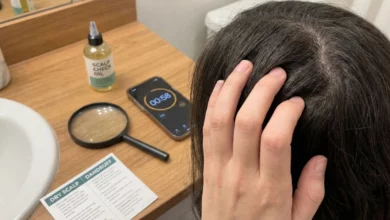
In zones like the crown, where UV exposure is highest, the skin often peels due to dehydration rather than fungal activity. Using an aggressive anti-fungal shampoo on sun-damaged skin will only worsen the irritation; performing a quick 60-second diagnostic check for dry scalp will ensure you aren’t stripping your barrier when it actually needs moisture.
3. Behind the Ears and Nape: The Friction Zone
The area behind the ears and at the base of the neck is a warm, humid micro-environment. Moisture from wet hair often lingers here, creating a perfect habitat for fungal overgrowth. Additionally, friction from high-collared clothing or scarves can irritate the skin, causing the surface layers to shed prematurely.
Localized Irritation vs. Global Dandruff
| Feature | Localized Flaking (Hotspots) | Global Dandruff (Chronic) |
| Distribution | Concentrated in specific zones. | Evenly spread across the scalp. |
| Primary Driver | External triggers (Makeup, UV, Friction). | Biological triggers (Oil, Yeast). |
| Texture | Usually dry and small (powder-like). | Often waxy, oily, and yellowish. |
| Skin Condition | May show signs of redness or tightness. | Often feels greasy or inflamed. |
| Recovery | Clears with targeted habit changes. | Requires long-term active management. |
Scientific Triggers: Why Concentration Matters
The distribution of sebaceous (oil) glands on the scalp is not uniform. The crown and hairline are significantly richer in these glands than the nape. According to a study published in the Journal of Investigative Dermatology, an imbalance in the scalp’s microbiome is often localized to these high-sebum areas.
Furthermore, internal Stress & Health factors can manifest in specific zones. When Cortisol levels spike, the body’s inflammatory response can target nerve-rich areas like the base of the skull, leading to localized flaking and sensitivity that vanishes once the stressor is removed.
Targeted Solutions for Zone-Specific Clarity

- Hairline Fix: Use a gentle Cleanser to ensure all makeup is removed from the hairline before bed. Focus on double-rinsing your shampoo to prevent surfactant residue.
- Crown Reset: Incorporate a physical or chemical Scrub containing Salicylic Acid once a week to remove environmental buildup and sweat residues.
- Nape Balance: Ensure the area behind the ears is thoroughly dried after every wash. Avoid high-tension hairstyles that increase friction in this sensitive zone.
Expert Insight
Anabel Kingsley, a world-renowned trichologist, emphasizes the importance of localized observation in hair care:
“Localized flaking is often the scalp’s way of reacting to our daily rituals. Before reaching for a medicated shampoo, evaluate what touches that specific area. Is it your foundation? Is it your hairspray? Is it a hat? Often, the solution is as simple as adjusting your cleansing technique.”
Conclusion: Targeted Care for Lasting Results
Solving scalp issues requires a diagnostic mindset. By observing where your flakes appear, you can implement a Minimal Routine that targets the root cause without stripping the rest of your hair. When you treat the geography of your scalp with respect, you pave the way for long-term Hair Strengthening and a Flawless Base.
Where is your most stubborn spot? Have you noticed a change in your scalp after switching your makeup or hats? Share your experiences in the comments below!
If you’ve cleared your “hotspots” with these swaps, show us your progress using #sylvaia_com on social media!