
Better Sleep 101: The 7 Reasons You’re Tired Even After 8 Hours (and What to Try First)
Table of contents
- The Science of Non-Restorative Sleep: Why Quantity Isn’t Quality
- 7 Biological Disruptors Keeping You Tired
- 1. Poor Sleep Architecture: The Deep Sleep Deficit
- 2. Circadian Misalignment (The Blue Light Effect)
- 3. The Magnesium and Micronutrient Gap
- 4. REM Fragmentation: The Alcohol & Caffeine Paradox
- 5. Thermal Barriers: Why a Warm Room Blocks Rest
- 6. Elevated Evening Cortisol (The “Wired but Tired” State)
- 7. Silent Micro-Awakenings
- Sleep Optimization: Quantity vs. Quality
- The Sleep Rescue Protocol: What to Try First
- Expert Insight
- Conclusion: Reclaiming Your Vitality
The Science of Non-Restorative Sleep: Why Quantity Isn’t Quality
It is a common frustration: you set a strict bedtime, avoid late-night snacks, and successfully log a full eight hours of sleep, yet you wake up feeling as though you haven’t rested at all. This phenomenon is known as non-restorative sleep. While the clock says you slept, your biology tells a different story.
In your 30s, the body’s ability to “bounce back” from poor-quality rest diminishes. Sleep is not merely a period of inactivity; it is a highly active metabolic state where your brain flushes out toxins and your skin undergoes cellular repair. When these processes are interrupted, the result is chronic morning grogginess, or “sleep inertia.” Understanding why your eight hours aren’t yielding energy requires looking past the quantity and focusing on the biological triggers that govern rest.

7 Biological Disruptors Keeping You Tired
1. Poor Sleep Architecture: The Deep Sleep Deficit
Sleep is composed of distinct cycles. The most critical for physical restoration is Stage 3 Non-REM (Deep Sleep). This is when the body releases growth hormones for tissue repair and immune strengthening. If your sleep is shallow, you may log eight hours of “light sleep” without ever reaching the deep, restorative phase.
When your body misses out on these deep restorative phases, the impact extends beyond your energy levels. Chronic lack of physical repair often manifests in your hair’s vitality; identifying the root causes of persistent scalp irritation and dullness is frequently the first step in realizing that your body’s internal “reset” button hasn’t been fully pressed overnight.
2. Circadian Misalignment (The Blue Light Effect)
The human brain is hardwired to respond to light signals. Exposure to blue light from smartphones and laptops suppresses the production of Melatonin. This creates a “circadian shift,” where your body may be unconscious, but your internal clock believes it is still daytime, preventing the metabolic shift into deep rest.
3. The Magnesium and Micronutrient Gap
Magnesium is a vital mineral that regulates the neurotransmitters responsible for “quieting” the nervous system. A deficiency in magnesium or B vitamins can keep your muscles and brain in a state of low-level tension, preventing the complete physical relaxation necessary for high-quality sleep.
4. REM Fragmentation: The Alcohol & Caffeine Paradox
While alcohol may help you fall asleep faster, it acts as a sedative that significantly disrupts REM (Rapid Eye Movement) sleep. Similarly, caffeine has a half-life of about five to six hours; a cup of coffee at 4:00 PM can still be blocking sleep receptors at 10:00 PM, leading to fragmented, low-quality cycles.
5. Thermal Barriers: Why a Warm Room Blocks Rest
To initiate sleep, your core body temperature must drop by about two to three degrees Fahrenheit. If your bedroom is too warm, your body struggles to reach this thermal threshold. Scientific research from the National Sleep Foundation suggests that a room temperature of approximately 65°F (18.3°C) is optimal for deep sleep.
6. Elevated Evening Cortisol (The “Wired but Tired” State)
Chronic stress keeps your adrenal glands pumping out Cortisol long after the sun goes down. High evening cortisol levels prevent the natural rise of melatonin. This leaves you in a “wired but tired” state where you are physically exhausted but your brain remains on high alert.
7. Silent Micro-Awakenings
Environmental factors—such as a flickering street light, a slight drop in air quality, or ambient noise—can cause “micro-awakenings.” You won’t remember these 3-second wake-ups, but they pull you out of Deep Sleep and reset your sleep cycle, ensuring you wake up feeling unrefreshed.
Sleep Optimization: Quantity vs. Quality
| Feature | Empty Hours (Low Quality) | High-Efficiency Sleep |
| Primary Goal | Staying in bed for 8+ hours. | Completing 5 full 90-minute cycles. |
| Metabolic State | High inflammation; slow repair. | Peak Rejuvenation and detoxification. |
| Hormone Balance | Lingering Cortisol; low Melatonin. | Optimized growth hormone release. |
| Morning Feeling | Heavy limbs and persistent brain fog. | Natural alertness within 15 minutes. |
If you find that even after optimizing your sleep environment, you still struggle with a persistent mental cloudiness, the issue might be nutritional. Addressing the biological “gaps” in your diet by choosing specific foods to eliminate morning brain fog can complement your sleep hygiene and finally clear the cognitive haze.
The Sleep Rescue Protocol: What to Try First
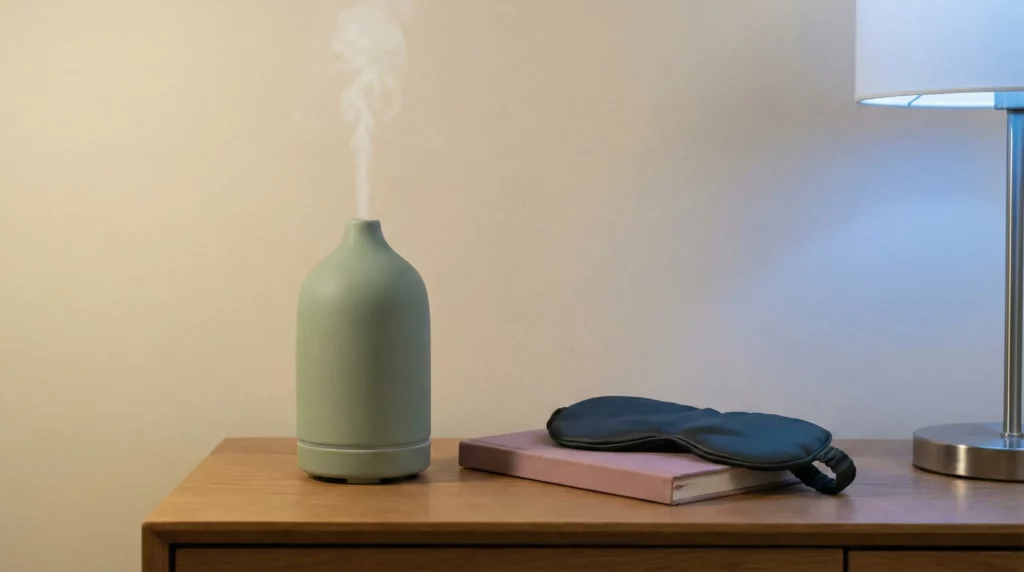
To transition from “empty hours” to restorative rest, focus on these science-backed adjustments:
- The 3-2-1 Rule: Stop eating 3 hours before bed (to prevent digestive disruption), stop working 2 hours before (to lower cortisol), and turn off screens 1 hour before (to allow melatonin to rise).
- Environment Audit: Ensure your room is pitch black and cool. Use a Diffuser with high-quality lavender or sandalwood essential oils to signal to your limbic system that it is time to downshift.
- Targeted Supplementation: Consider Supplements like Magnesium Glycinate or L-theanine, which are documented to support the nervous system’s transition into sleep without the “hangover” effect of traditional sedatives.
Expert Insight
As Dr. Matthew Walker, professor of neuroscience and psychology at the University of California, Berkeley, and author of Why We Sleep, states:
“Sleep is the single most effective thing we can do to reset our brain and body health each day. It is not an optional lifestyle luxury; it is a non-negotiable biological necessity.”
Conclusion: Reclaiming Your Vitality
Mastering your sleep is the foundation of both beauty and health. By addressing the quality of your rest rather than just the duration, you allow your body to perform the vital Rejuvenation tasks that keep your skin clear and your mind sharp.
What is the biggest challenge preventing you from getting a restful night? Is it stress, your phone, or an uncomfortable room temperature? Leave a comment below and let’s discuss!
If you’ve tried our “3-2-1 Rule,” share your results with the community using #sylvaia_com on social media.