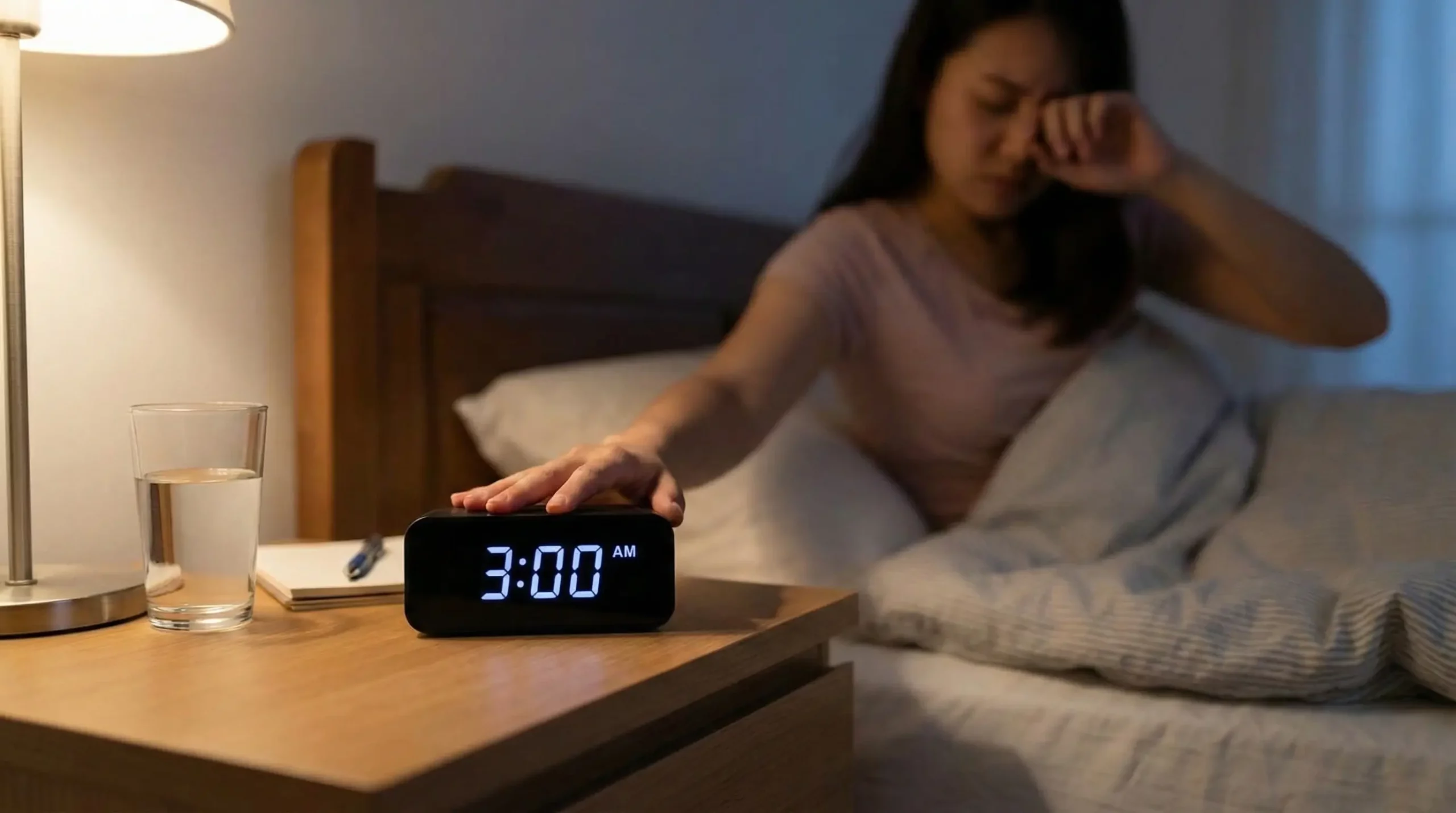
Waking Up at 3 a.m.: 5 Common Causes and the “First 10 Minutes” Rescue Plan
Table of contents
The 3 a.m. Phenomenon: Biology vs. Anxiety
Waking up in the early hours of the morning is one of the most common sleep disruptions reported by women. While it often feels like a sign of poor health, it is frequently a result of the brain transitioning between sleep cycles. Approximately every 90 minutes, the body completes a cycle, and the periods of wakefulness between these cycles become longer as morning approaches.
However, when these brief awakenings turn into hour-long sessions of staring at the ceiling, it moves from a natural transition into a state of hyperarousal. Distinguishing between a routine wake-up and more persistent issues is essential for maintaining your Mental Health and physical vitality. Understanding whether you are dealing with Night Waking vs. Insomnia is the first step in regaining control of your rest.

5 Common Causes of Early Morning Awakening
1. The Cortisol “Early Trigger”
If your body is under chronic pressure, your internal clock may trigger an early release of Cortisol. This hormone is designed to wake you up in the morning, but high stress levels can cause it to spike prematurely, usually between 2 a.m. and 4 a.m.. This often occurs when you are navigating Is It Stress, Anxiety, or Burnout?.
2. Blood Sugar Fluctuations
A significant drop in blood sugar (hypoglycemia) during the night can cause the brain to enter a survival state. When glucose levels fall too low, the body releases adrenaline and cortisol to mobilize stored sugar, which effectively “jolts” you awake.
3. Alcohol Metabolism Rebound
While alcohol may help you fall asleep faster, its metabolism causes a “rebound effect” in the second half of the night. As the sedative wears off, the body experiences a spike in sympathetic nervous system activity, often leading to fragmented sleep and night sweats.
4. Sleep Cycle Transitioning
As the night progresses, the percentage of Deep Sleep decreases while REM (Rapid Eye Movement) sleep increases. REM is a much lighter stage of sleep, making you more susceptible to external disturbances like noise, temperature changes, or light.
5. Hormonal Shifts and Temperature
For many women, the Luteal Phase of the menstrual cycle or perimenopause can cause a rise in core body temperature. This internal heat can disrupt the “cool-down” phase required for the body to stay in deep rest throughout the night.
Trigger Comparison: Environmental vs. Biological
| Feature | Environmental Trigger | Biological Trigger |
| Common Source | Noise, light, or temperature. | Cortisol spikes or blood sugar. |
| Physical Feeling | Alert but able to drift back. | “Tired but wired” or heart racing. |
| Frequency | Occasional and situational. | Persistent and often timed the same. |
| Response | Resolves by removing the trigger. | Requires lifestyle or dietary shift. |
The “First 10 Minutes” Rescue Plan
What you do in the first ten minutes after waking up determines whether you will return to sleep or remain awake for the rest of the night.

- The “No Clock” Rule (Minute 1): Resist the urge to check your phone or the bedside clock. Checking the time triggers “sleep math” and immediate anxiety about the coming day.
- Muscle Relaxation (Minutes 2-5): Perform a progressive muscle relaxation from your toes to your jaw. This sends a physical signal to the brain that there is no immediate threat, lowering the heart rate.
- Diaphragmatic Breathing (Minutes 6-8): Focus on long, slow exhales. This activates the parasympathetic nervous system, which is essential for overriding a premature Cortisol spike.
- The Mental “Memory Fold” (Minutes 9-10): Instead of thinking about your “to-do” list, visualize a mundane, repetitive task, such as folding laundry or walking through a familiar park. This occupies the prefrontal cortex without overstimulating it.
The Impact on Health and Beauty
Consistent sleep disruption is not just a mental burden; it is a primary driver of premature aging. During Deep Sleep, the body focuses on Cellular Repair and collagen synthesis. According to the Sleep Foundation, chronic sleep deprivation can lead to increased skin sensitivity and a weakened skin barrier.
If your sleep is consistently disrupted, it may exacerbate Seasonal Hair Loss or inflammatory skin conditions. Prioritizing rest is the most effective form of Anti-Aging After 30 that exists.
Expert Insight
Dr. Guy Meadows, a lead sleep physiologist, has frequently highlighted the mental trap of night waking:
“The brain is an association machine. If you lie in bed awake and frustrated every night at 3 a.m., your brain begins to associate the bed with wakefulness and stress. The key is to remain calm and neutral about the awakening, rather than fighting it.”
Conclusion: Reclaiming Your Rest
Waking up at 3 a.m. is a signal from your body, not a failure of your health. By identifying whether your triggers are environmental or biological, you can apply a targeted Night Routine that supports your needs. Consistency and stress management are the ultimate tools for achieving the deep, restorative rest you deserve.
Do you find yourself waking up at the exact same time every night? What is your favorite “boring task” to visualize to fall back asleep? Share your tips in the comments below!
If you’ve mastered your rescue plan, show us your serene bedroom setup using #sylvaia_com on social media!