How to Treat Adult Acne Without Wrecking Your Skin Barrier
Table of contents
The Adult Acne Paradox: Why Traditional Treatments Fail
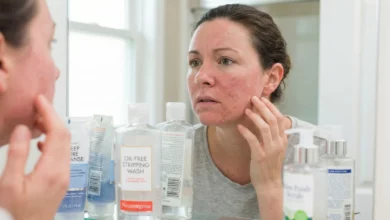
Treating adult acne in your 30s is fundamentally different from treating teenage breakouts.1 While teenage skin is often resilient and highly oily, adult skin is frequently prone to dehydration and a slower rate of Rejuvenation.2 Many women make the mistake of using aggressive, high-percentage drying agents that were designed for adolescents, only to find their skin red, peeling, and still breaking out.
This is the “Adult Acne Paradox”: the harsher you treat the acne, the more you damage your Skin Barrier, leading to “inflammaging”—a state where chronic irritation actually triggers more breakouts.3 To clear your skin effectively, you must adopt a science-first approach that prioritizes the health of your stratum corneum (the outermost layer of the skin) while quietly managing the bacteria and oil.
Many women struggle with the instinct to scrub away their imperfections, not realizing that excessive washing often traps you in a cycle of inflammation. Understanding the risks of an overly aggressive cleansing routine is the first step toward allowing your biological shield to heal and stop the formation of new cysts.
Traditional vs. Barrier-First Approach
Before restructuring your routine, it is essential to understand why the “scorched earth” method of acne treatment often backfires on adult skin.
| Feature | Traditional “Teen” Approach | Science-First “Adult” Approach |
| Cleansing | Harsh, foaming sulfates. | Non-foaming, lipid-rich Cleanser. |
| Active Ingredients | High % Benzoyl Peroxide / Alcohol. | Azelaic Acid / Low % Salicylic Acid. |
| Moisturization | Often skipped to “dry out” oil. | Focused on Ceramides and Fatty Acids. |
| Exfoliation | Physical Scrub or high-strength AHA. | Gentle, time-released polyhydroxy acids (PHAs). |
| Result | Stripped barrier & reactive oiliness. | Balanced, calm, and clear skin. |
The Biological Foundation: Respecting the Microbiome
Adult acne is often less about “dirt” and more about an imbalance in the skin’s microbiome and a compromised lipid bilayer. When the Skin Barrier is healthy, it acts as a gatekeeper, keeping moisture in and the Cutibacterium acnes bacteria in check.
According to research published in the Journal of Clinical and Aesthetic Dermatology, the use of barrier-repairing ingredients alongside acne medications significantly reduces side effects and increases patient adherence to treatment. By reinforcing your skin with Ceramides and Peptides, you create a resilient environment where acne-fighting actives can work without causing collateral damage.
While topical care is the foundation, internal factors often dictate the severity of adult breakouts. Exploring how dietary choices influence chronic skin inflammation can provide the final piece of the puzzle for those whose acne persists despite a perfect barrier-first skincare routine.
The Science-First Routine for Adult Clarity
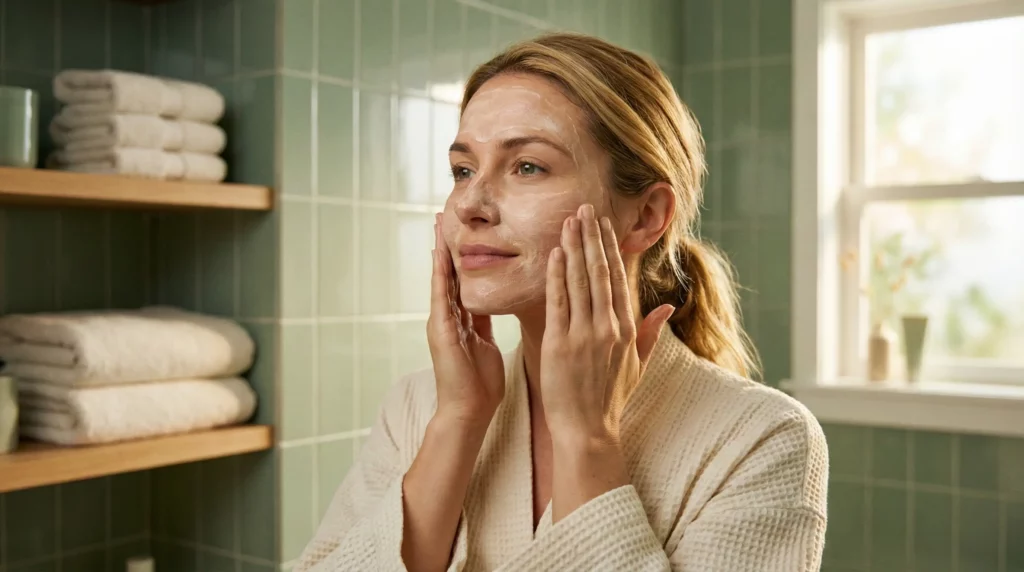
1. The Gentle Cleanse
Avoid the “squeaky clean” feeling. Use a pH-balanced cleanser that removes pollutants and makeup without disrupting the acid mantle. If you wear heavy SPF or foundation, a double cleanse with a nourishing oil followed by a creamy wash is the gold standard for Oily Skin & Makeup removal.
2. The Multi-Tasking Active: Azelaic Acid
If you have to choose one ingredient for your 30s, let it be Azelaic Acid. It is a dicarboxylic acid that kills acne-causing bacteria, reduces inflammation, and gently fades Acne Scars & Marks.4 Unlike many other acids, it is exceptionally well-tolerated by those with sensitive skin.5
3. Niacinamide for Regulation
Niacinamide (Vitamin B3) is essential for adult acne because it regulates sebum production while simultaneously strengthening the barrier.6 It helps minimize Pore Size and calms the redness associated with active cysts.
4. Barrier Replenishment
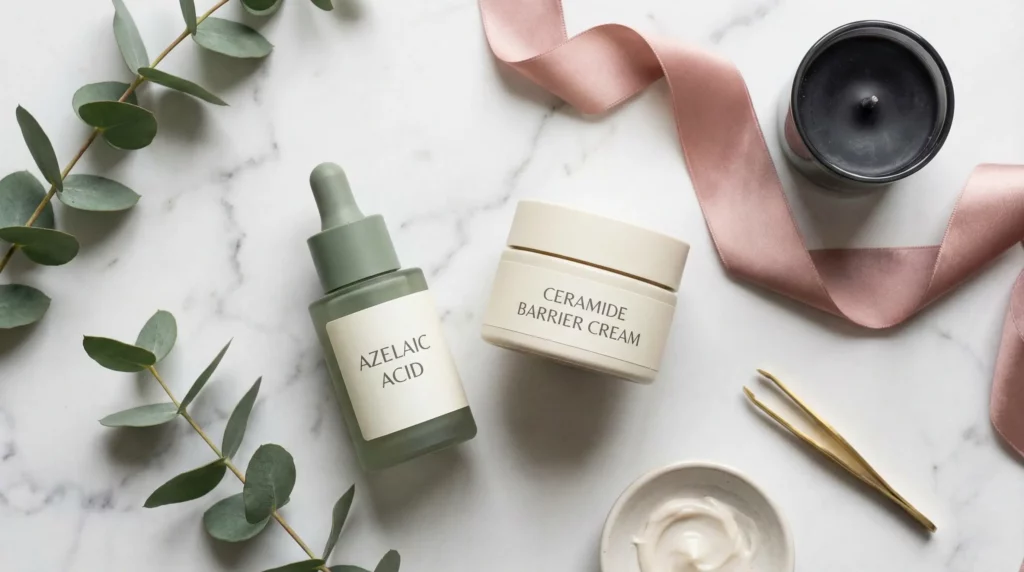
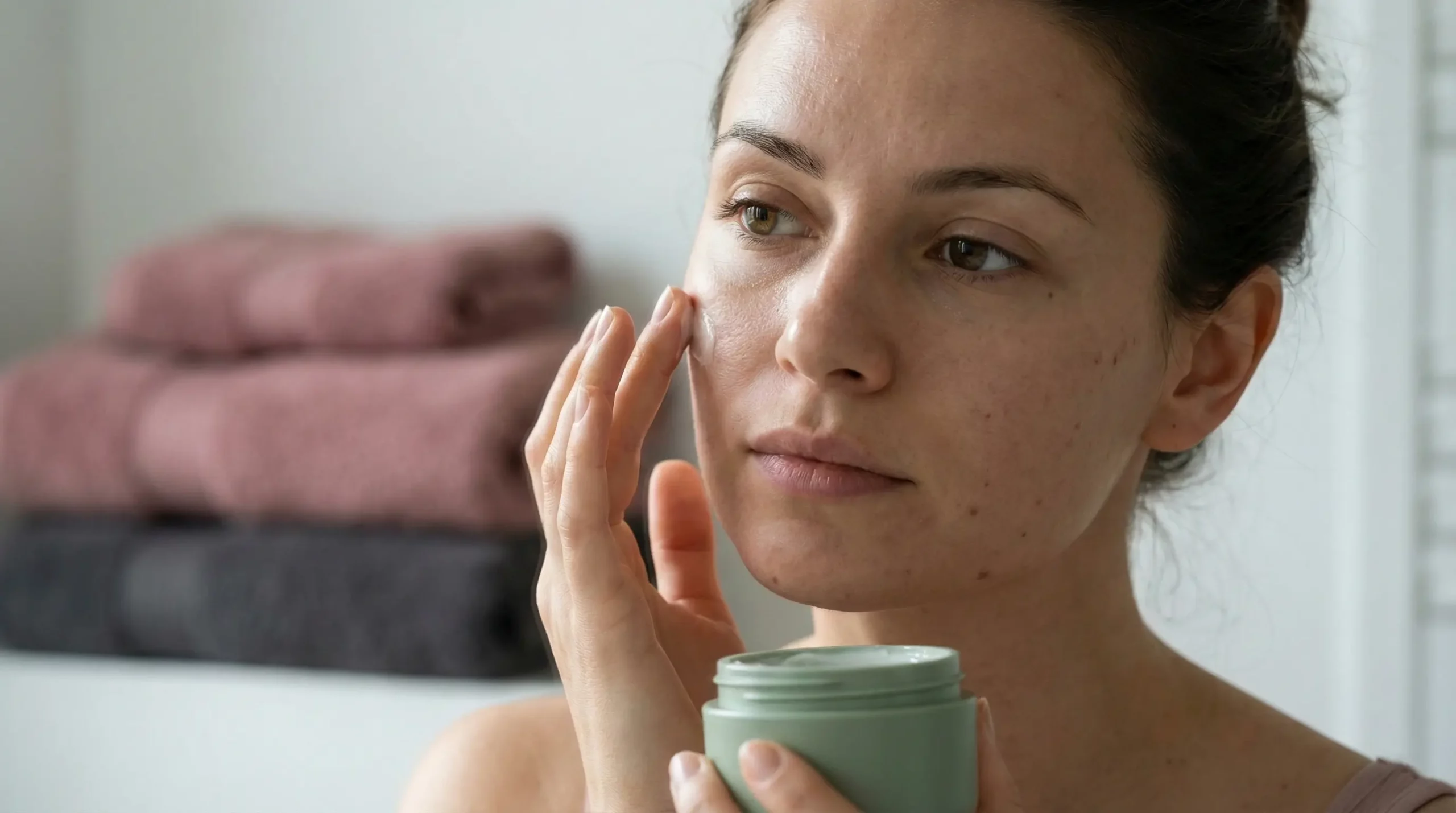
Never leave your skin “naked” after applying actives. A high-quality Moisturizer containing cholesterol, fatty acids, and ceramides is non-negotiable. This mimics the skin’s natural composition and “plugs” the gaps in a damaged barrier.
Expert Insight
Dr. Sam Bunting, a renowned cosmetic dermatologist and founder of her eponymous clinic in London, has frequently explained the necessity of a gentle approach on her professional educational platforms:
“In adult acne, the barrier is often already under-functioning. If you use aggressive leave-on products that cause dryness and peeling, you’re just adding fuel to the fire. You want to get the skin into a ‘virtuous cycle’ where the barrier is intact so it can actually tolerate the medications that clear the pores.”
Conclusion: Clarity Through Calm
Treating adult acne is an exercise in patience and biological respect. By shifting your focus from “attacking” the spots to “supporting” the skin, you eliminate the cycle of irritation that keeps breakouts hanging around. A Minimal Routine built on science-backed ingredients will always outperform a cabinet full of harsh chemicals.
Do you find that your skin feels tight after using acne treatments? Have you tried switching to a barrier-first approach? Share your thoughts and memories in the comments below!
If you’ve successfully cleared your skin while keeping your barrier healthy, share your routine with us using #sylvaia_com on social media!