Over-Cleansing & Skin Damage: Why ‘Squeaky Clean’ Causes Acne & How to Fix It
Table of contents
The Squeaky-Clean Myth: When “Clean” Becomes “Damaged”
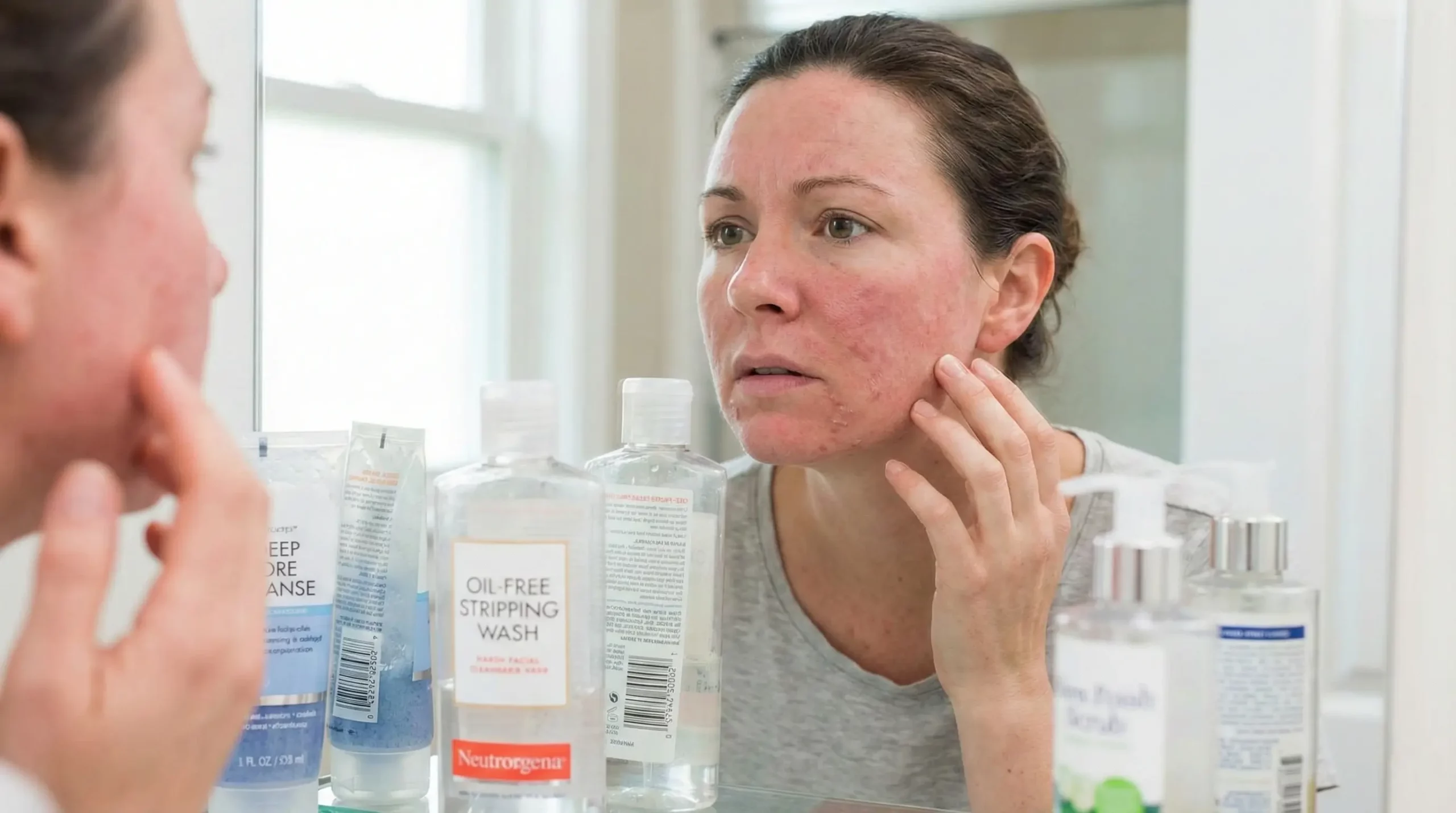
Clara, a 32-year-old teacher, was convinced her skin was simply “dirty.” To combat her persistent breakouts, she washed her face three times a day with a foaming wash and used a physical scrub every morning. “If it doesn’t feel tight and squeaky, it isn’t clean,” she believed. Yet, her acne was only getting redder, and her skin felt increasingly irritated.

What Clara didn’t realize is that the “squeaky-clean” feeling is actually the sound of your Skin Barrier screaming for help. In your 30s, your skin’s ability to produce natural lipids slows down. When you over-wash, you aren’t just removing dirt; you are stripping away the essential protection your skin needs to heal.
The Science of the “Acid Mantle”
Your skin is covered by a thin, slightly acidic film called the acid mantle. This biological shield is made of lipids, amino acids, and sweat. Its job is to keep moisture in and harmful bacteria out.
When you use harsh soaps or wash too frequently, you dissolve this shield. This creates a rebound effect: your brain receives a signal that the skin is dangerously dry, so it triggers a massive surge in sebum production. This is why many women find themselves battling Oily Skin & Makeup slippage by noon, despite having “dried out” their skin in the morning.
This rebound oiliness is often exacerbated by your internal chemistry. While over-cleansing creates an external oil surge, understanding how your skin’s internal rhythm dictates oil levels throughout the month can help you distinguish between a hormonal flare-up and a damaged barrier.
Is Your Cleansing Routine the Culprit?
Use this comparison table to determine if your current routine is supporting your skin or sabotaging it.
| Feature | Over-Stripped Skin | Healthy, Balanced Skin |
| Post-Wash Feel | Tight, “shiny” but dry, or stinging. | Soft, flexible, and comfortable. |
| Oil Production | Sudden “oil slick” a few hours later. | Steady, manageable oil levels. |
| Texture | Flaky patches alongside active acne. | Smooth and plump. |
| Sensitivity | Products sting upon application. | High tolerance for active ingredients. |
The 3 Ways Over-Cleansing Fuels Adult Acne
1. Micro-Tears and Inflammation
Aggressive scrubbing or using high-pH cleansers creates microscopic tears in the skin. These tears become entry points for P. acnes bacteria. Instead of a clean surface, you end up with a highly inflamed environment where acne can spread more easily.
2. Disrupting the Microbiome
Your skin is home to billions of “good” bacteria that naturally fight off acne. According to a study published by the National Institutes of Health (NIH), a healthy skin microbiome is essential for preventing inflammatory conditions. Over-cleansing kills these beneficial microbes, leaving the door wide open for acne-causing bacteria to thrive without competition.
3. The “Dry-Acne” Paradox
When skin is chronically dehydrated from over-washing, dead skin cells don’t shed properly. Instead, they clump together and clog the pores. This traps oil beneath the surface, leading to those deep, painful “blind” bumps that characterize adult acne.
The “Low-Friction” Reset: How to Cleanse for Clarity
To break the cycle, you need to transition to a more supportive Minimal Routine:
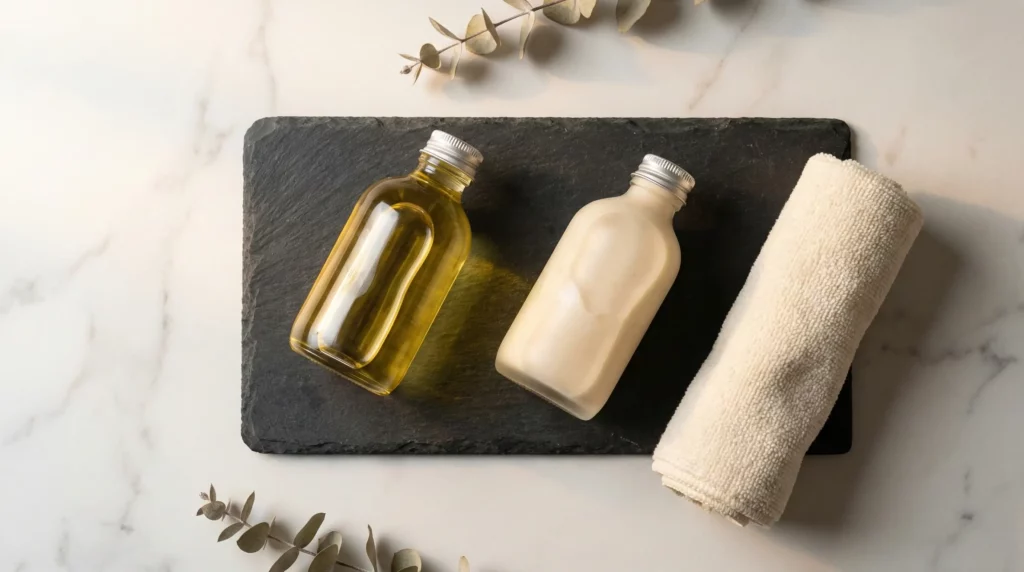
- The Double Cleanse: Instead of scrubbing, use a lipid-rich oil cleanser first to dissolve makeup and sunscreen. Follow it with a gentle, non-foaming wash.
- Check the Temperature: Hot water strips the skin’s natural oils instantly. Use lukewarm water to keep your barrier intact.
- Look for Barrier-Builders: Switch to products containing Ceramides. These act like “glue” between your skin cells, helping to rebuild the protection you may have washed away.
This “less is more” philosophy shouldn’t stop at your hairline. Often, the same harsh surfactants that strip your face are also present in your hair care, leading to a similar cycle of irritation and grease. Distinguishing between surface-level irritation and a deeper barrier issue on your scalp is just as vital for your overall beauty health.
Expert Insight
As Dr. Whitney Bowe, a world-renowned board-certified dermatologist, stated on her official social media platforms:
“If you’re scrubbing your skin until it’s squeaky clean, you’re actually damaging your skin’s microbiome and its natural barrier. We need to move away from the idea that ‘clean’ means ‘stripped’ if we want to heal chronic inflammation and acne.”
Conclusion: Less is More for the 30+ Glow
You cannot wash your way to clear skin, but you can heal your way there. By respecting your skin’s natural biology and reducing the friction in your routine, you allow your Skin Barrier to do what it does best: protect and repair.
Does your skin feel tight or “shiny” after you wash it? Have you ever tried the double-cleansing method? Share your thoughts and questions in the comments below!
If you’ve simplified your routine and seen results, share your progress with us using #sylvaia_com on social media!