Fall Back Hair Loss: How the Daylight Saving Time Change Triggers Shedding & A 3-Step Rescue Plan
Table of contents
- The “Fall Back” Phenomenon: It’s Not Just an Extra Hour of Sleep
- The Science: How a 1-Hour Shift Can Trigger a “Stress Shed”
- How Stress and Cortisol Directly Impact Your Hair
- Your 3-Step “Follicle Rescue” Plan for November
- The At-a-Glance Comparison: Normal vs. Amplified Shedding
- The Verdict: You Have More Control Than You Think
The “Fall Back” Phenomenon: It’s Not Just an Extra Hour of Sleep
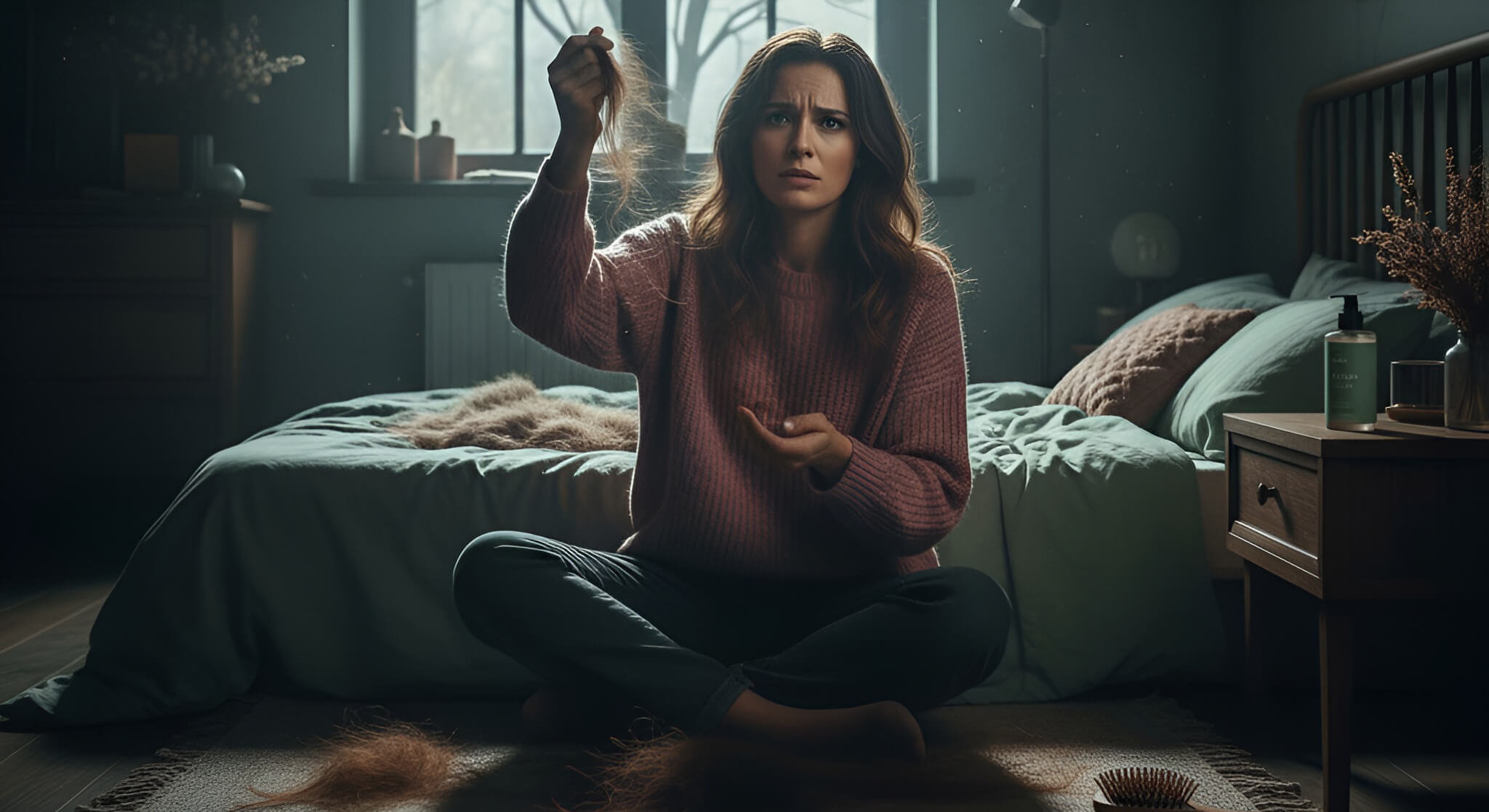
It’s early November, and you’re suddenly seeing more hair in your brush. It’s alarming. You’ve heard of seasonal shedding in autumn, but this feels different, more sudden. You’re not imagining it, and there’s a good chance a very specific, recent event is to blame: the end of Daylight Saving Time (DST).
That one-hour “fall back” might feel like a minor inconvenience or the bonus of an extra hour of sleep, but to your internal biology, it’s a significant disruption. This sudden jolt to your system is a physiological stressor that can have a direct and visible impact on your hair.
This “fall back” phenomenon is a significant physiological stressor, and it’s a connection many are starting to make. You’re not alone, as many people are noticing this surprising culprit for seasonal shedding.
We’re exploring the surprising scientific link between the clock change that happens around November 1st and your hair health. More importantly, we’ll share the 3-step “follicle rescue” plan you need to start right now.
The Science: How a 1-Hour Shift Can Trigger a “Stress Shed”
The connection between the clock change and your hair is a cascade of biological responses.
The Circadian Rhythm Shock
Your entire body, including your hair follicles, runs on a precise 24-hour internal clock called a circadian rhythm. This clock dictates your sleep, mood, and hormone release. The abrupt one-hour shift from DST is a form of “social jet lag” that throws this entire rhythm out of sync.
The Cortisol Connection
This disruption is a form of stress. Your body responds to this stress by producing more of its primary “fight-or-flight” hormone: Cortisol. High Cortisol is a known enemy of healthy hair.
The “Double Whammy” Effect
This is the key. This stress-induced spike in Cortisol happens at the same time your body is already experiencing natural seasonal shedding from the changing light cycles. The two triggers combine, creating a ‘double whammy’ that can amplify your hair loss, making it much more noticeable and causing significant anxiety.
How Stress and Cortisol Directly Impact Your Hair
This isn’t just a theory; there is a direct link. When Cortisol levels are high, it can prematurely signal your hair follicles to move from the active ‘growth’ phase (anagen) to the resting ‘shedding’ phase (telogen). As a 2021 Harvard University study confirmed, a key stress hormone (corticosterone in mice, the equivalent of Cortisol in humans) can directly keep hair follicles in a prolonged dormant state, preventing them from regenerating. This means more of your hair is programmed to fall out at once.
Your 3-Step “Follicle Rescue” Plan for November
This is the “How to Stop It” part of the guide. You can build a rescue plan to counteract this stress.
Step 1: Re-Anchor Your Clock (Morning Light)
The most powerful tool to reset your circadian rhythm is bright light. Within the first hour of waking up, get 10-15 minutes of direct morning sunlight (even if it’s cloudy). This is the strongest signal to your brain to stop producing sleep hormones and to reset your internal clock.
Step 2: Proactively Manage Stress (Cortisol Control)
Since you know your body is under stress, fight back. Introduce a 5-minute mindfulness or breathing exercise into your night routine to lower Cortisol levels before bed. This can help improve deep sleep quality, which is when your body repairs itself.
Step 3: Support Your Scalp (Internal & External)
Support your hair’s foundation. Internally, ensure you’re getting enough protein and iron (low iron can also cause shedding). Externally, use a serum with stimulating ingredients like caffeine to boost microcirculation to the scalp, delivering vital nutrients to your follicles.
The At-a-Glance Comparison: Normal vs. Amplified Shedding
| Feature | Normal Seasonal Shedding | Stress-Amplified Shedding (Post-DST) |
| Primary Cause | Biological response to less light (evolutionary) | High Cortisol + Circadian Disruption |
| Shedding Volume | Moderate Increase | Noticeable, Anxiety-Inducing Increase |
| Your Control Level | Low (It’s a natural cycle) | High (By managing stress & sleep) |
| Best Solution | Patience, good nutrition | Active stress reduction, sleep hygiene |
The Verdict: You Have More Control Than You Think
So, is it ‘just you’? No. That extra hair in your brush is a real phenomenon, and the stress from the ‘fall back’ clock change around November 1st is a major contributing culprit that amplifies the normal seasonal trend.
While you can’t stop the seasons or the clock from changing, you can control your body’s response to that change. By supporting your sleep cycle, actively managing your stress, and nourishing your scalp, you can build a more resilient foundation for your hair health and get through the shedding season with confidence and better mental health.
Related article:


