The “Pink Juice” Investigation: Is There Actually Watermelon in Glow Recipe’s Viral Toner?
Table of contents
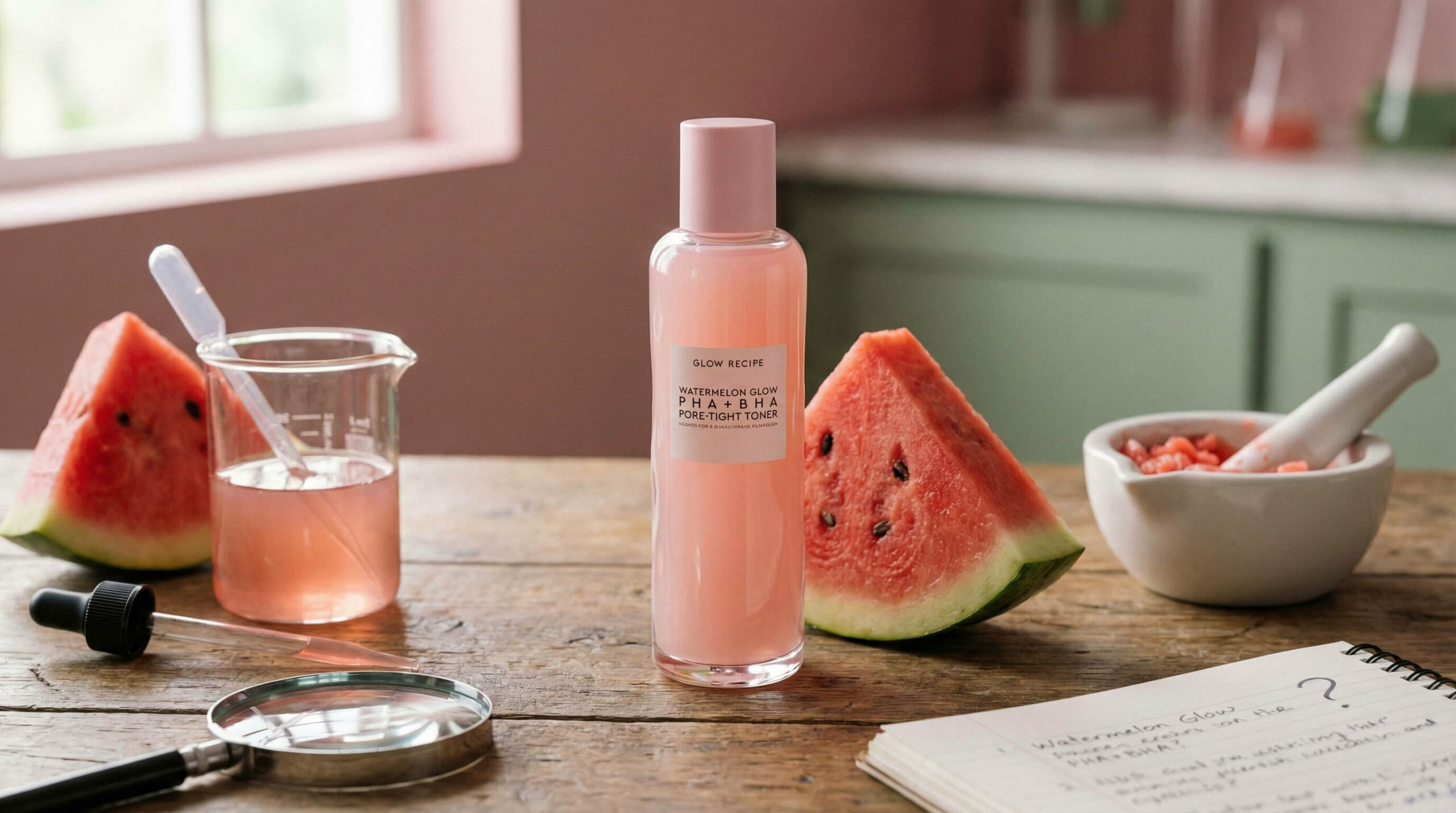
Chloe, 22, bought the famous pink bottle for one reason: it looked delicious.
Everywhere she scrolled on TikTok, influencers were raving about the “Watermelon Glow” toner, promising “Glass Skin” and poreless perfection. But as she held the heavy glass bottle in her bathroom, a wave of skepticism hit her.
Did she just pay $34 for pink sugar water and perfume? Or was there actual biology inside this bottle?
Chloe decided to ignore the pretty packaging and audit the only thing that doesn’t lie: The Ingredient List.
Decoding the “First 5” Rule
In the world of skincare, marketing is poetry, but the ingredient label (INCI) is law.
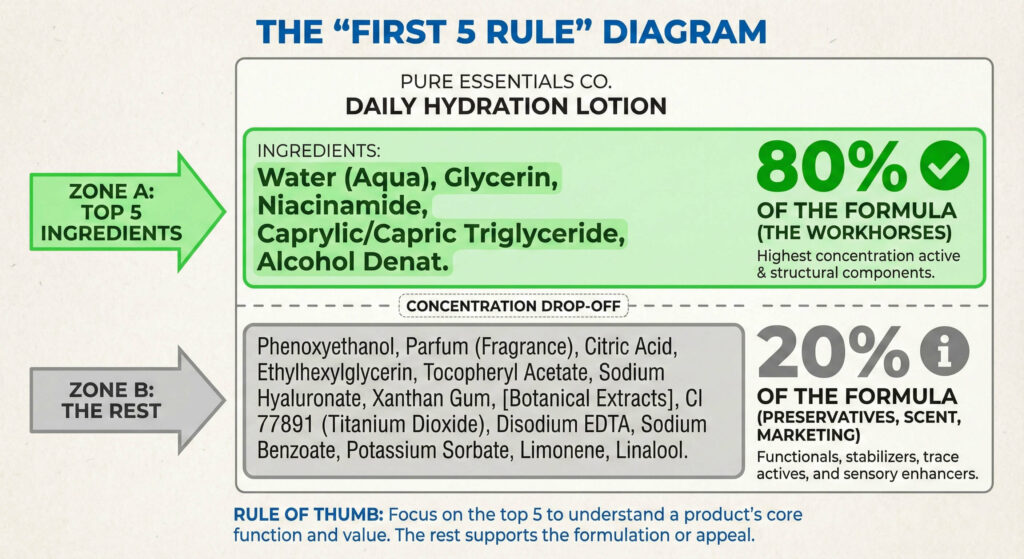
According to the U.S. Food and Drug Administration (FDA), ingredients must be listed in descending order of predominance. This means the First 5 Ingredients usually make up about 80% of the formula. Everything after that is often just a “fairy dusting” (less than 1%).
Chloe isn’t the only one dissecting labels to separate “clean” marketing from scientific reality. Another viral brand, Drunk Elephant, uses similar terminology to sell their philosophy. We put their specific claims to the test in our investigative review: We Tested Drunk Elephant’s “Biocompatible” Claim.
Chloe turned the bottle around. Here is what she found in the top spots:
- Water (Standard base).
- Cactus Extract (Wait, not Watermelon?).
- Gluconolactone (This is a PHA acid).
- Watermelon Fruit Extract (Citrullus Lanatus).
The Verdict: It is in the top 5.
This is rare. In many “fruit-based” skincare products, the actual fruit extract is listed near the bottom, right next to the preservatives. Chloe realized this wasn’t just a scent; it was a significant part of the formula.
Comparison: The Marketing vs. The Chemistry
Chloe learned that while the fruit is the “star” on the poster, it’s not the worker bee. Here is how the bottle actually works:
| Feature | The Marketing (The “Pink” Story) | The Chemistry (The Real Workhorse) |
| Hero Ingredient | Watermelon Extract. | Gluconolactone (PHA) & BHA. |
| Main Function | Soothes, hydrates, provides Amino Acids. | Exfoliates, unclogs pores, retexturizes. |
| Why it sells | “Yummy,” viral aesthetic, smells good. | Clinical efficacy (it actually smooths skin). |
| Sensation | Cooling and refreshing. | Slight tingle (active acid). |
The “Real” Hero Isn’t the Fruit (It’s the Acid)
While the Watermelon extract provides essential vitamins and amino acids to soothe the skin, the reason Chloe’s pores actually looked smaller wasn’t the fruit—it was Ingredient #3: Gluconolactone.
This is a PHA (Polyhydroxy Acid). Unlike harsh scrubs that tear the skin, PHAs gently dissolve the “glue” holding dead cells together.
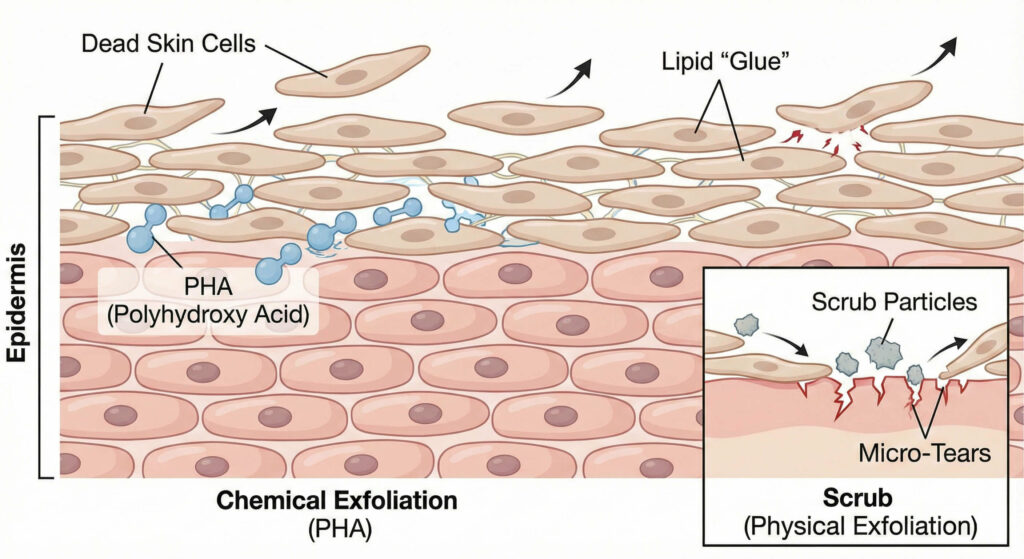
So why the Watermelon?
It acts as a Buffer.
If you put straight acid on your face, it burns. By mixing the acid into a base of Watermelon and Cactus extract (which are rich in electrolytes and moisture), the formula buffers the irritation. The fruit allows the acid to do its job without hurting you.
A Note on “Fragrance”
Chloe noticed one “cheat” in the formula. The delicious watermelon scent isn’t 100% from the fruit. The label does list “Fragrance (Parfum).”
However, because the rest of the formula is packed with soothing ingredients, her skin tolerated it well.
While this particular formula uses synthetic fragrance, many “fruit” products rely on essential oils to achieve that yummy scent. However, just because a scent comes from a plant doesn’t mean it’s safer for sensitive skin. We explore the risks of natural fragrance in our guide: Is Using Essential Oils in Your Skincare Products a Good Idea?
The Conclusion
Chloe almost returned the bottle because she thought it was a gimmick. She kept it because the chemistry checked out. It wasn’t just sugar water; it was a smart exfoliating acid disguised as a treat.
Go check your favorite fruit serum right now.
Is the fruit listed in the top 5 ingredients, or is it buried at the bottom with the preservatives? Tell us what you find in the comments below!