The “8-Hour” Hack: Why Your Cotton Pillowcase is Ruining Your Hair
Table of contents
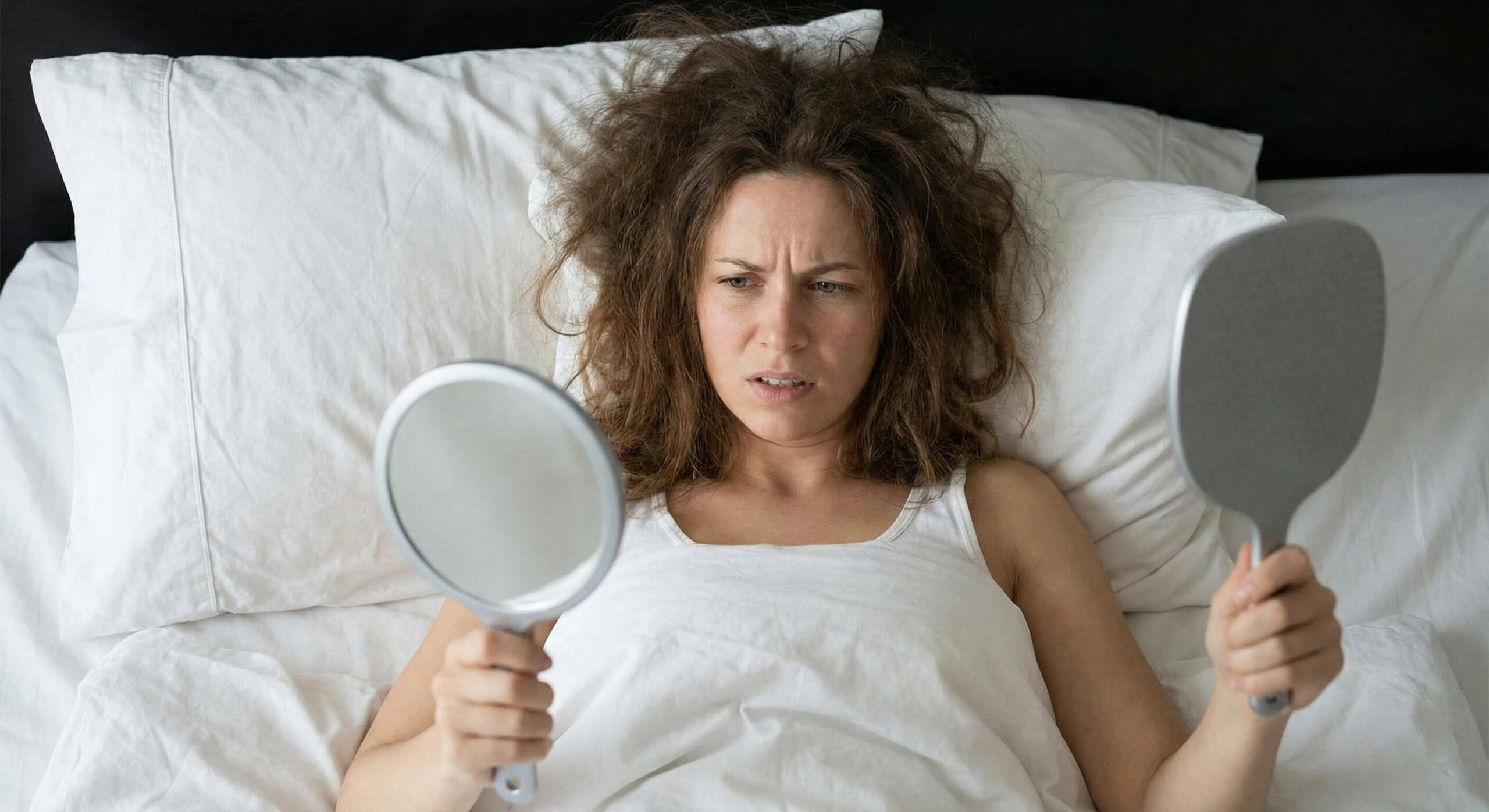
Sarah spent a fortune on her hair. She bought Olaplex, high-end serums, and bond-building masks. She would go to bed with a hydrated, bouncy blowout, only to wake up eight hours later with a tangled, dry “bird’s nest.”
Optimizing your sleep environment is only half the battle; the quality of the sleep itself is the other half. While a silk pillowcase protects your hair externally, deep sleep is required to repair your cells internally. We explored the biological impact of rest on your appearance in our guide: Sleep vs. Water: Which One Actually Fixes “Period Skin”?
She thought she was a restless sleeper. She wasn’t. She was just sleeping on the wrong surface.
Sarah was resting her delicate hair strands on cotton—a fabric that, on a microscopic level, acts like sandpaper. She didn’t need another product; she needed to change the fabric she spent one-third of her life lying on.
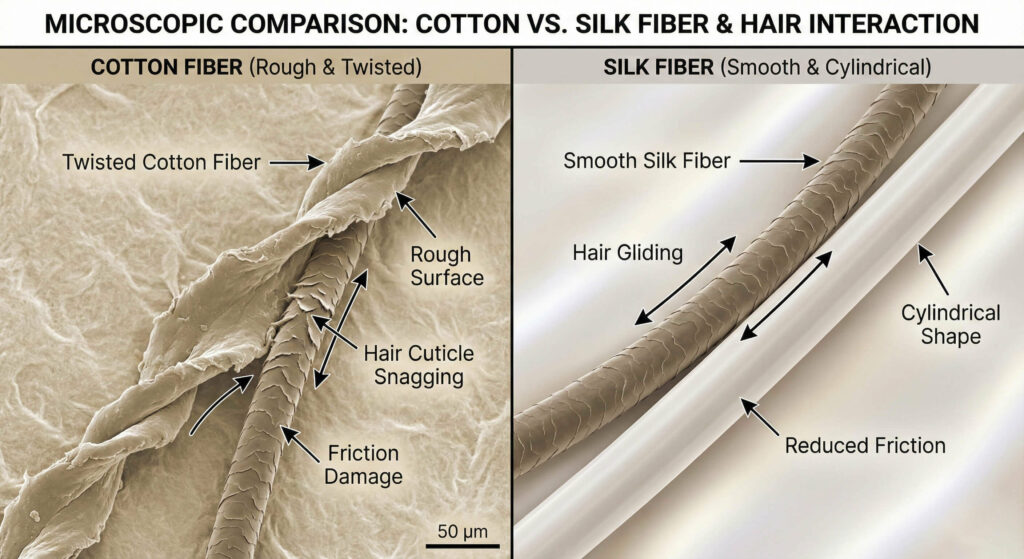
The Science: Cotton Acts Like Velcro
Standard cotton pillowcases are problematic for hair for two specific reasons: Friction and Absorbency.
- Friction: Cotton fibers are short and twisted. When you move your head at night, these fibers snag the hair cuticle (the outer layer), lifting it up. A lifted cuticle equals frizz and tangles.
- Hygroscopy (Absorbency): Cotton is designed to absorb moisture (think of a cotton towel). It doesn’t know the difference between sweat and your expensive hair serum. It sucks the natural oils out of your hair strands while you sleep, leaving them brittle.
If you have been sleeping on cotton for years, your hair is likely already suffering from this chronic “nighttime dehydration.” To replenish the moisture that your bedding has stolen, we recommend pairing your new pillowcase with a strong daily hydrator from our list: Ranking the Best Leave-in Conditioners for an Instant Shine Boost.
According to research published in the Journal of Cosmetic Dermatology, friction against bedding is a leading cause of “weathering” damage in hair fibers, leading to split ends and breakage that no conditioner can reverse.
Comparison: The Dehydrator vs. The Smoother
Sarah swapped her cotton case for a Mulberry Silk one. Here is the immediate difference:
| Feature | Cotton Pillowcase (The Dehydrator) | Silk Pillowcase (The Smoother) |
| Friction Level | High. Acts like Velcro, snagging hair. | Low. Hair “glides” over the surface. |
| Moisture | Absorbs oils and hydration. | Retains moisture (non-absorbent). |
| Temperature | Traps heat (sweaty). | Breathable / Cool to the touch. |
| Price | Low ($10 – $20). | High ($40 – $90). |
Silk vs. Satin: Do You Need to Spend $80?
Sarah hesitated at the price tag of real silk. She considered “Satin” instead. It is important to know the difference:
- Silk: A natural protein fiber produced by silkworms. It contains amino acids that are compatible with human skin and hair. It is breathable and luxurious.
- Satin: This is not a fabric, but a weave. Most cheap “satin” pillowcases are actually Polyester (plastic). While they are smooth and good for frizz, they are not breathable. You might wake up sweating.
The Verdict: If you can afford it, go for real Silk. If you are on a budget, Polyester Satin works for frizz, but your skin might not breathe as well.
Decoding the “Momme” Count
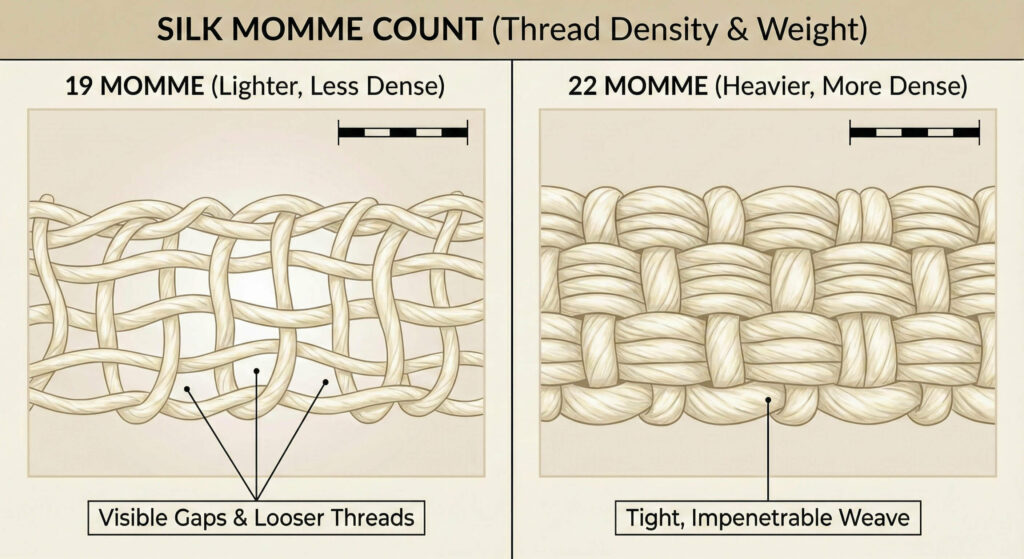
If you buy silk, look for the “Momme” (mm) count. This is the measure of the silk’s weight and density.
- 19 Momme: Entry-level (might tear after a few washes).
- 22 Momme: The Gold Standard. Durable, thick, and ultra-smooth.
- 30 Momme: Luxury weight (very expensive).
Sarah chose a 22 Momme Mulberry Silk case.
The Result
The first morning, Sarah woke up and her hair looked… exactly how she left it. It wasn’t matted to her head. The blowout still had bounce. By stopping the nightly friction, she stopped the daily damage.
Check your pillow right now.
Is it cotton? If you wake up with frizz, your bed might be the enemy. Tell us if you’ve made the switch in the comments below!