Sun Damage Myths: The Hidden “Invisible Aging” Most People Miss Every Morning.
Table of contents
- The “No Burn, No Damage” Fallacy: Understanding Invisible Aging
- 3 Sun Protection Myths That Are Quietly Aging Your Skin
- The Biological Cost: How UV Rays Break Down Your 30s Glow
- Comparison Table: Surface Protection vs. Deep Cellular Repair
- The “Invisible Shield” Protocol: Your Morning Anti-Aging Routine
- Expert Insight
- Conclusion: Consistency is the Ultimate Anti-Aging Secret
The “No Burn, No Damage” Fallacy: Understanding Invisible Aging
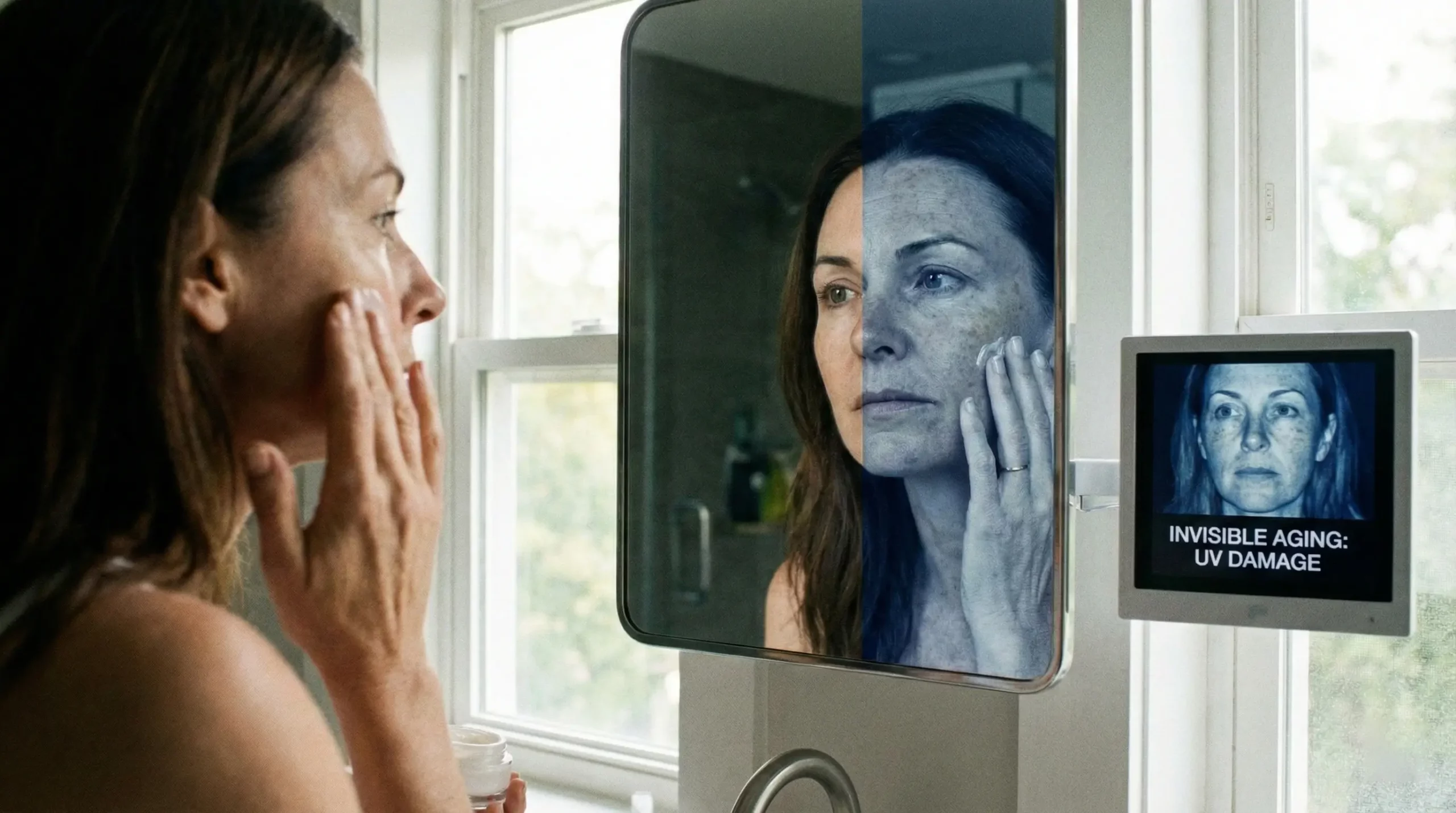
For many women in their 30s, sun protection is only a priority when the skin starts to feel warm or look pink. This is the biggest misconception in modern skincare. Sunburn is caused by UVB rays, which affect the surface of the skin. However, the true architect of wrinkles, sagging, and dark spots is UVA radiation.
UVA rays are “invisible agers.” They don’t cause the pain of a burn, but they penetrate much deeper into the dermis, where they silently dismantle the structures that keep your skin firm. If you only wear sunscreen when you expect to “burn,” you are leaving your skin’s foundation unprotected for the other 350 days of the year. This cumulative exposure is what dermatologists call photo-aging, and it is the primary reason for Anti-Aging After 30: The 10 Habits That Age Skin Faster.

3 Sun Protection Myths That Are Quietly Aging Your Skin
1. “I’m indoors or in the car, so I’m safe from UV.”
Standard glass windows in homes and cars block most UVB rays, but they are practically transparent to UVA rays. If you sit near a window or spend time driving, one side of your face is receiving a steady dose of “aging” radiation. This creates asymmetrical collagen loss and deeper fine lines over time.
2. “My foundation has SPF 15, so I don’t need sunscreen.”
To achieve the SPF rating listed on a makeup bottle, you would need to apply roughly seven times the amount of foundation you normally use. Because makeup is applied thinly, the actual protection you receive is negligible. Think of makeup SPF as a “bonus,” not your primary shield.
3. “Sun damage only happens during summer vacations.”
UV radiation is present 365 days a year. Even on a rainy day in January, up to 80% of UV rays penetrate the clouds. Winter sun can be particularly deceptive because the cold air masks the sensation of sun exposure, leading to issues like Dry Scalp vs. Winter Dandruff: How to Tell Which One is Flaking in the Cold as the skin’s barrier is compromised by environmental stress.
The Biological Cost: How UV Rays Break Down Your 30s Glow
When UV rays hit your skin, they trigger the production of Matrix Metalloproteinases (MMPs). These are enzymes that effectively act like microscopic scissors, cutting through your Collagen and Elastin fibers.
In your 20s, your body can keep up with the repairs. After 30, however, your natural cellular turnover slows down. The “invisible damage” accumulates, leading to a loss of elasticity that doesn’t show up immediately but manifests as significant sagging and deep-set wrinkles a few years later. This is why daily protection is not about today’s look—it is an investment in your skin’s architecture for the next decade.
Comparison Table: Surface Protection vs. Deep Cellular Repair
| Feature | Physical/Chemical Sunscreen | Antioxidant Serums (Vitamin C) |
| Primary Goal | Deflects or absorbs UV rays before they enter. | Neutralizes free radicals that bypass sunscreen. |
| Layer of Action | Surface of the skin. | Deep within the epidermis/dermis. |
| Best For | Preventing immediate DNA damage. | Repairing oxidative stress and brightening. |
| Consistency | Must be reapplied every 2 hours. | Usually applied once in the morning. |
| Required For | Everyone, every single day. | Essential for women over 30 for repair. |
The “Invisible Shield” Protocol: Your Morning Anti-Aging Routine
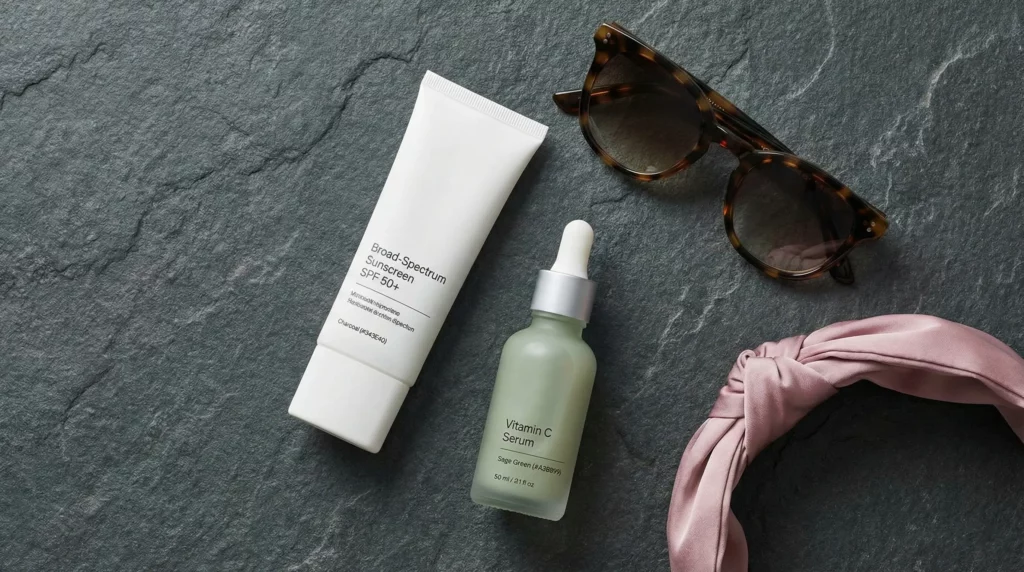
To truly combat invisible aging, you need a two-layered defense strategy.
- The Antioxidant Base: Apply a Vitamin C or Ferulic Acid serum every morning. These Antioxidants act as a second line of defense. If a UV ray manages to penetrate your sunscreen, the antioxidants neutralize the resulting free radicals before they can damage your collagen.
- The 2-Finger Rule: Use a broad-spectrum SPF 30 or higher. Apply two full strips of sunscreen to your index and middle fingers—this is the exact amount required for your face and neck to ensure you are actually getting the advertised SPF.
- The Reapplication Hack: If you wear makeup, use an SPF powder or a fine mist for touch-ups. This ensures you maintain your “invisible shield” without ruining your Flawless Base.
Expert Insight
According to a famous influencer who has spoken with our team regarding the “long-game” of beauty:
“The most expensive anti-aging cream in the world cannot fix the damage that five minutes of unprotected morning sun does daily. We call it ‘invisible aging’ because you don’t see it today—you see it in the mirror ten years from now. Sunscreen isn’t a beauty product; it’s the most effective anti-aging medicine we have.”
Conclusion: Consistency is the Ultimate Anti-Aging Secret
You don’t need a 10-step routine to look youthful; you need a consistent one. By debunking the myths of “seasonal” protection and recognizing the reality of UVA penetration, you take control of your skin’s biological clock. Protection is the ultimate act of self-love for your future self.
Did you think you were safe from the sun on cloudy days? Have you checked if your daily moisturizer actually has enough SPF? Share your memories and daily routines in the comments below!
Show us your “morning shield” setup using #sylvaia_com on social media!