The “Acetone Frost”: Why Clara Swapped Her Remover to Save Her Peeling Nails
Table of contents
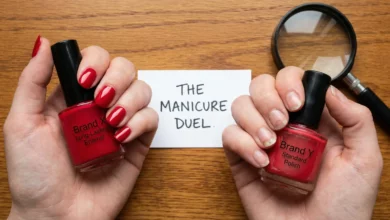
Clara loved the look of a fresh, dark red manicure. But she dreaded the removal process.
While this classic shade is a staple, the heavy pigment often requires aggressive scrubbing to remove, exacerbating the damage. If you are looking to switch up your palette to shades that might be easier to maintain (and remove) this season, check out our trend report: Stop Using Classic Red: These Are The Winter Nail Colors Everyone Wants.
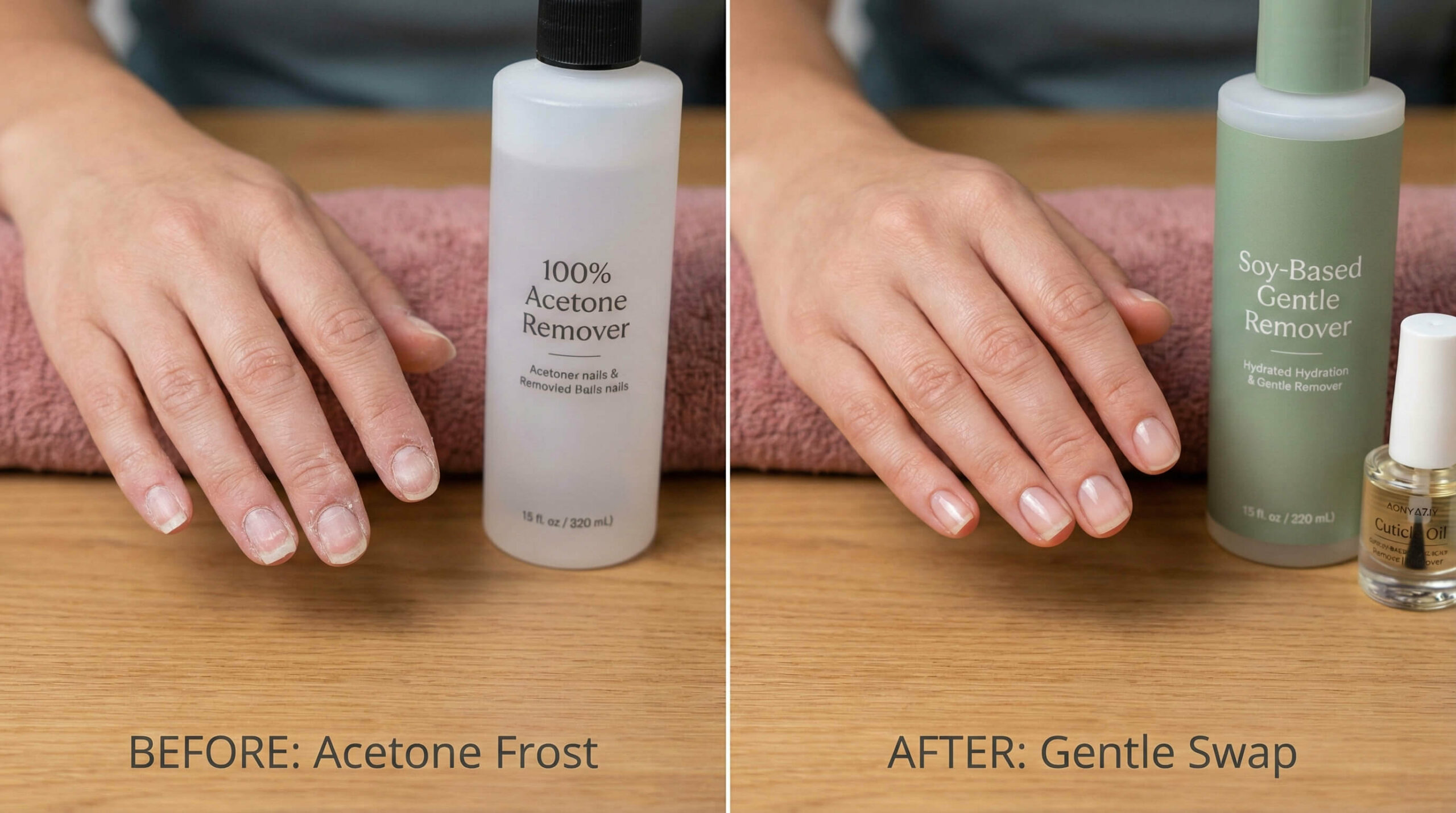
Every Sunday night, she would grab her cotton balls and a $2 bottle of standard nail polish remover. As she scrubbed away the red paint, the skin around her nails would turn instant white—a dry, chalky “frost” that looked and felt like sandpaper.
This immediate dehydration is a sign that the skin barrier has been compromised. To repair this specific type of chemical dryness on the hands and cuticles, we recommend pairing your gentle remover with a dedicated heavy-duty treatment from our review: Comparing 3 Popular Hand Creams for Preventing Cracks.
Worse, her actual nails were peeling in layers at the tips. Clara thought she just had “weak genes” or that the polish itself was to blame.
She was wrong. The culprit was the Acetone. She was essentially soaking her fingertips in a harsh paint thinner that was dissolving the glue holding her nails together.
Why Your Nails Are Peeling (It’s Not the Polish)
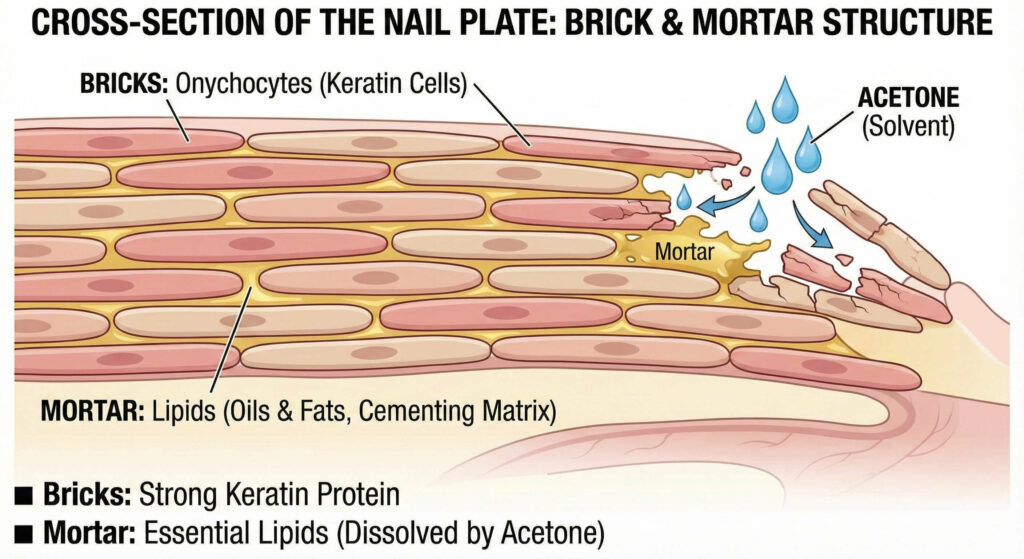
Your nail plate isn’t one solid block; it’s made of layers of dead cells called Onychocytes, held together by a natural mix of moisture and lipids (oils).
Acetone is a solvent designed to dissolve chemicals, but it doesn’t know when to stop. It dissolves the polish, but it also strips those essential lipids. Without that “intracellular glue,” the layers of your nail delaminate and peel apart like an old pastry.
The American Academy of Dermatology (AAD) specifically warns against using acetone-based removers if you have brittle nails, as it dehydrates the nail plate and damages the surrounding cuticle skin.
Comparison: The Stripper vs. The Melter
Clara decided to test a Soy-Based Remover against her usual Acetone bottle. The difference in experience was night and day.
| Feature | 100% Acetone (The Stripper) | Soy/Oil-Based Remover (The Melter) |
| Active Ingredient | Acetone (Solvent). | Soy Methyl Ester, Essential Oils. |
| Speed | Fast (Dissolves instantly). | Slow (Needs 30 seconds to soak). |
| After-Feel | Dry, chalky, tight skin. | Oily, hydrated, soft cuticles. |
| Smell | Chemical fumes (headache). | Lavender or un-scented. |
| Nail Health | Causes peeling/brittleness. | Conditions and nourishes. |
The Official Ranking (Hydration First)
Clara tested three top-rated “non-drying” removers to see which one could remove red polish without ruining her hands.
3. The Drugstore Gem: Mineral Fusion Nail Polish Remover
This is the best bridge between the two worlds. It is non-acetone, but it still feels like a traditional remover.
- Why it works: It uses milder solvents that cut through dark colors surprisingly fast, but it leaves behind a slight moisturizing film instead of a white frost.
- Best For: People on a budget who want to avoid the “chalky” look.
2. The “Smart” Hybrid: Zoya Remove+
This is a cult favorite for a reason. It technically contains mild solvents, but it acts as a 3-in-1: It’s a polish remover, a nail prep (cleaner), and a conditioner.
- Why it works: It removes polish faster than any other non-acetone product, but it leaves the nail plate looking pink and hydrated, never stripped.
- Best For: Impatient people. It’s the fastest option that is still safe.
1. The Oil Miracle: Ella+Mila Soy Polish Remover
This was the game-changer for Clara. It has zero harsh solvents. It is essentially a bottle of Soy and Lavender oil.
- Why it works: It literally “melts” the polish off. When you are done, your hands look like you just applied a high-end cuticle oil.
- The Catch: You cannot scrub. You have to be patient (see the technique below).
- Best For: Severely damaged, peeling, or post-gel nails.
The “Soak, Don’t Scrub” Rule
If you switch to an oil-based remover, you have to change your technique.
Rubbing aggressively creates friction and drives pigment into the nail plate (staining it).
Clara’s New Method:
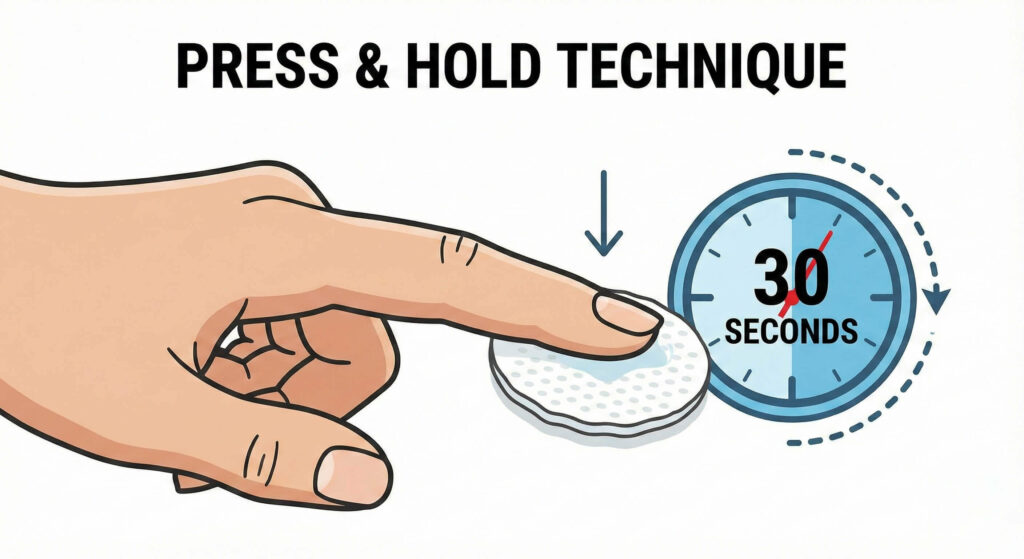
- Saturate the cotton pad with the soy remover.
- Press it firmly onto the nail and hold it still for 30 to 45 seconds. Let the oil break down the bond.
- Wipe downward once. The polish should slide right off.
The Result
After one month of using the Soy Remover, Clara’s nails stopped peeling. The “white frost” never returned, and her cuticles are so healthy she doesn’t even need to trim them.
Do you use the “cheap stuff” or have you upgraded?
Are you willing to scrub a little longer to save your nail health? Tell us your remover preference in the comments below!