The Clock-Checking Trap: How to Stop Calculating Hours and Fall Back Asleep Faster
Table of contents
The Psychology of “Sleep Math”
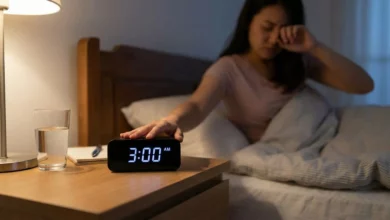
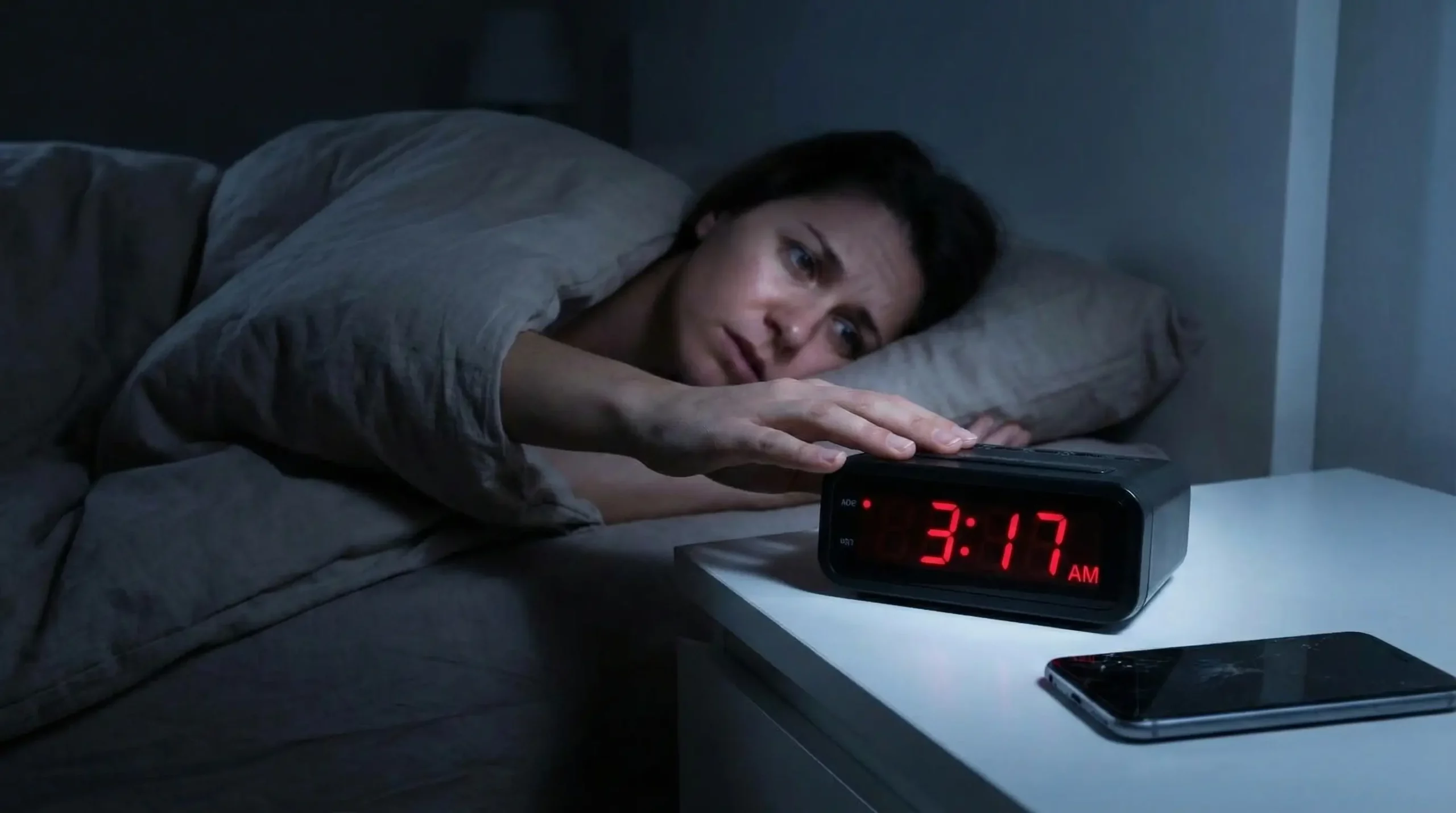
It usually starts around 2:45 a.m. You wake up, reach for your phone, and immediately perform a mental calculation: “If I fall asleep right now, I’ll get 4 hours and 12 minutes of rest.” This calculation, often called “Sleep Math,” is one of the most destructive habits for your Mental Health and overall recovery.
When you check the clock, you aren’t just looking at the time; you are triggering a biological stress response. The moment you realize how little sleep is left, your brain perceives a “threat” to your productivity and health for the next day. This realization spikes your Cortisol levels, moving you further away from the parasympathetic state required for Deep Sleep.

The Trap: Comparison Table
Understanding the difference between a reactive response and a restorative protocol is the key to falling back asleep faster.
| Feature | The Clock-Checking Trap (Reactive) | The No-Clock Protocol (Restorative) |
| Immediate Action | Checking phone/clock for the exact time. | Keeping eyes closed or staying in the dark. |
| Mental Process | Calculating remaining hours (Sleep Math). | Focus on breathing or sensory grounding. |
| Hormonal State | Spike in Cortisol and Adrenaline. | Maintenance of Melatonin levels. |
| Result | Hyperarousal and prolonged wakefulness. | Increased likelihood of entering the next cycle. |
| Beauty Impact | Increased inflammation and puffiness. | Continued Cellular Repair. |
Why the Blue Light Isn’t Your Only Enemy
We often hear that blue light from phones suppresses melatonin, but the Cognitive Load of knowing the time is arguably more damaging. Checking the clock turns a natural mid-night awakening—which is often just a transition between cycles—into a case of Night Waking vs. Insomnia.
When your brain registers the time, it begins to simulate the stress of the upcoming day. This mental stimulation is enough to keep your heart rate elevated, making it physically impossible to drift back into the lighter stages of NREM sleep. This persistent state of “wired but tired” is a primary contributor to Burnout vs. Tiredness.
3 Steps to Stop Calculating and Start Resting

1. The Physical Blackout
The most effective way to stop the trap is to remove the temptation. Place your phone in a drawer or on the opposite side of the room. If you use a bedside clock, turn the face away from the bed. If you don’t know the time, you cannot do the math.
2. Implementation of “Cognitive Shuffling”
Instead of worrying about hours, give your brain a low-stakes task. Think of a random word, such as “Cream,” and visualize objects starting with each letter (C-Cloud, R-Rain, E-Emerald…). This occupies the brain’s “active” center without triggering the stress of your to-do list.
3. Use the “First 10 Minutes” Rule
If you find yourself spiraling into worry, use the rescue plan for 3 a.m. wake-ups. This involves grounding your physical body rather than engaging with your thoughts. By focusing on the weight of your limbs against the mattress, you signal to your nervous system that you are safe to rest.
The Beauty and Health Connection
Quality sleep is your most powerful anti-aging tool. During uninterrupted rest, your body focuses on Collagen synthesis and the repair of the Skin Barrier. Chronic “Sleep Math” leads to fragmented rest, which manifests as:
- Dark Circles: Caused by poor lymphatic drainage and high stress.
- Skin Sensitivity: A result of the inflammatory response to high cortisol.
- Scalp Issues: High stress can even trigger an Oily Scalp or itchy flakes.
Expert Insight
A famous influencer who has spoken with our team regarding high-performance wellness noted:
“The greatest hack I ever learned wasn’t a supplement or a tea; it was turning my clock toward the wall. Once I stopped measuring my sleep, my body actually started performing the rest it needed. You cannot force sleep through math; you have to invite it through peace.”
Conclusion: Neutralize the Night
Your value the next day is not strictly determined by the exact number of minutes you slept. By breaking the clock-checking habit, you reduce the power that “Sleep Math” has over your Mental Health. Treat your midnight awakenings as a neutral event, and your body will return to its natural rhythm.
Do you have a habit of checking your phone the second you wake up? How many times do you do “Sleep Math” in a single night? Share your memories and struggles in the comments below!
Show us your “No-Phone Zone” bedroom setup using #sylvaia_com on social media!