HEV Light: What is Blue Light and How It Causes Invisible Aging
Table of contents
The Invisible Glow: What is HEV Light?
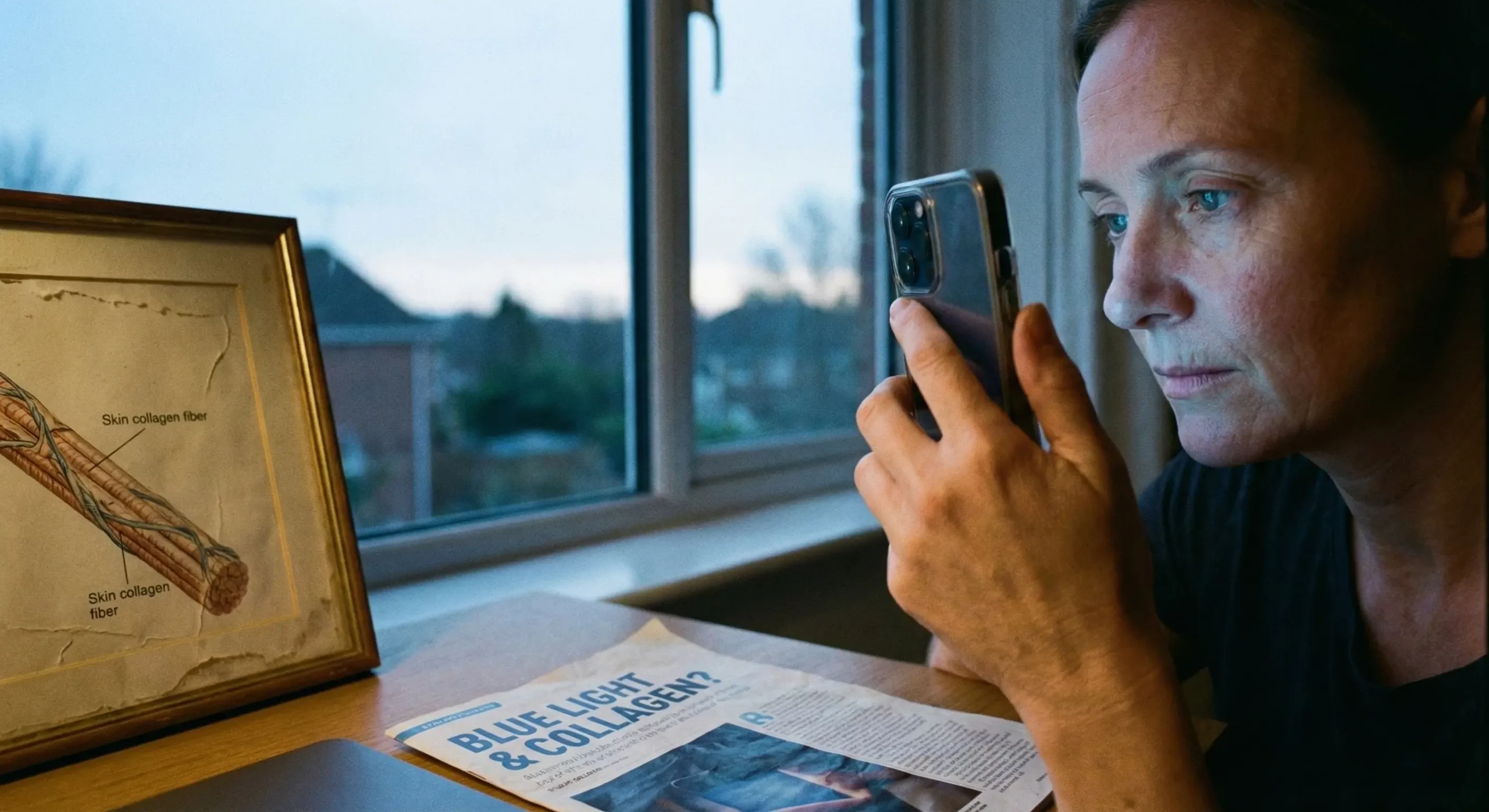
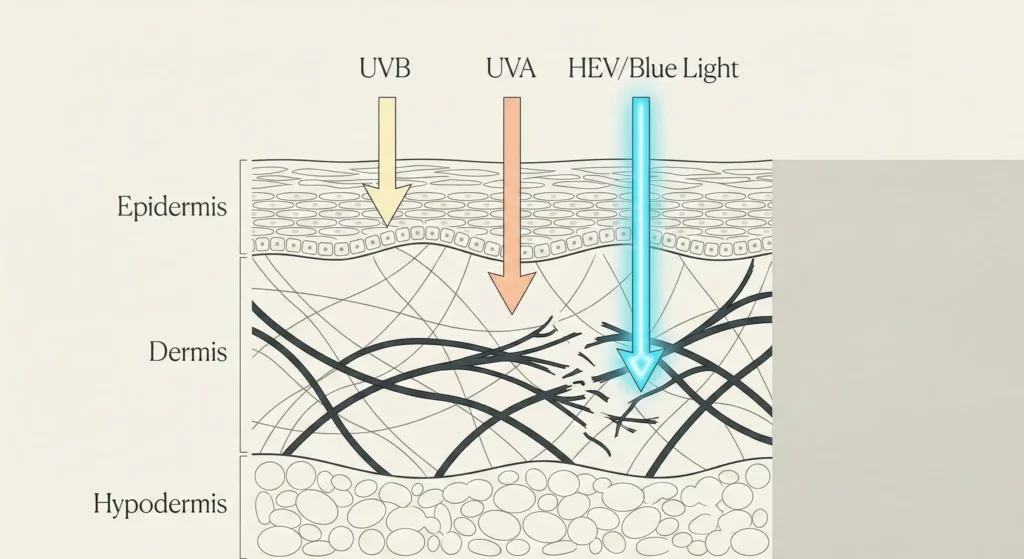
We have been trained to fear the sun’s UV rays, but a new digital predator is emerging in the palms of our hands. Modern smartphones, particularly those with vibrant OLED screens, emit high-energy visible (HEV) light—more commonly known as Blue Light. While this light doesn’t cause the immediate DNA damage associated with a sunburn, it possesses a unique ability to penetrate deeper into the dermis than both UVA and UVB rays combined.
For women over 30, this “digital pollution” is becoming a primary driver of Invisible Aging. Because we spend hours each day inches away from our screens, the cumulative exposure can be significant. Understanding the difference between Sun Damage Myths: The Hidden “Invisible Aging” Most People Miss and digital damage is the first step in protecting your skin’s structural integrity.
Smartphone Blue Light vs. Solar UV: The Comparison Table
The way digital light impacts your skin cells is fundamentally different from the way the sun does, making traditional SPF only one part of the solution.
| Feature | Solar UV Radiation (UVA/UVB) | Digital Blue Light (HEV) |
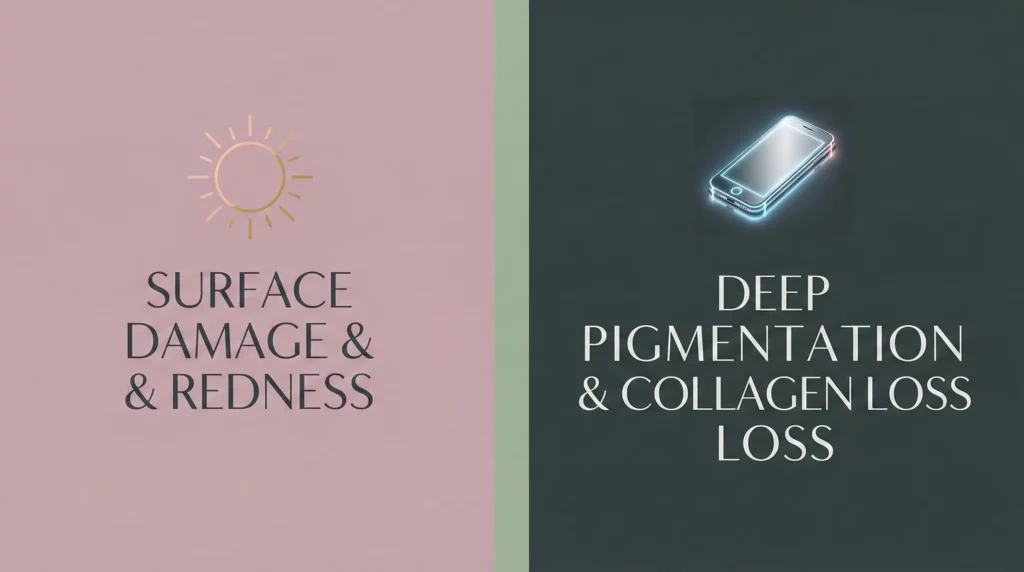
| Primary Effect | DNA damage and surface burns. | Oxidative stress and “Digital Melasma.” |
| Penetration Depth | Epidermis and upper Dermis. | Deep Dermis (where collagen lives). |
| Exposure Timing | Mostly daytime/outdoors. | Constant (Day and Night). |
| Impact on Collagen | Immediate structural breaking. | Slow, chronic degradation via free radicals. |
| Protection | Standard chemical/physical SPF. | Iron Oxides and high-dose Antioxidants. |
The Biological Breakdown: How Screens Steal Your Collagen
Blue light induces a state of “oxidative stress” in the skin. When HEV light hits your skin cells, it triggers the production of unstable molecules called free radicals. These molecules act like microscopic vandals, attacking your Collagen and elastin fibers.
1. The “Digital Melasma” Effect
Unlike UV rays, blue light is particularly effective at stimulating melanocytes (pigment-producing cells). This leads to long-term hyperpigmentation and uneven skin tone, often referred to as “Digital Melasma.” This is why your Hormonal Skin After 30 might feel more reactive or “muddied” even if you are diligent with sunscreen.
2. The Circadian Disruption
HEV light doesn’t just damage the skin directly; it attacks it indirectly by suppressing melatonin. This interferes with your Sleep Architecture, preventing you from entering the Deep Sleep phase where 90% of skin repair occurs. As we discussed in REM vs. Deep Sleep: How Your Sleep Architecture Impacts Your Skin, without this repair window, the damage from the day becomes permanent.
According to a study published in the Journal of Biomedical Physics & Engineering, even short exposures to the blue light emitted by electronic devices can increase the production of reactive oxygen species (ROS) in human skin, leading to accelerated aging.
3 Steps to “Screen-Proof” Your Skin
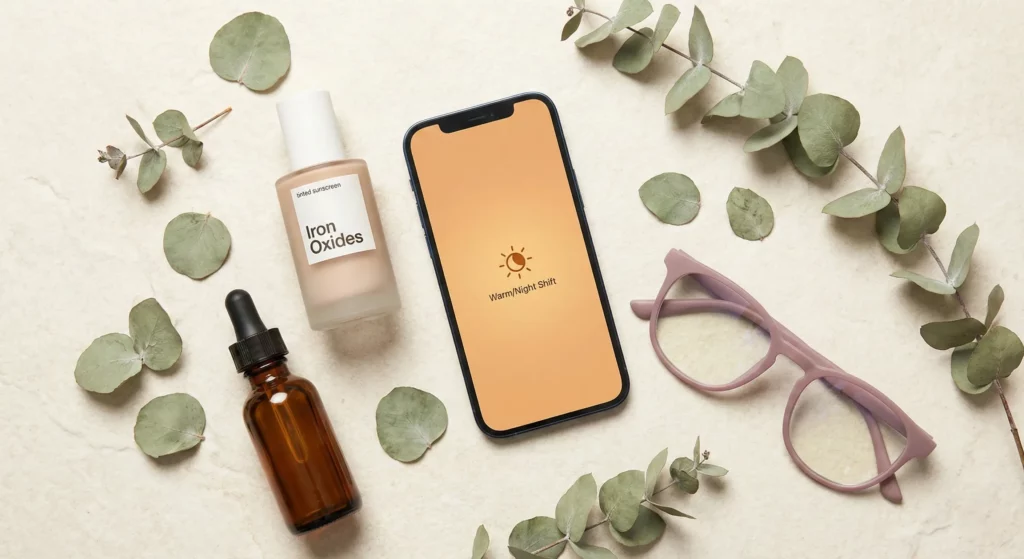
You don’t have to give up your smartphone to save your skin. You just need a better defense strategy.
- Use Iron Oxides: Standard sunscreens often miss blue light. Look for “tinted” sunscreens or foundations containing Iron Oxides. These minerals act as a physical shield specifically against HEV light.
- The Antioxidant Buffer: Apply a Vitamin C or Niacinamide serum every morning. These Antioxidants neutralize the free radicals generated by your screen before they can reach your collagen.
- Night Mode is Non-Negotiable: Switch your devices to “Night Shift” or “Blue Light Filter” mode permanently. This shifts the display toward warmer tones, significantly reducing the amount of HEV radiation hitting your face.
Expert Insight
“We are seeing a new type of aging pattern in the clinic—pigmentation and sagging that is more pronounced on the side of the face where people hold their phones. Blue light from screens penetrates deep enough to reach the skin’s ‘scaffold’ (the collagen), causing it to lose its bounce faster. If you’re spending 6 hours a day on a screen, you need to treat it with the same protective respect as an afternoon at the beach.”
— Dr. Shereene Idriss, Board-Certified Dermatologist and founder of Idriss Dermatology.
Conclusion: Balancing the Digital Life
The digital world is here to stay, but your skin’s youthful structure doesn’t have to be the price you pay. By recognizing smartphone screens as a source of Invisible Aging and adapting your Skincare Routine to include blue-light blockers, you can maintain your glow in a high-tech world. Remember, the best anti-aging routine is one that accounts for the light you see and the light you don’t.
Do you check your screen time and wonder why your skin looks tired? Have you noticed more ‘tech-neck’ or dullness lately? Share your thoughts and observations in the comments below!
If you’ve switched your phone to “Eye Comfort” mode to save your skin, show us your digital-wellness setup using #sylvaia_com on social media!