Sleep vs. Water: Which One Actually Fixes “Period Skin”?
Table of contents
Bella, 26, carried a one-gallon water bottle with her everywhere she went. She treated it like a security blanket.
Whenever her skin started to look dull, grey, or puffy—usually right before her period—she would double her intake. She was drinking so much water she had to run to the bathroom every 45 minutes.
Yet, her skin remained lackluster. She still had dark circles, and her hormonal chin breakouts were as red as ever.
Bella was hydrated, but she was exhausted. She was waking up at 5:30 AM for the gym and getting less than 6 hours of sleep. She didn’t realize that in the battle for “The Glow,” water is just the janitor; sleep is the architect.
The “Flush” vs. The “Repair”
We have been conditioned to believe that water “flushes out toxins” and clears acne. While hydration is essential for life, it cannot physically repair a damaged cell.
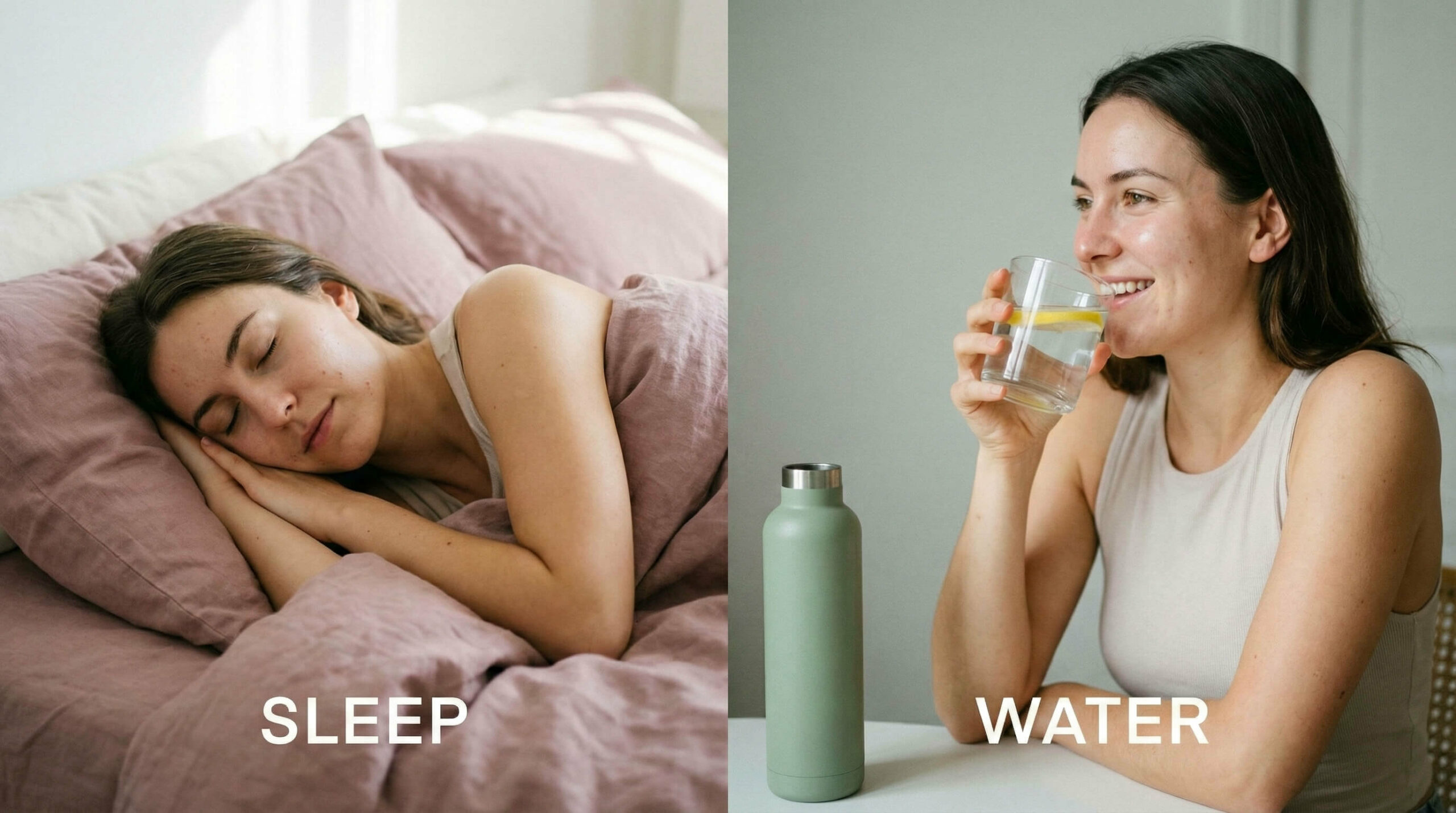
- Water (The Flush): Helps your kidneys filter waste and maintains blood volume. It keeps cells “plump,” but it doesn’t build new ones.
- Sleep (The Repair): This is where the magic happens. During deep sleep (specifically the Delta wave stage), your body releases Human Growth Hormone (HGH), which accelerates skin repair and cell regeneration.
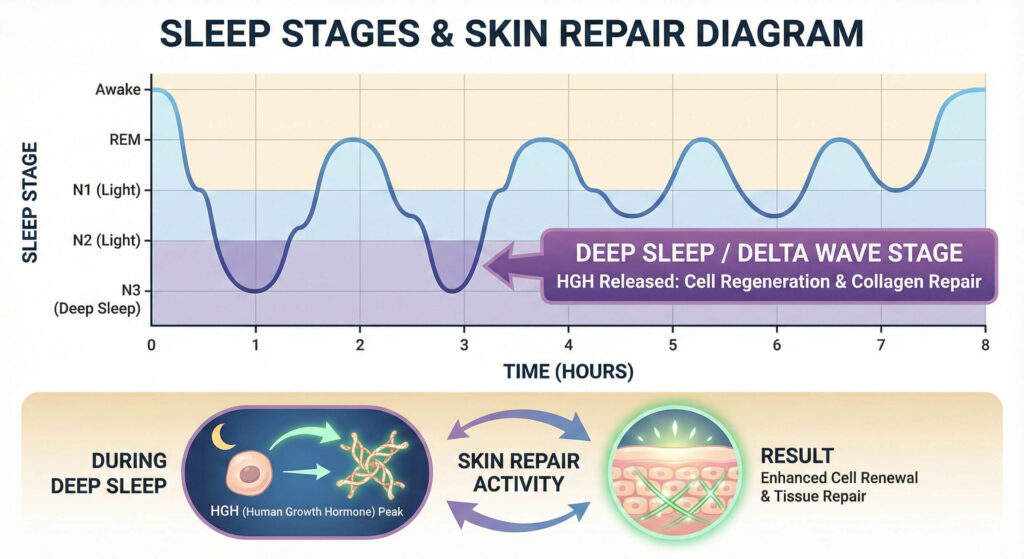
According to the Sleep Foundation, sleep deprivation compromises the skin barrier function, leading to increased moisture loss and inflammation. You can drink all the water you want, but if your barrier is leaking because you didn’t sleep, you will still look dry.
Comparison: The Bottle vs. The Pillow
Bella compared her “High Water/Low Sleep” weeks against a “Normal Water/High Sleep” week. Here is the biological difference:
| Feature | Drinking Water (The Input) | Deep Sleep (The Process) |
| Primary Function | Filtration & Volume. | Regeneration & Repair. |
| Effect on Cortisol | Neutral. | Drastically Lowers it. |
| Visual Result | Plumper skin (if dehydrated). | Brighter complexion, less redness. |
| Effect on Acne | Minimal (helps detoxification). | High (reduces inflammation). |
Why Sleep Wins the “Glow” War
During her PMS week (the Luteal Phase), Bella’s progesterone levels were high, causing water retention (puffiness), and her baseline cortisol was creeping up.
Bella’s realization about the Luteal Phase was the key to her success. She stopped fighting her biology and started syncing her habits with her hormones. This concept of adapting your beauty regimen to your monthly rhythm is a powerful tool. We explain exactly how to do this in our guide: Transformed Her Skincare Routine by Tracking Her Cycle.
1. The Cortisol Connection
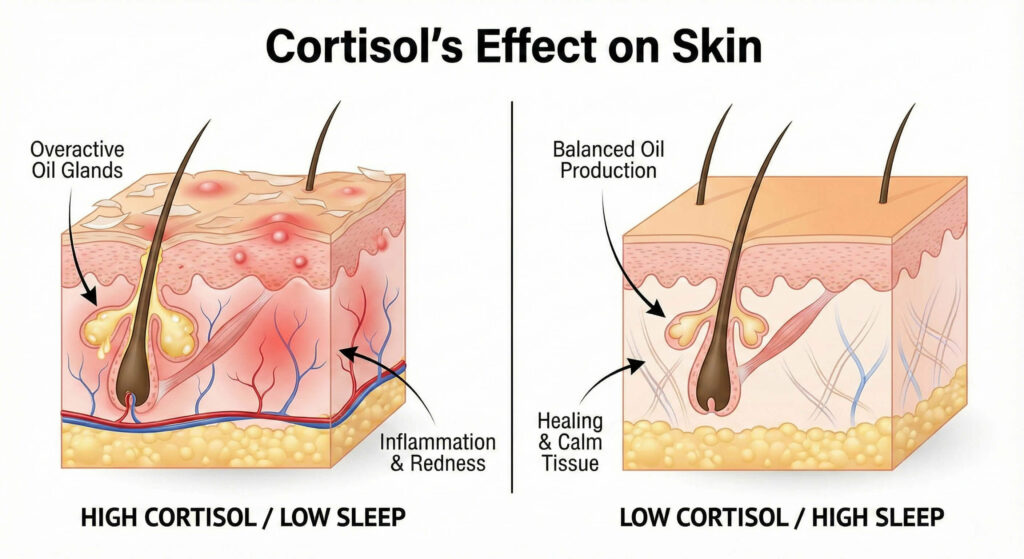
Lack of sleep keeps Cortisol levels chronically high.
High cortisol tells your sebaceous glands to produce thick, sticky oil. This is why you wake up with a new pimple after a sleepless night. By sleeping 8 hours, Bella lowered her cortisol, effectively turning off the oil tap.
If you find it difficult to switch off and achieve this deep, restorative rest, your bedroom environment might be the culprit. Creating a sensory cue that tells your brain it’s time to sleep is essential for lowering cortisol. We explore how to set the stage for rest in our guide: Stressful Home Environment Into a Calm Sanctuary With Aromatherapy.
2. The “Internal Facial”
During sleep, blood flow to the skin increases. This surge delivers oxygen and nutrients to the face, fixing the “grey” dullness that Bella was trying to wash away with water.
When Hydration Actually Matters
This doesn’t mean you should stop drinking water. Water is the baseline. If you are dehydrated, your skin will look like a raisin. But water is maintenance; sleep is the cure.
Think of it this way: Water keeps the house clean, but Sleep fixes the broken roof.
The Result
Bella stopped setting her alarm for 5:30 AM during her luteal phase. She slept until 7:00 AM.
The extra 90 minutes of sleep did what the extra liter of water couldn’t: Her dark circles vanished, her puffiness drained naturally, and her hormonal breakouts healed in half the time.
Do you sacrifice sleep for your routine?
Are you guilty of the “5 AM Club” even when your body is screaming for rest? Tell us your sleep schedule in the comments below!