Sleep vs. Night Cream: Which One Actually Reverses Aging in a 30-Day Experiment?.
Table of contents
The Great Anti-Aging Debate: Science vs. Substance
As women cross the threshold of 30, the search for the “fountain of youth” often begins in the skincare aisle. We invest in high-end creams, promising to erase fine lines and restore a lost glow. But what if the most powerful anti-aging “product” in the world was completely free and already in your bedroom?
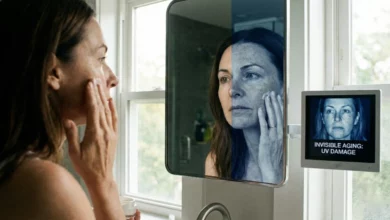
In a hypothetical 30-day biological assessment, we look at the competition between topical application (Night Cream) and internal systemic repair (Deep Sleep). While a cream can provide immediate surface hydration, sleep orchestrates the structural rebuilding of the skin from the inside out. Understanding the mechanics of The “Invisible Aging” Most People Miss Every Morning is the first step in realizing that a tube of cream cannot fix what a lack of rest has broken.
Topical Cream vs. Biological Sleep: The Comparison Table
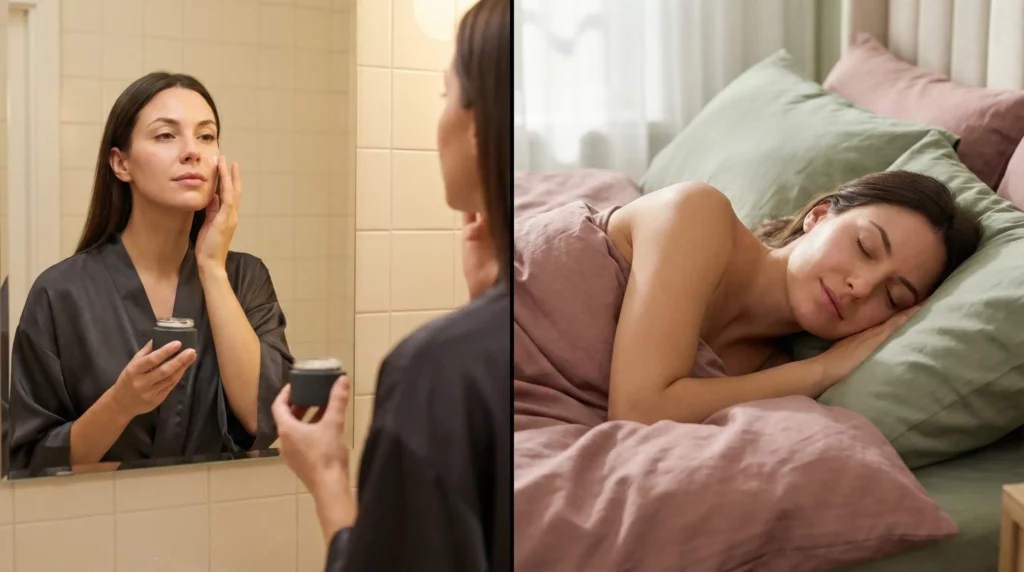
The results of our 30-day scientific comparison show that these two forces operate on entirely different levels of the skin’s architecture.
| Feature | Premium Night Cream (Topical) | High-Quality Sleep (Biological) |
| Primary Mechanism | Provides lipids and actives to the epidermis. | Triggers HGH (Growth Hormone) for repair. |
| Impact on Collagen | Minimal (unless containing strong Retinoids). | Maximum (the primary time for synthesis). |
| Hydration Source | External occlusives (temporary). | Internal water regulation and lymphatic flow. |
| Inflammation | Calms the surface with antioxidants. | Lowers systemic Cortisol levels. |
| 30-Day Result | Smoother texture and temporary plumpness. | Increased elasticity and brighter complexion. |
The 30-Day Biological Breakdown
The First 15 Days: The Surface Shift
During the first two weeks, a night cream containing Hyaluronic Acid and Ceramides will win the battle for immediate gratification. It reinforces the Skin Barrier, making the skin look “dewy” and hydrated. However, if the subject is suffering from Weekend Sleep “Jet Lag”, the internal inflammation remains high, meaning the skin underneath the cream is still stressed and thin.
Day 16-30: The Structural Turn
By the end of the month, the group prioritizing Deep Sleep begins to pull ahead. During these final weeks, the consistent release of Human Growth Hormone (HGH) facilitates the repair of DNA damage and the synthesis of new Collagen fibers. Unlike the cream, which only sits on the top 15-20 layers of dead skin cells, sleep impacts the living dermis, where Wrinkles & Fine Lines are actually formed.
According to a clinical study published by Royal Society Open Science, individuals who were sleep-deprived for just two days were perceived as significantly less attractive and less healthy. Over 30 days, this translates to a visible difference in skin volume and eye-area health.
Why You Shouldn’t Choose Just One
While sleep is the superior biological repair tool, it works most effectively when the skin’s surface is protected. The ultimate Anti-Aging strategy for women over 30 is a “Synergistic System.”
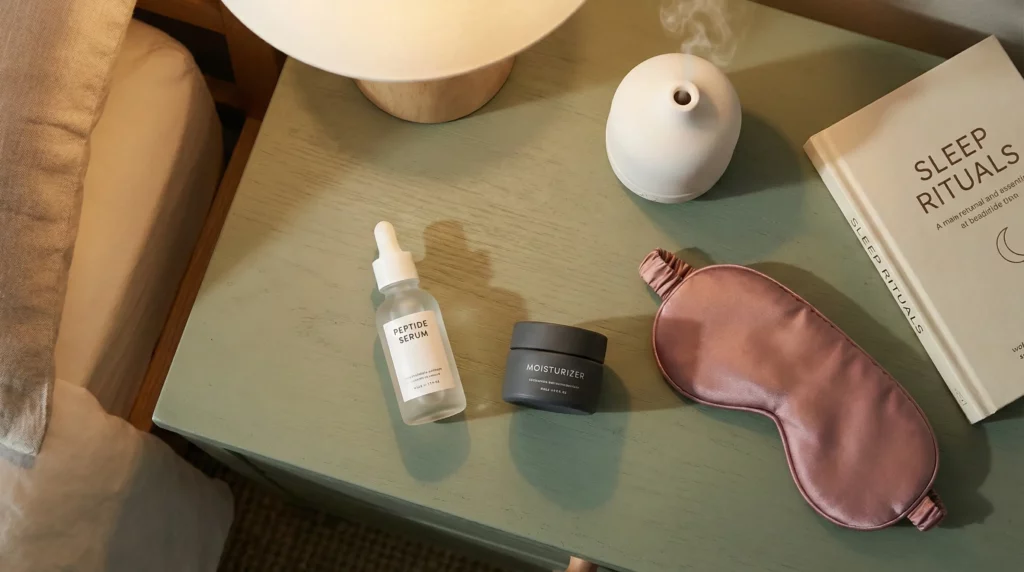
- The Repair Catalyst: Use your Night Routine to apply a Retinol or peptide-rich cream. These ingredients act as “work orders” for your skin cells.
- The Labor Force: Go to sleep. Once you are in a deep rest state, your body provides the energy and materials needed to fulfill those “work orders.”
- The Stress Barrier: By managing your Cortisol levels through rest, you prevent the hormones from breaking down the very collagen your cream is trying to build.
Expert Insight
“There is no chemical compound in a jar that can replicate the systemic cellular repair that happens during the 90-minute cycles of deep NREM sleep. Sleep is the most effective, most consistent, and most affordable beauty treatment we have. When you skip sleep, you aren’t just tired; you are physically aging your skin at an accelerated rate.”
— Dr. Matthew Walker, Neuroscientist and Director of the Center for Human Sleep Science at UC Berkeley, author of Why We Sleep.
Conclusion: The Winner of the 30-Day Experiment
In the battle of Sleep vs. Night Cream, Sleep is the clear winner for structural, long-term anti-aging. However, a high-quality night cream is the perfect “finishing touch” that protects the work your body does overnight. If you want to see a real transformation in the mirror 30 days from now, stop looking for a miracle in a bottle and start looking for it in a consistent bedtime.
Do you spend more on your skincare than you do on your sleep environment? Have you ever noticed your fine lines ‘disappear’ after a particularly long night of rest? Share your memories and results in the comments below!
If you’ve optimized your bedroom into a Sage Green and Cream sanctuary for better rest, show us using #sylvaia_com on social media!