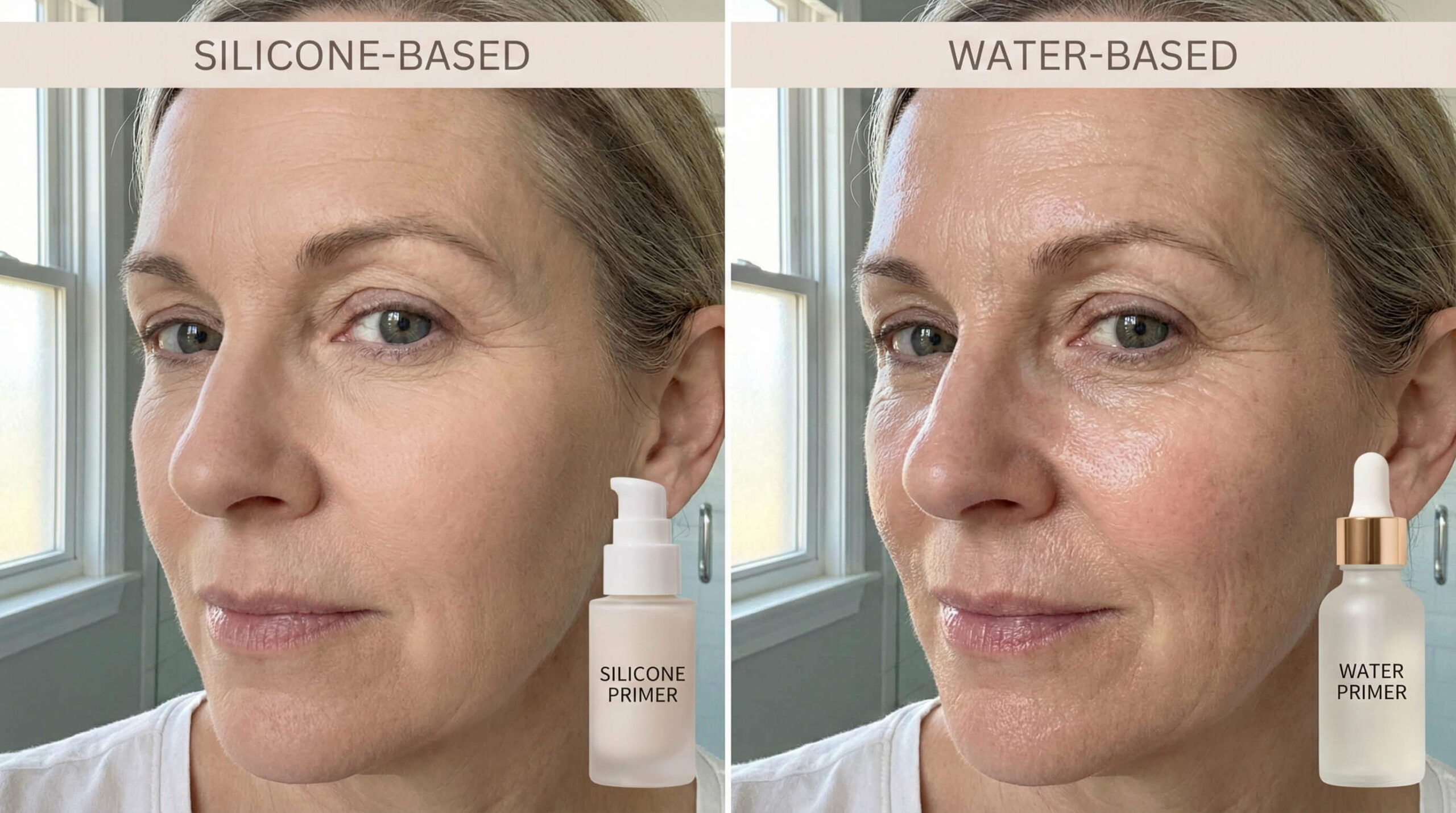
Silicone vs. Water: Which Primer Actually Hides Wrinkles?
Table of contents
Lisa wanted to look “glowy” and youthful, so she bought a trending, water-based hydrating primer. She applied it generously, followed by her foundation.
By 1:00 PM, she looked in the mirror and gasped. Her makeup hadn’t smoothed her face; it had separated and settled deep into the fine lines on her forehead, creating a “cracked paint” effect.
Lisa made a common mistake: She was treating a texture problem (wrinkles) with a moisture solution.
To get a flawless base, you need to understand the difference between “Spackle” and “Sponges.”
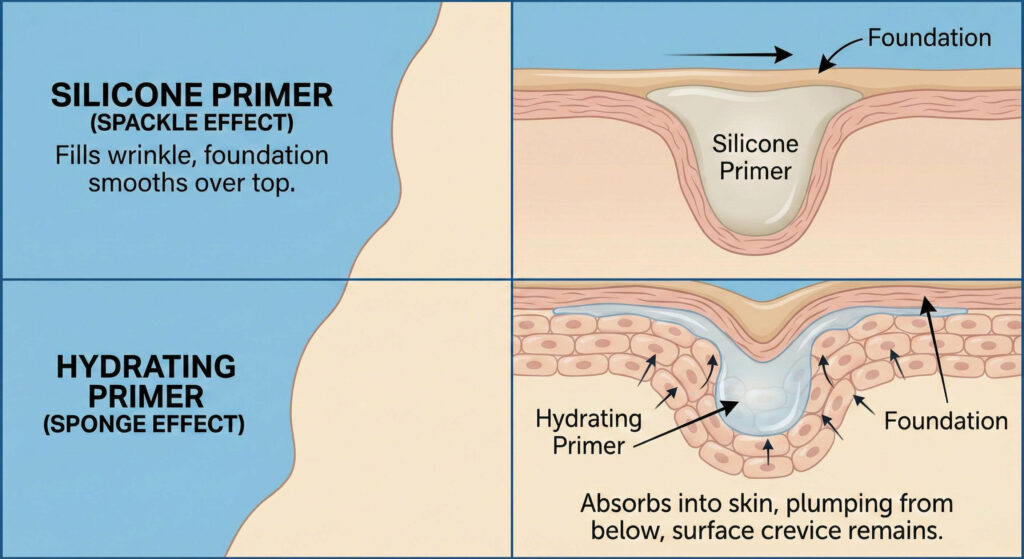
The “Spackle” vs. The “Sponge”
Imagine your skin is a wall with a few cracks (wrinkles) and holes (pores).
- Silicone Primers (The Spackle): These sit on top of the wall, filling in the cracks to create a perfectly smooth, glass-like surface.
- Hydrating Primers (The Sponge): These sink into the wall to make it damp and plump.
This “Sponge” category has become extremely popular, with many “gripping” primers promising to hold makeup in place through intense hydration. We tested the most famous of these in our detailed review: Are Gripping Primers Like Milk Makeup’s Hydro Grip Actually Effective?
If you have deep lines, a wet sponge won’t fill them. You need spackle.
There is a lot of fearmongering about silicones (often listed as Dimethicone), but according to the Paula’s Choice Ingredient Dictionary, Dimethicone is a gentle, breathable ingredient that forms a permeable barrier. It doesn’t suffocate the skin; it simply allows makeup to glide over imperfections rather than sinking into them.
Comparison: Choosing Your Weapon
Here is the breakdown of which bottle you should reach for based on your skin concern:
| Feature | Silicone Primer (The Smoother) | Hydrating Primer (The Plumper) |
| Main Ingredient | Dimethicone, Cyclopentasiloxane. | Hyaluronic Acid, Glycerin, Water. |
| Function | Fills depressions (pores, scars, wrinkles). | Adds water to thirsty cells. |
| Finish | Velvet, Matte, or Satin. | Dewy, Wet, or Radiant. |
| Best For… | Wrinkles, large pores, acne texture. | Dry patches, crepey skin, dullness. |
When to Choose Silicone (The Texture Fix)
If your main concern is Wrinkles & Fine Lines or Pore Size, silicone is your best friend.
Silicone creates a bridge over the wrinkle. When you apply foundation on top, it sits on that bridge. Without silicone, the foundation falls into the crevice, darkening the line and making it look deeper.
- Pro Tip: Press the primer into the skin (don’t just rub it around) to physically fill the uneven texture.
When to Choose Hydrating (The Dryness Fix)
If your makeup looks “cakey” or powdery because your skin is sucking the moisture out of it, you need a hydrating primer.
This is best for crepey skin (like under the eyes) where the issue isn’t a deep line, but a lack of elasticity and hydration.
This logic applies just as much to the thinnest, most textured skin on your face: the eyelids. This area often has crepey texture and oil, making it the ultimate challenge for makeup longevity. We cover the specific products for that area in our guide: Ranking the Top 4 Eye Primers That Actually Stop Creasing on Mature Lids.
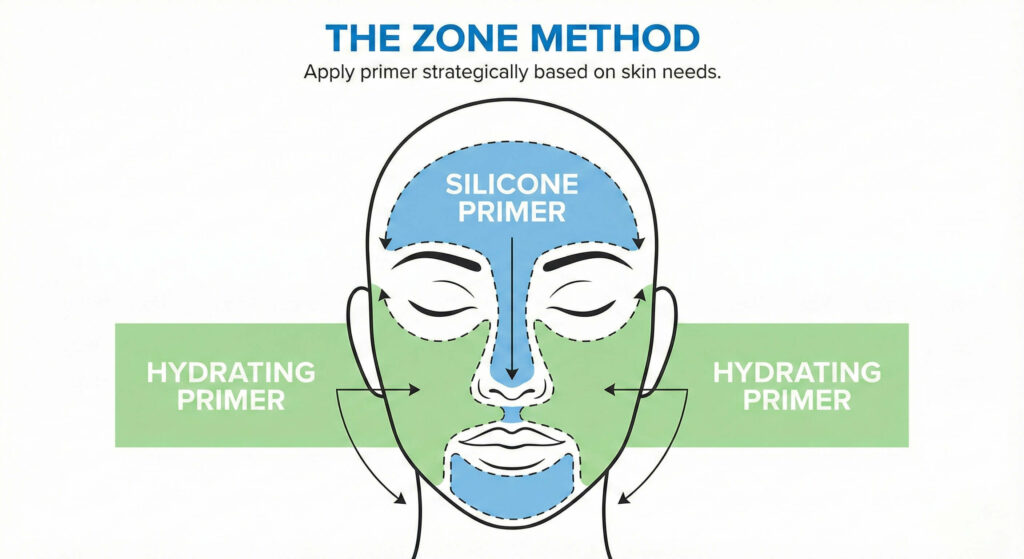
The “Zone” Technique (Lisa’s Solution)
Lisa stopped the separation by using the Zone Method. She stopped using one primer for her whole face.
- T-Zone & Forehead: She uses a tiny amount of Silicone Primer to fill her pores and forehead lines.
- Cheeks & Periphery: She uses a Hydrating Primer where her skin gets dry and tight.
The result? Her forehead looks airbrushed, and her cheeks glow.
What is your biggest skin struggle?
Is it texture (pores/lines) or dryness (flakes)? Tell us which primer team you are on in the comments below!