A Hair Enigma: Why Does My Hair Color Always Turn Brassy?
Table of contents
The Two-Week Fade: The Betrayal of a Beautiful Blonde
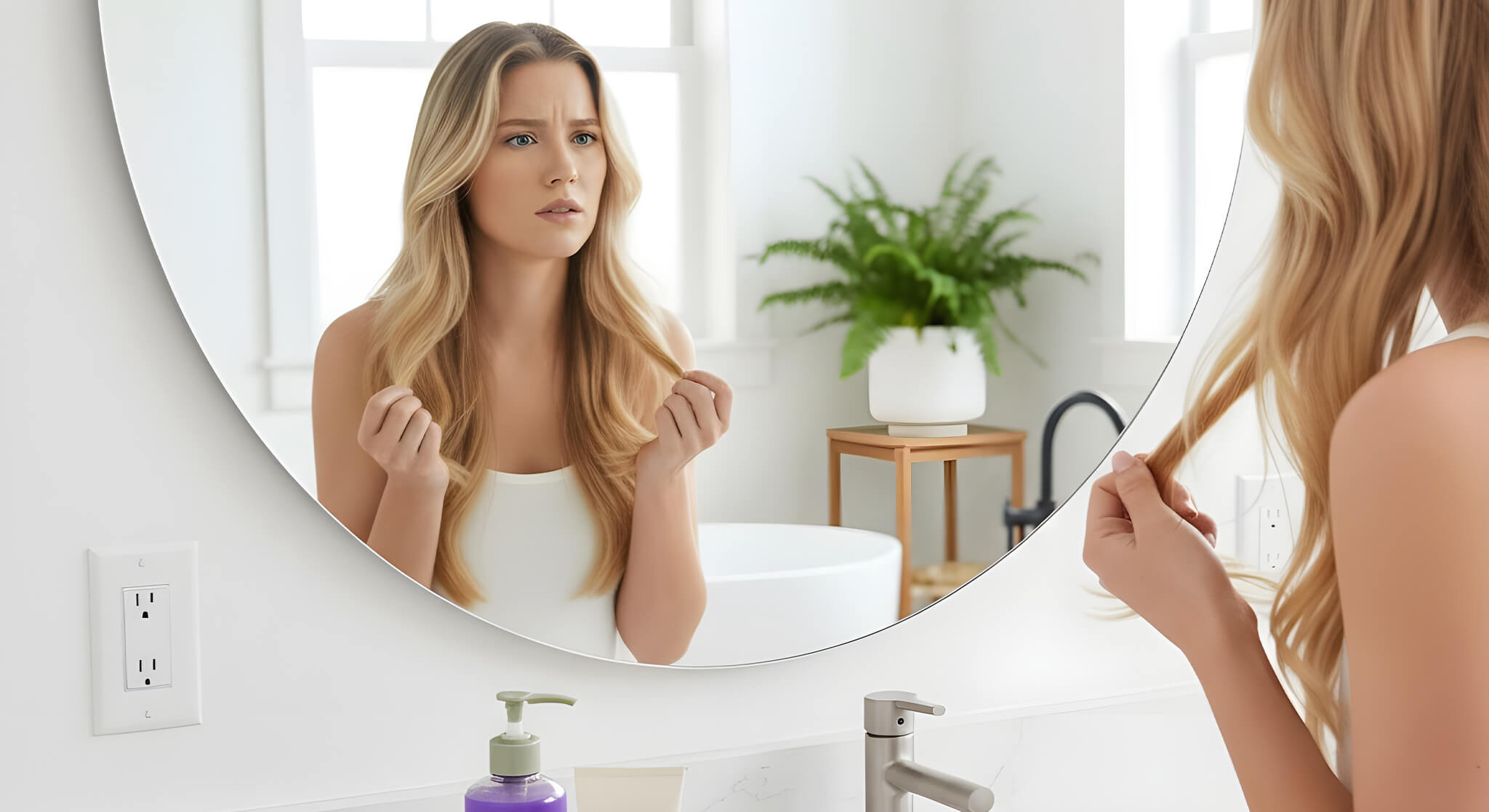
You leave the salon with a perfect, cool-toned balayage. Your hair is a beautiful, icy blonde or a rich, neutral brunette. You feel fantastic. But then, two weeks later, you look in the mirror and see it: the creeping, unwanted warmth. Your blonde is turning yellow, and your brunette is turning a rusty orange. This is “brassy” hair.
Why does this happen? Is your hair just “bad” at holding color? Or is something in your daily routine actively sabotaging your expensive salon visit?
The answer is a simple, unavoidable fact of hair science. Your hair isn’t turning brassy because you’re doing something wrong; it’s because your toner is fading, revealing exactly what lies underneath. We’ll explain why this happens and how to stop it.
Do Tryptophan-Rich Foods (Like Turkey) Really Make You Sleepy
The Science: The “Hidden” Pigment Under Your Hair Color
To understand brassiness, you have to understand what happened to your hair during the coloring process.
The Lifting Process
To color your hair (especially to lighten it), your stylist must first use bleach or a high-lift color to remove your natural pigment (melanin). All dark hair has a natural “underlying pigment.” When you strip away the dark color, you reveal the warm tones underneath. Dark brown hair lifts to red, medium brown lifts to orange, and dark blonde lifts to yellow.
The Role of “Toner”: The Blue & Violet Magic
That beautiful, cool-toned color you leave the salon with is thanks to the toner. A toner is a semi-permanent color (usually blue, violet, or green) that your stylist applies after bleaching. It works on color theory: blue cancels out orange, and violet cancels out yellow.
The Real Culprit: Toner is Temporary
Here is the hard truth: Toner molecules are very small and sit on the surface of the hair shaft. They are the first thing to wash out. Brassy hair is not a new color; it is the re-emergence of your hair’s natural underlying pigment as the cool-toned toner fades away.
The 3 Main “Toner-Strippers” That Accelerate Brassiness
While fading is natural, certain factors speed up the process significantly.
Culprit #1: Your Water (Minerals & Chlorine)
“Hard water” is full of minerals and metals like calcium and copper. These minerals build up on your hair, creating a film that makes your color look dull and brassy. Additionally, chlorine in city water acts as a bleaching agent, actively stripping out the toner.
Culprit #2: Your Shampoo (Sulfates)
Harsh, sulfate-based shampoos are the enemy of hair color. They are strong detergents that blast open the hair’s protective layer, the cuticle, allowing the toner and color molecules to wash right down the drain. This is the fastest way to lose your cool tone.
Culprit #3: Sun & Heat (UV Rays & Styling)
UV rays from the sun act as a natural bleach, oxidizing your color and fading the toner rapidly. High-heat styling can also damage the hair structure. The impact of chemical and physical stressors on the hair shaft is well-documented, showing that a damaged cuticle is less able to retain both moisture and color, leading to faster fading.
The At-a-Glance Comparison Table: The Anti-Brassy Toolkit
| The Culprit | The Primary Problem | The Pro Solution |
| Water Minerals & Chlorine | Causes mineral buildup & stripping | Shower Filter (Removes minerals/chlorine) |
| Harsh Shampoo | Strips toner & opens cuticle | Sulfate-Free Shampoo (Cleanses gently) |
| Fading & Sun Exposure | Fades toner & exposes warmth | Purple/Blue Shampoo (Re-tones the hair) |
Your 3-Step Plan to Fight the Brass
You can’t stop the underlying pigment from existing, but you can keep it covered.
Step 1: Wash Smarter (Less Often, More Gently)
Wash your hair less frequently to preserve the toner. When you do wash, always use a sulfate-free shampoo and rinse with lukewarm or cool water. Cold water helps to keep the cuticle sealed. A sealed cuticle is the key to locking in color molecules and creating brilliant hair shine.
Step 2: Use the Right “Antidote” (Purple or Blue Shampoo)
This is your most important maintenance tool. A color-depositing shampoo deposits a small amount of pigment to cancel out brassiness as it cleans.
- Purple Shampoo: For blondes who are seeing unwanted yellow tones.
- Blue Shampoo: For brunettes who are seeing unwanted orange or red tones.
Step 3: Seal & Protect Your Investment
Always follow up with a high-quality conditioner or a deep hair mask. This smooths the cuticle and locks in the color. Before using any hot tools, always use a heat protectant, ideally one with a UV filter to protect your color from the sun’s oxidizing rays.
The Final Word: Biology, Not Failure
Brassiness is a biological inevitability of lightening hair, not a failure of your stylist or your hair type.
By understanding that your hair wants to be warm, you can use the right tools—like color-depositing shampoos and filtered water—to keep it cool. It’s about maintenance, protection, and keeping that cuticle healthy and sealed for long-lasting, vibrant color.