The Scalp-Type Checklist: Dry, Oily, Sensitive, or Combo?
Table of contents
The ‘Skinification’ of Hair: Why Your Scalp Type Matters
In the world of beauty, we have reached a collective realization: your hair is essentially the high-maintenance accessory of your scalp. This movement, often called the “Skinification” of hair, treats the scalp with the same clinical respect we give our faces. If you have been investing in expensive hair masks but still struggle with limp, dull, or frizzy strands, the problem likely isn’t your hair—it’s the “soil” it grows from.
A healthy Scalp Health routine is not one-size-fits-all. Using a harsh, clarifying wash on a dehydrated scalp is a recipe for irritation, while a heavy, oil-based treatment on an already congested scalp will lead to flat, lifeless hair. To unlock true Hair Shine and volume, you must first identify your specific scalp profile.
The Scalp-Type Diagnostic Checklist

Take a moment to evaluate your roots under a bright light. Which of these descriptions feels like home?
- Oily Scalp: You feel the need to wash your hair every single day. By noon, your roots have a visible shine, and your hair loses its “lift” almost immediately after styling.
- Dry Scalp: Your scalp feels uncomfortably tight, especially after washing. You notice tiny, white, powdery flakes that resemble dust rather than wax.
- Sensitive Scalp: You experience frequent stinging, burning, or redness. Your scalp might even feel “sore” after wearing a ponytail or using a new styling product.
- ‘Combo’ Scalp: This is the trickiest profile. Your roots look greasy and flat, yet your actual scalp feels itchy, flaky, or dry in certain patches.
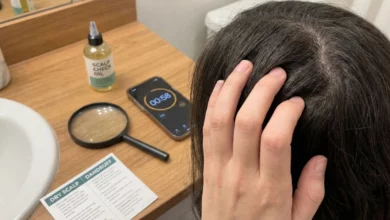
If your diagnostic results lean toward the “Dry” or “Combo” categories, it is vital to ensure you aren’t misidentifying your symptoms. Using a harsh treatment on a parched barrier will only deepen the irritation; taking a moment to perform a 60-second check for dry scalp versus dandruff can save you from a cycle of unnecessary peeling and redness.
Scalp Types: A Comparative Guide
Use this table to quickly identify the best approach for your specific biology:
| Scalp Type | Key Symptoms | Washing Frequency | Hero Ingredient |
| Oily | Shine at roots, flat hair, waxy buildup. | Daily or every other day. | Salicylic Acid |
| Dry | Tightness, small white flakes, dullness. | 2–3 times per week. | Hyaluronic Acid |
| Sensitive | Redness, stinging, reaction to fragrance. | Varies; use minimal products. | Aloe Vera / Bisabolol |
| Combo | Greasy roots with itchy or flaky patches. | Every other day. | Niacinamide |
Tailored Routines for Every Scalp
The Oily Scalp Strategy
The goal here is regulation, not total stripping. If you over-wash with harsh sulfates, you may trigger a “rebound” oil effect. Use a Shampoo containing Salicylic Acid twice a week to dissolve excess sebum and prevent follicle clogging.
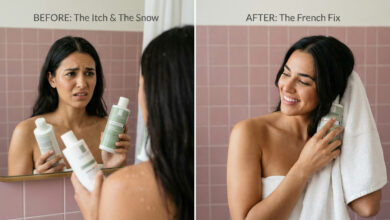
For those struggling with the “Oily” profile, the solution often lies in the technique rather than just the product. We have seen how a simple shift in the washing process can recalibrate sebum production entirely. You can read about how one woman balanced her greasy roots by moving away from aggressive stripping and embracing a more strategic, scalp-first cleansing method.
The Dry Scalp Rescue
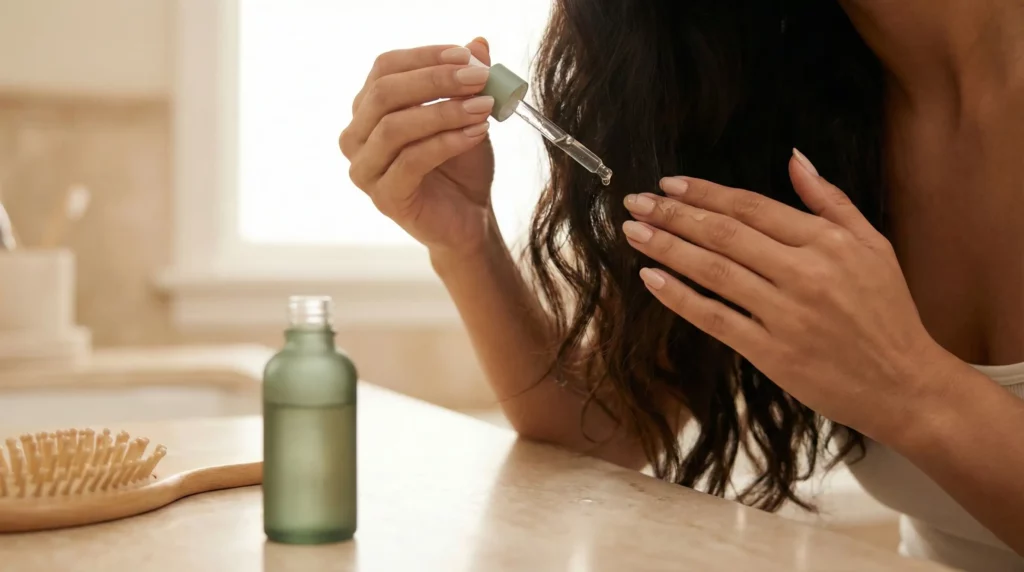
Treat your scalp like you would dry skin on your face. Look for “creamy” cleansers and incorporate Scalp Health oils (like jojoba or squalane) as a pre-wash treatment. This replenishes the lipid barrier and prevents the “tight” feeling that leads to itching.
The Sensitive Scalp Protocol
Less is always more. Avoid synthetic fragrances, alcohols, and harsh surfactants. According to the American Academy of Dermatology (AAD), individuals with sensitive skin should prioritize pH-balanced formulas to maintain the acid mantle and prevent inflammatory flares.
The ‘Combo’ Balancing Act
Focus your clarifying treatments only on the crown and temples where oil accumulates. For the rest of your scalp, use a soothing, hydrating serum. Niacinamide is an excellent choice for combo types as it balances oil while simultaneously strengthening the moisture barrier.
The Microbiome Connection
Your scalp is home to a complex ecosystem of bacteria and fungi. When this balance is disrupted—often by high Stress & Health issues or a spike in internal Cortisol—your scalp type can shift. Research published in the Journal of Investigative Dermatology highlights that an imbalanced scalp microbiome is a leading cause of both dandruff and premature hair thinning. Maintaining a stable environment through a Minimal Routine is the best way to support long-term hair density.
Expert Insight
Dr. Francesca Fusco, a world-renowned medical and cosmetic dermatologist specializing in scalp health, has often stated in interviews with major health publications:
“We need to stop thinking of hair and scalp as two separate entities. If you aren’t exfoliating and hydrating your scalp with the same intention you use for your face, you are never going to achieve the hair quality you’re capable of. The scalp is just skin—and it needs a specific regimen to thrive.”
Conclusion: Your Roadmap to Stronger Hair
Identifying your scalp type is the first step toward a Hair Strengthening journey that actually works. When you treat the “soil” with the right nutrients and balance, your hair responds with natural volume and resilience. Forget the 10-step hair routines; find the one or two products that respect your scalp’s biology, and the rest will fall into place.
Which category do you fall into? Have you been treating your scalp for the wrong type? Share your thoughts and questions in the comments below!
If you’ve discovered your perfect scalp-match routine, show us your “Glow-up” results using #sylvaia_com on social media!