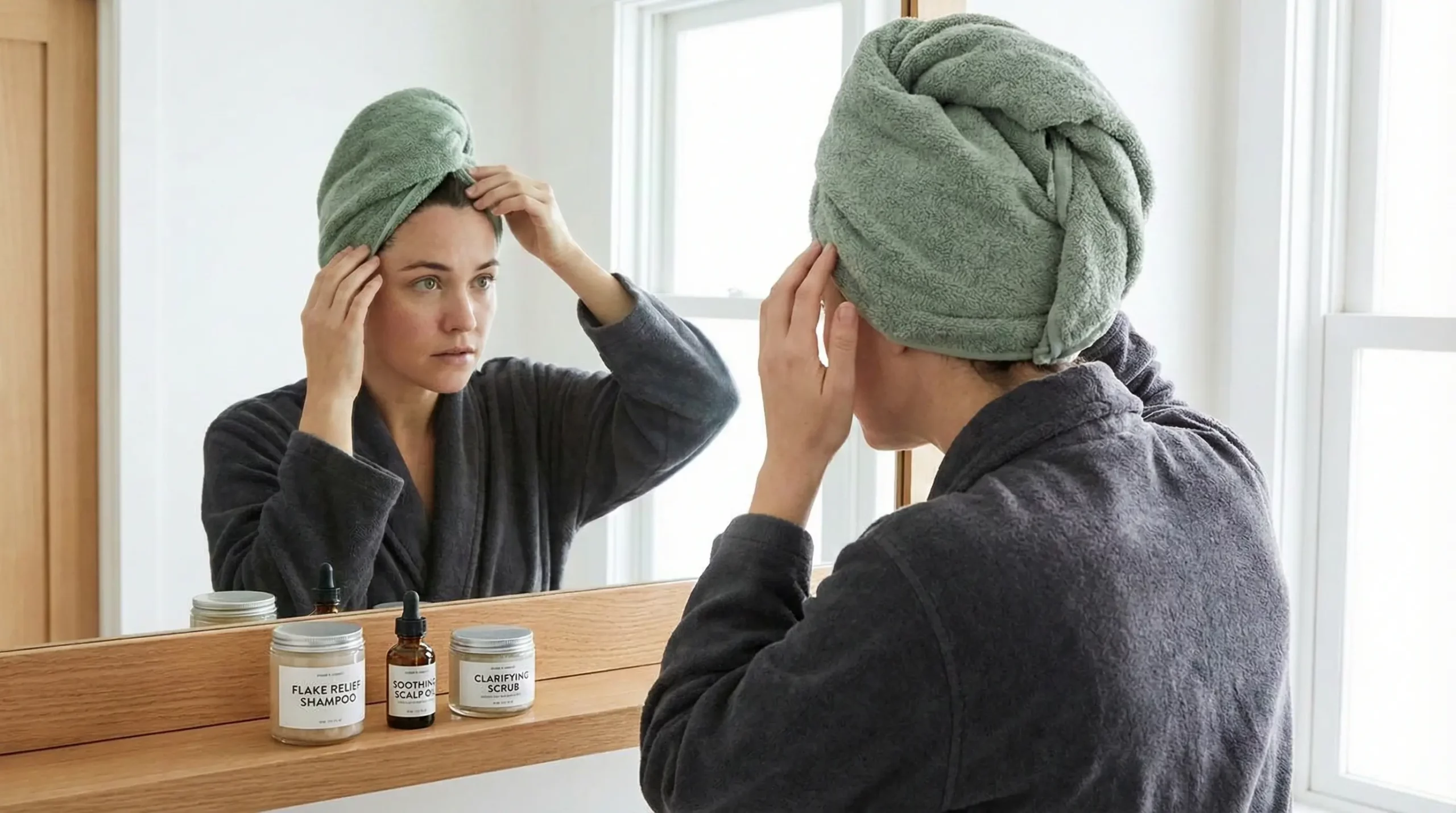
Scalp Health 101: The 6 Most Common Causes of Itch, Flakes, and Oil (and How to Tell Which One You Have)
Table of contents
The Foundation of Great Hair: Why Your Scalp is the Hero
Jessica, a 30-year-old freelance designer, spent a small fortune on high-end silk hair wraps and bond-repairing treatments. Yet, her hair remained dull, and she was constantly battling an annoying itch at the nape of her neck. “I was treating the branches of the tree,” she told us, “but I completely ignored the soil.”

It wasn’t until she shifted her focus to Scalp Health that her hair finally regained its vitality. The “skinification” of hair is more than just a trend; it is a biological necessity. Your scalp is an extension of the skin on your face, and when it is out of balance, your Hair Growth and Hair Shine suffer the consequences. To fix the problem, you first have to identify exactly what is happening beneath the surface.
When your scalp health is compromised, it can trigger a premature shift in your hair’s natural life cycle. If you notice that your flakes are accompanied by an unusual amount of strands in your brush, it’s important to understand how seasonal shifts and scalp inflammation work together to impact your overall hair density.
The Scalp Symptom Checker
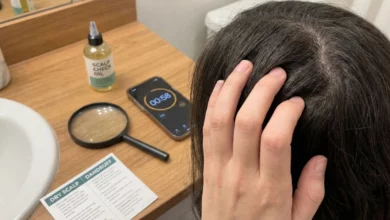
Before you reach for a random anti-dandruff bottle, use this table to narrow down your specific condition:
| Symptom | Flake Color/Type | Itch Level | Scalp Oiliness | Likely Culprit |
| Dandruff | Yellowish, oily, large | Moderate | High | Fungal Overgrowth |
| Dry Scalp | White, small, powdery | High | Very Low | Dehydration |
| Product Buildup | Clear or white “film” | Mild/Crawly | Varies | Residue |
| Seborrheic Dermatitis | Greasy, crusty patches | Intense | High | Chronic Inflammation |
| Oily Scalp | Usually no flakes | Low | Constant Grease | Genetics/Hormones |
| Contact Dermatitis | Red bumps or patches | Sudden/Sharp | Normal | Ingredient Allergy |
The 6 Most Common Scalp Culprits
1. Classic Dandruff (The Fungal Factor)
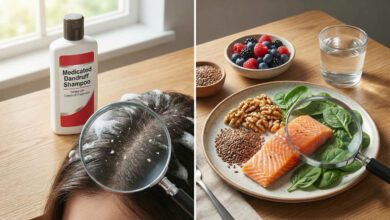
Contrary to popular belief, dandruff isn’t about being dry; it’s about being too oily. A fungus called Malassezia feeds on your natural sebum. When it grows too fast, it causes skin cells to shed prematurely, resulting in those classic oily flakes.
2. The Dehydrated Scalp
Just like your face can get tight and dry, so can your scalp. If you live in a cold climate or use harsh, sulfate-heavy Shampoo, your scalp loses its moisture. These flakes are usually tiny, white, and fall easily like snow.
3. Product Buildup (The “Invisible” Layer)
If you rely heavily on dry shampoo, hairspray, or heavy silicones, they eventually form a “suffocating film” over your follicles. This prevents your scalp from breathing and can lead to a “crawly” sensation or even Thinning Hair over time.
4. Seborrheic Dermatitis
This is a more severe version of dandruff that involves red, inflamed skin and greasy scales. According to the specialists at Healthline, this condition is often linked to an overreaction of the immune system and requires targeted, anti-inflammatory care.
5. The Oily Scalp (Sebum Overload)
Sometimes, your glands are simply overachievers. An Oily Scalp can be driven by hormonal shifts or genetics. If your hair looks greasy only a few hours after washing, you aren’t dealing with a hygiene issue, but a regulation issue.
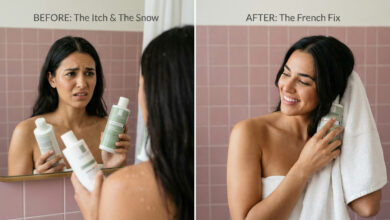
Dealing with constant grease isn’t always about how often you wash, but how you wash. We’ve seen remarkable transformations when women move away from aggressive scrubbing to more strategic cleansing methods. You can read about one woman’s journey to balancing her oily roots through a single, effective change in her shower routine.
6. Contact Dermatitis (Ingredient Sensitivity)
If you recently switched to a new hair dye or a heavily scented Conditioner and suddenly started itching, you might be having an allergic reaction. Common culprits include synthetic fragrances and certain preservatives.
The Rescue Routine: How to Restore Balance
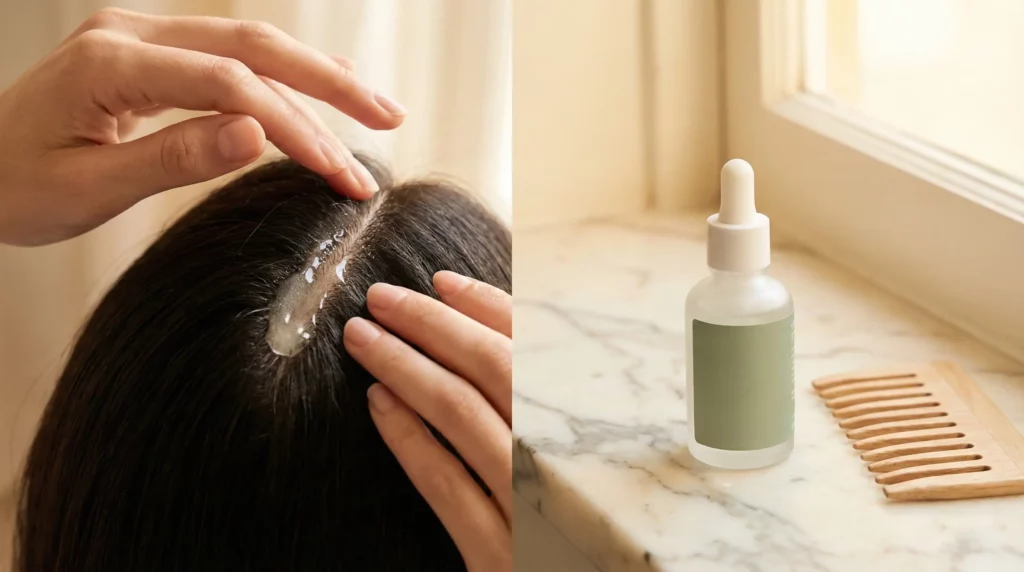
- The Clarifying Step: Once a week, swap your regular wash for a clarifying treatment. This removes the “invisible film” of product residue. For a deeper “reset,” a physical Scrub can help manually lift stubborn flakes.
- Hydration without Weight: If your scalp is dry, don’t put conditioner on your roots. Instead, look for a lightweight Serum specifically designed for scalp hydration.
- The Minimalist Approach: Sometimes, the best thing you can do is less. Transitioning to a Minimal Routine for a week can help your Skin Barrier heal without the interference of multiple active ingredients.
Insights from the Inner Circle
“I used to think flakes meant I needed to wash my hair less, but it was actually the opposite. Once I started treating my scalp with the same respect I give my face, my hair growth exploded,” says a famous influencer who has spoken with our team about her journey to achieving a healthy, itch-free scalp.
Conclusion: Healthy Roots, Radiant Hair
Your scalp is the silent architect of your hair’s beauty. By identifying whether you are dealing with a fungal issue, a dry environment, or simply too much product, you can tailor your routine to create the perfect environment for Hair Strengthening.
Are your flakes white and dry, or yellow and oily? Let’s figure it out in the comments below—leave your questions and experiences!
If you’ve started a new scalp care journey, share your “before and after” photos using #sylvaia_com on social media!