Are Fragrance Discovery Kits Worth It? Pros, Cons & Smart Buying Guide
Table of contents
The Alluring Promise of a “Scent Library” in a Box
You’re exploring a new perfume house, intrigued by their aesthetic but daunted by the financial commitment of choosing just one full bottle. Then you see it: the beautifully presented “Discovery Kit,” offering a curated flight of their most popular fragrances in elegant, miniature form.
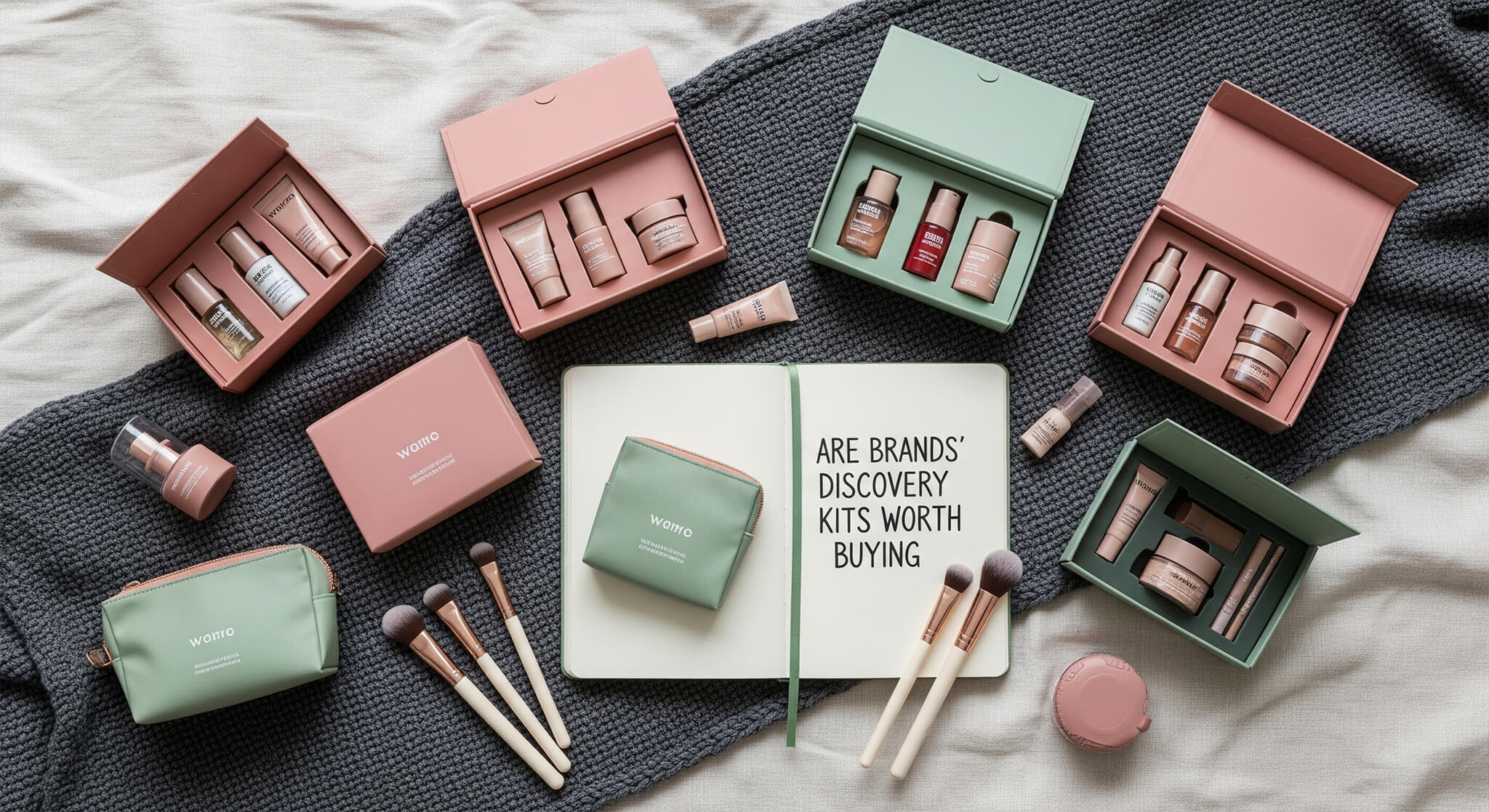
It seems like the perfect, low-risk solution to the fragrance lover’s dilemma. But are these kits a savvy way to explore a brand, or are they a clever marketing tool that leaves you with a handful of samples you’ll never use? Is it a good investment?
The answer depends on the kit, the brand, and your own goals as a fragrance explorer. We’re breaking down the strategic pros and cons to help you determine if a discovery kit is a worthy addition to your fragrance journey.
The “PROS”: Why a Discovery Kit Can Be a Brilliant Investment
Pro #1: You Get to “Meet the Family”
A discovery kit is the ultimate introduction to a brand’s unique DNA. By sampling 5-8 of their core creations, you can quickly learn their signature style, or “olfactive signature.” Do they lean towards airy florals? Rich, complex ambers? Minimalist, modern musks? It’s the most efficient way to know if a whole brand’s aesthetic resonates with you.
Pro #2: It’s a Masterclass for Your Nose
Testing a curated selection is an incredible way to educate your palate. You can compare different notes side-by-side and begin to understand what you truly love. You might discover a passion for a note you never expected (like cardamom or vetiver), which is invaluable information that makes you a smarter, more confident shopper in the future.
Pro #3: It’s the Ultimate Insurance Against a Costly Mistake
This is the biggest practical benefit. Spending $30-$50 to thoroughly test multiple scents over several weeks is infinitely smarter than blind-buying a $200+ bottle that you end up disliking. It removes the anxiety and financial risk from a major purchase.
Pro #4: The “Credit Back” Perk
Many modern, direct-to-consumer brands have adopted a brilliant model: they will offer the full price of the discovery kit back to you as a credit towards the purchase of a full-sized bottle. This essentially makes the entire sampling process free if you fall in love with one of the scents.
The “CONS”: Potential Pitfalls to Consider
While they can be a fantastic tool, not all discovery kits are a wise purchase.
Con #1: The Curation Isn’t Your Curation
The biggest drawback is the lack of choice. The selection is curated for you. If you already know you dislike heavy gourmand scents and the kit includes three of them, you may be paying for samples you have no real interest in testing.
Con #2: Check the Sample Size
Not all samples are created equal. Pay attention to the volume. Some kits contain generous 2ml spray vials that allow for several proper wear tests. Others might have tiny 1ml dauber vials that are difficult to apply and may only offer one or two experiences with the scent.
Con #3: Do the Math
Some luxury brands can charge a significant premium for their beautifully packaged kits. It’s worth doing a quick calculation: could you buy individual samples of the 3-4 scents you’re actually interested in from a reputable fragrance decanting website for less money? This calculation is especially important when considering that a fragrance’s performance is highly dependent on its concentration, such as Eau de Parfum vs. Eau de Toilette.
The Verdict: A Checklist for Choosing a “Worthy” Kit
Use this simple framework to make a smart decision.
A Discovery Kit is a GREAT Investment IF…
- …You are genuinely new to a brand and curious about its overall style and quality.
- …The kit contains at least 3-4 scents that are already on your “to-test” list.
- …The brand offers a credit back towards a full-bottle purchase, making it low-risk.
- …You want to expand your scent knowledge and train your nose on different notes.
You Might Be Better Off Buying Individual Samples IF…
- …You are only interested in one or two specific fragrances from the brand’s entire lineup.
- …The majority of the scents included in the kit fall into a fragrance family you know you dislike.
The Smartest Path to Discovery
Discovery kits are one of the most exciting and intelligent tools available to the modern fragrance enthusiast.
By evaluating them with a strategic eye—assessing the value, the selection, and the potential for a credit back—you can turn them into a powerful, cost-effective, and joyful part of your fragrance discovery journey. It’s the ultimate way to ensure your next full-bottle purchase is a true love, not a gamble.
Related article: