Paper vs. Skin: Why The Perfume You Bought Smells Different at Home
Table of contents
Sophie fell in love with a perfume called “Citrus Burst.” On the white paper strip in the store, it smelled like fresh lemons, sparkling water, and sunshine. She bought the $150 bottle immediately.
Two hours later, while getting ready for dinner, she sprayed it on her neck. By the time she reached the restaurant, the lemon was gone. She smelled like heavy vanilla and old musk.
Sophie felt catfished. She thought the perfume had “turned bad,” but the bottle was fine. The problem was the testing surface.
She learned the hard way that a paper blotter is just a trailer; your skin is the actual movie.
The Science: Cellulose vs. Living Tissue
Why did the paper lie? Because paper is cold, dry, and inert.
Perfume is made of molecules with different weights. The light, fresh notes (Citrus, Fruits) are highly volatile. On a cold paper strip, these molecules get trapped in the cellulose fibers and evaporate very slowly. They can hang around for hours.
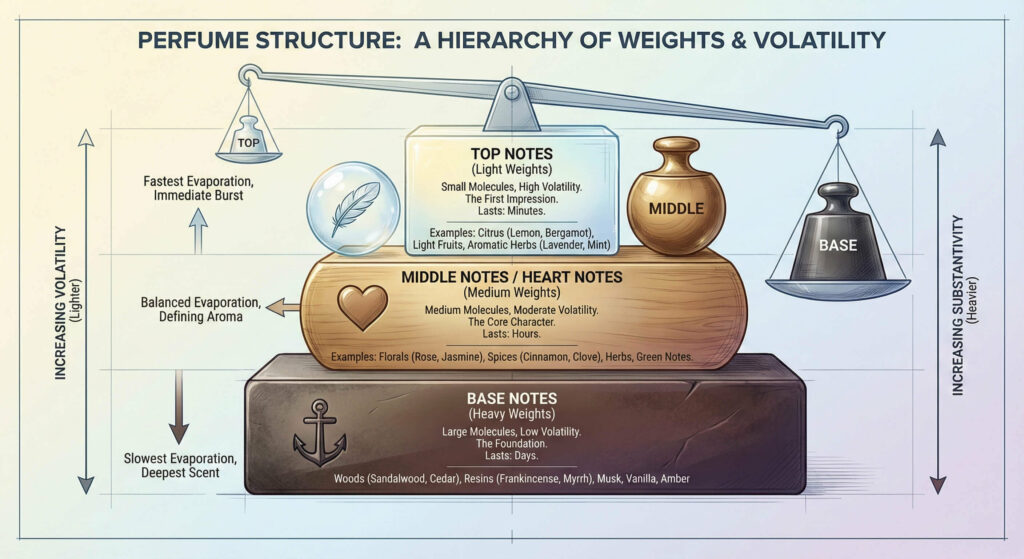
But your skin is a living, breathing organ. It is warm, slightly oily, and acidic. As soon as the liquid hits your pulse point, your body heat acts like a burner, evaporating those top notes instantly and rushing the scent straight to the heavy “Base Notes.”
Since your body heat fast-forwards the fragrance to this final stage, the “dry down” is actually the scent you will wear for 90% of the day. Knowing which ingredients anchor a scent can help you predict what will remain after the citrus fades. We ranked the most durable ingredients in our guide: Ranking the Best Base Notes (Amber, Sandalwood, Vetiver) That Contribute to a Perfume’s Longevity.
According to the thermodynamics of evaporation described by ScienceDirect, the volatility of a compound changes drastically based on the surface temperature. The paper freezes time; your skin fast-forwards it.
Comparison: The Blotter Strip vs. Your Skin
Sophie compared the experience of the paper strip against her actual wrist. Here is why they never match:
| Feature | The Blotter (The Trailer) | Your Skin (The Movie) |
| Surface Temp | Cold / Room Temp (68°F). | Warm Body Heat (98°F). |
| Evaporation | Slow. Keeps “Top Notes” (Citrus) alive for hours. | Fast. Burns off Top Notes in 10-15 mins. |
| Chemistry | Neutral (No reaction). | Reactive. Mixes with your oils/hormones. |
| The Result | What the perfumer designed. | What the perfume becomes on you. |
The “Skin Chemistry” Factor
It’s not just heat. Your biological makeup changes the scent.
1. pH Balance
Your skin’s acid mantle affects longevity.
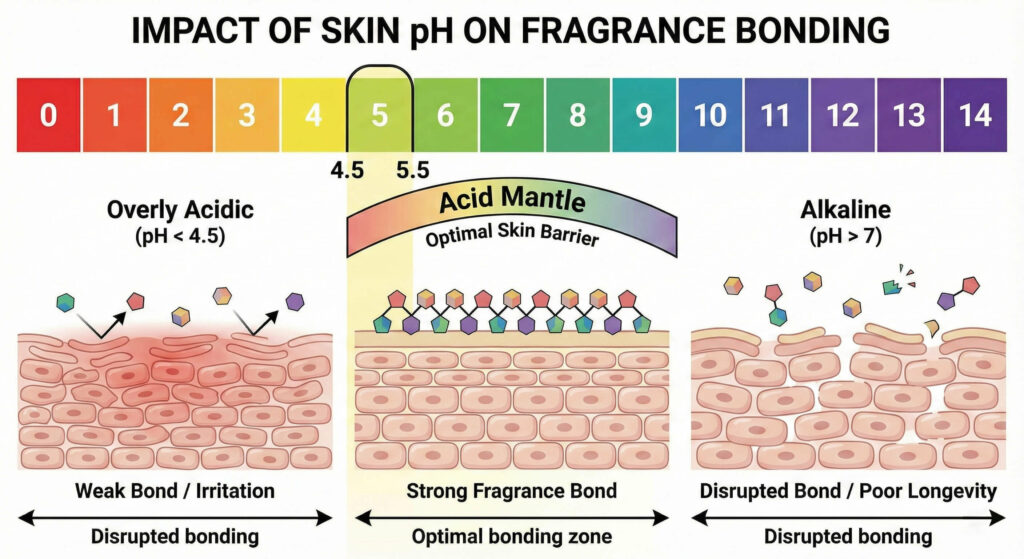
If your skin is dry or acidic (lower pH), it tends to have a harder time holding onto fragrance molecules, causing the perfume to disappear or turn “sour” faster. Oily skin holds scent longer.
2. Diet & Lifestyle
If you eat a diet high in garlic, onions, or spices, those sulfur compounds are excreted through your pores. When they mix with the alcohol and oils in the perfume, they can completely alter the fragrance profile.
The 2-Step Testing Rule
Sophie stopped wasting money by adopting a strict Two-Step Rule:
- The “No” Pile (Paper): Use the blotter strip to filter out what you hate. If it smells like a headache on paper, don’t put it on your body.
- The “Yes” Pile (Skin): If you like the paper, spray one spray on your wrist. Walk away. Go get a coffee.
- The Wait: Wait 20 minutes. This allows the “Heart Notes” to emerge. If you still love it after the lemon fades, then you buy it.
Executing this “walk away and wait” strategy can be intimidating if you are in a high-pressure sales environment. You need a store that allows you the freedom to spray and leave without judgment. We visited the major retailers to see which one supports this testing style in our review: Sephora vs. Nordstrom vs. Ulta: Who actually lets you test perfume in peace?
Has a perfume ever turned “sour” on you?
Did you love it in the store and hate it at home? Tell us your fragrance horror story in the comments below!