Perfume Cloud Myth Debunked: Why Spray & Walk Doesn’t Work
Table of contents
The Romantic Notion of the Perfume “Cloud”
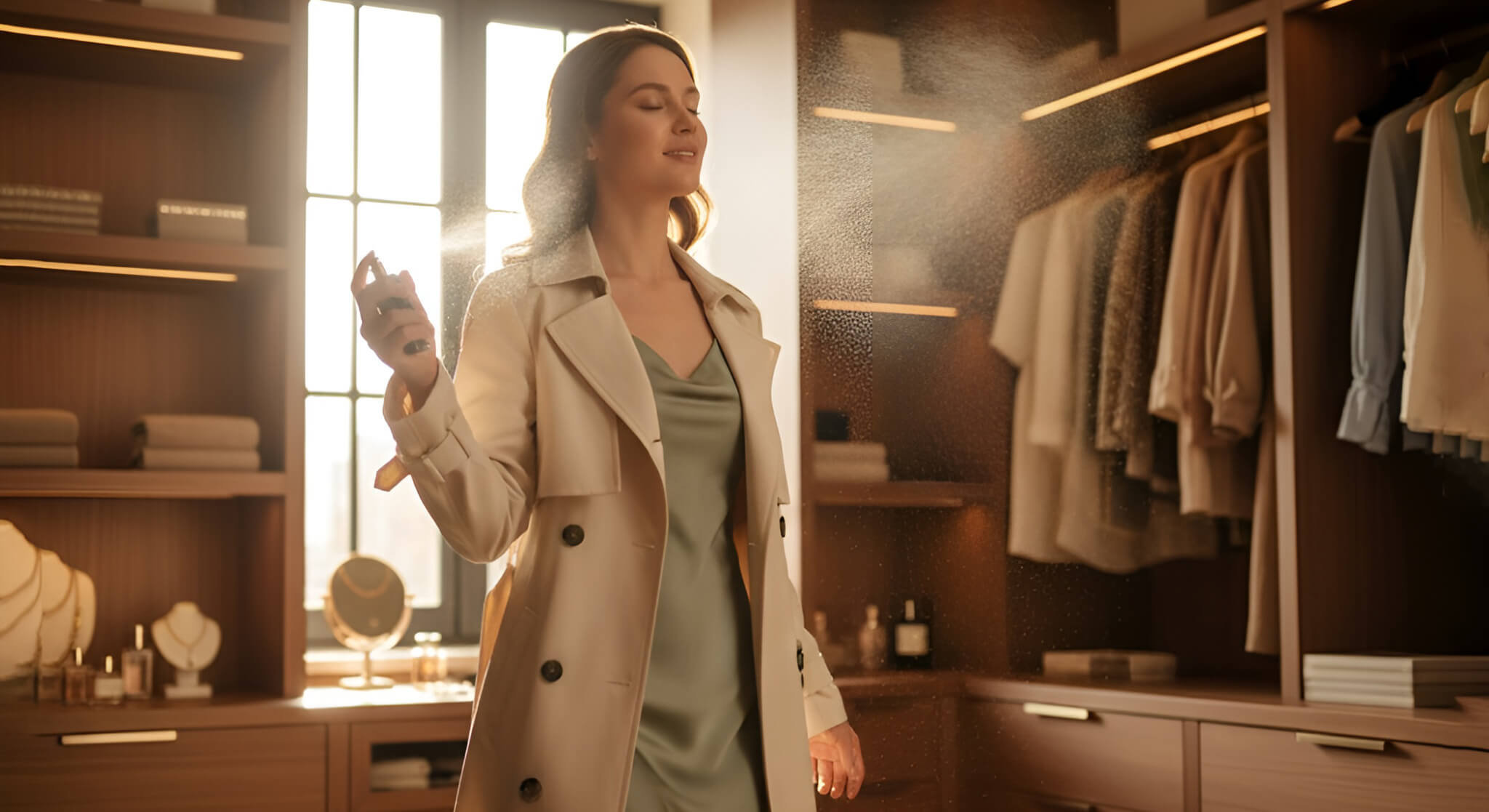
It’s a scene we’ve seen in countless movies and glamorous advertisements: a person spritzes a beautiful cloud of their favorite perfume into the air and gracefully walks through it, emerging in a delicate, scented aura. It’s a romantic, alluring, and cinematic idea.
But does this glamorous ritual actually work? Is walking through a “perfume cloud” an effective way to apply your fragrance and, more importantly, to make it last?
We’re here to give you the definitive, science-backed answer that perfumers and fragrance experts all agree on. While the method looks beautiful, it is one of the biggest and most common mistakes you can make with your precious fragrance.
The Science: Why the “Spray and Walk” Method Fails
This popular technique is fundamentally flawed for three main reasons.
Reason #1: It’s Incredibly Wasteful
When you spray a cloud of perfume into the air, the vast majority of it—likely over 90%—ends up not on you, but on your floor, your furniture, and simply evaporating into the room. It’s the equivalent of trying to water a single houseplant by turning on a sprinkler in the middle of your living room. You are wasting a significant amount of product and money with every spray.
Reason #2: It Provides an Uneven, Ineffective Application
The few tiny droplets that do happen to land on you are randomly and unevenly distributed. A bit might land on your hair, your shoulder, or the hem of your shirt, but almost none of it lands on your pulse points. These warm areas of your skin (like your wrists and neck) are essential for making a perfume truly “bloom” and develop as the perfumer intended.
Reason #3: It Kills Longevity and Scent Character
Perfume is designed to interact with the warmth and oils of your skin to evolve through its top, middle, and base notes. When it lands on the cool, dry fibers of your clothing or hair in a fine, sparse mist, it cannot develop properly. It sits on the surface and evaporates very quickly, directly sabotaging your goal of achieving good makeup longevity (scent longevity).
The At-a-Glance Comparison Table
| Feature | “Spray and Walk” Method | Direct Application Method |
| Efficiency / Waste | Extremely High Waste | Very Low Waste |
| Application Control | Very Low / Random | Very High / Targeted |
| Scent Development | Poor / Flat | Excellent / As Intended |
| Longevity | Very Poor | Excellent |
The Expert-Approved Method: A Targeted, Intentional Application
To get the most out of your fragrance, you need to apply it directly and intentionally.
Step 1: Prep Your Canvas
The golden rule of longevity is that moisturized skin holds fragrance. Before applying your perfume, start your body skincare routine by applying a layer of unscented moisturizer or body lotion to the areas you will spray. This gives the perfume molecules an emollient base to cling to.
Step 2: Target Your Pulse Points
Spray directly onto your warm pulse points from a distance of about 5-7 inches. This allows the heat from your body to gently diffuse the scent throughout the day, a process that relies on the natural warmth created by blood flow closest to the skin. The best spots include:
- The sides of the neck
- The wrists
- Behind the ears
- The inner elbows
Step 3: Don’t Rub, Just Let It Be
After spraying your wrists, resist the powerful urge to rub them together. This common habit creates friction that crushes the delicate top notes of the fragrance and creates heat, causing the scent to evaporate much faster. Simply spray and let it air dry naturally on your skin.
The Verdict: A Beautiful Myth, But a Wasteful Reality
So, is spraying perfume in the air and walking through it an effective method? No. While it is a beautiful fantasy, in reality, it is the most wasteful and least effective way to apply your precious fragrance.
The secret to a long-lasting, beautiful scent experience isn’t about creating a cloud; it’s about a direct, intimate application that allows the perfume to work as the artist intended. By applying your fragrance with intention to prepared skin, you honor the perfumer’s art, you get the most value from your investment, and you ensure your signature scent lasts all day, reducing the anxiety of it disappearing too quickly.
Related article: