Lack of Sleep vs. Smoking: How Surprisingly Close They Are for Skin Aging
Table of contents
The Biological Collision: Why Sleep Deprivation Mimics a Toxin
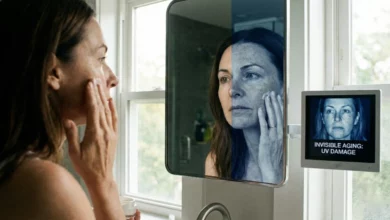
Most women in their 30s understand that smoking is a fast track to premature wrinkles and a sallow complexion. However, emerging dermatological science suggests that chronic sleep deprivation acts on the skin through remarkably similar biological pathways. Both habits trigger a massive spike in oxidative stress and a catastrophic breakdown of the Skin Barrier.
When you lose sleep, you aren’t just “tired.” You are subjecting your body to a state of systemic inflammation that rivals the chemical damage found in environmental toxins. Understanding the results of a Sleep vs. Night Cream: Which One Actually Reverses Aging? comparison is vital to realizing that your skin’s biological clock is powered by the quality of your rest, not just the products on your shelf.
Smoking vs. Sleep Deprivation: The Comparison Table
The parallels between these two “aging accelerators” are found in how they dismantle the skin’s structural integrity over time.
| Damage Marker | Chronic Smoking | Chronic Lack of Sleep |
| Primary Mechanism | Restricts blood flow (vasoconstriction). | Increases Cortisol (pro-inflammatory). |
| Collagen Impact | Destroys existing fibers via enzymes. | Prevents new Collagen synthesis. |
| Complexion | Sallow, “grey” tone due to low oxygen. | Dull, pale tone due to poor circulation. |
| Repair Window | Constantly inhibited by toxins. | Blocked by a lack of Deep Sleep. |
| Long-Term Result | Vertical “smoker” lines and sagging. | Deeper nasolabial folds and fine lines. |
The “Micro-Vessel” Crisis: Why Both Cause Dullness
Smoking is notorious for narrowing the tiny blood vessels in the outermost layers of the skin, which depletes the skin of oxygen and vital nutrients like Vitamin A. Surprisingly, a lack of sleep does something very similar. When you are sleep-deprived, your body remains in a sympathetic “fight or flight” state. This diverts blood flow away from the skin and toward the internal organs.
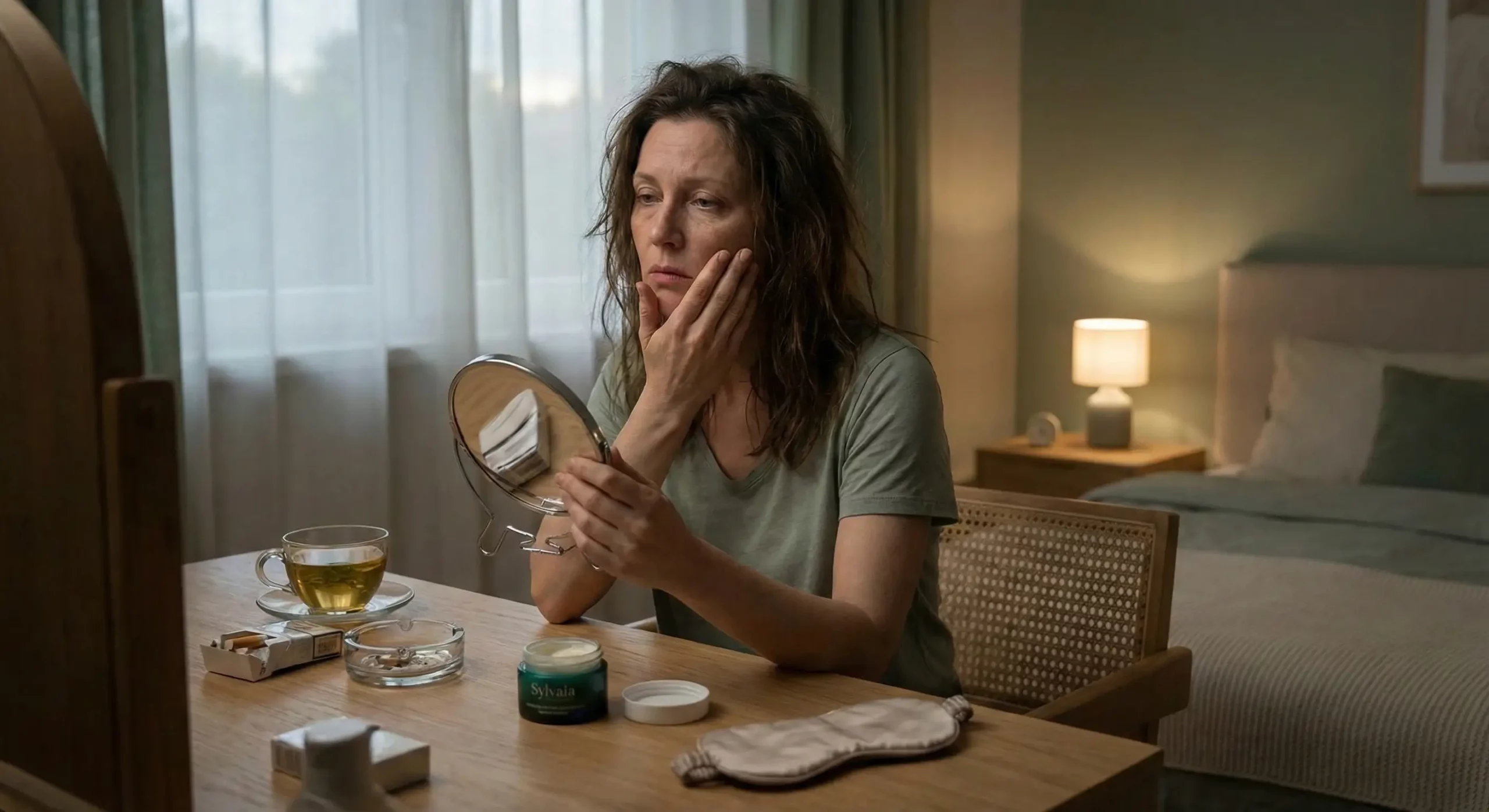
The result is a shared aesthetic: the “sallow” look. Without consistent blood flow during the night, the skin cannot perform Cellular Repair, leading to a buildup of metabolic waste. This is why women who suffer from Weekend Sleep “Jet Lag” often wake up with the same puffiness and dullness typically associated with a “smoker’s complexion.”
The “Tonight-Only” Rescue Plan: Immediate Damage Control
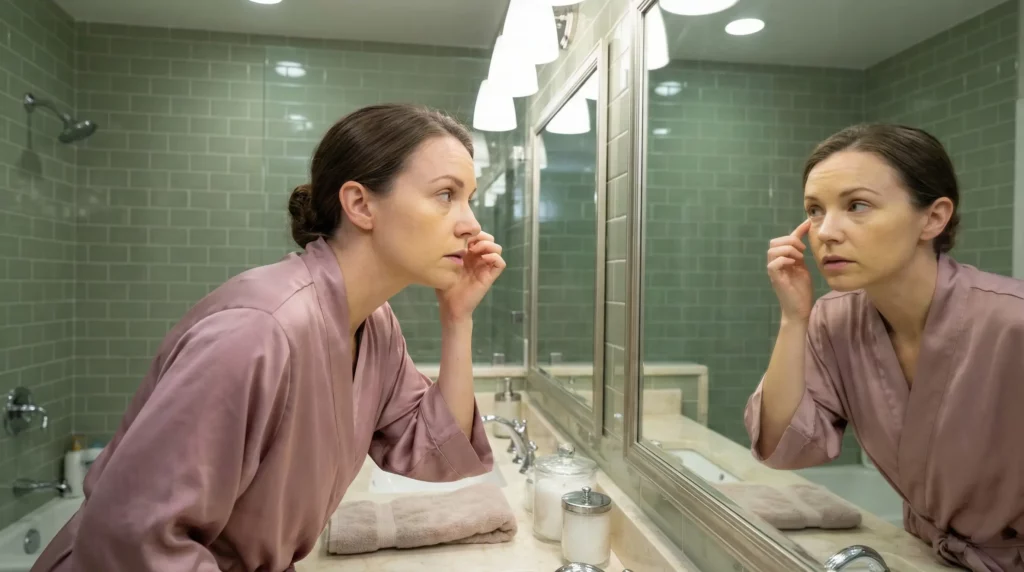
If you’ve already lost sleep and are worried about the “toxin-like” aging effect, use this 3-step emergency protocol to reset your skin’s environment tonight.

- The “Temperature Flush”: Splash your face with cold water for 30 seconds before your Night Routine. This forces blood back to the surface of the skin, mimicking the healthy circulation you missed during poor sleep.
- Antioxidant Overload: Apply a high-concentration Vitamin C or Resveratrol serum. Since sleep loss causes an explosion of free radicals (just like smoking), you need external Antioxidants to neutralize the damage before you hit the pillow.
- The Magnesium Anchor: Take a warm bath with Epsom salts. The magnesium helps lower systemic Cortisol levels instantly, signaling your body to exit “survival mode” and enter the “repair mode” required to fix Wrinkles & Fine Lines.
According to a study published in the journal Clinical and Experimental Dermatology, “poor sleepers” had significantly higher levels of trans-epidermal water loss and a much slower recovery of the skin barrier after a “stressor” compared to good sleepers.
Expert Insight
“We often talk about smoking as the ultimate skin sin, but sleep deprivation is the ‘invisible’ equivalent. In my practice, I can see the same patterns of oxidative damage and sallow skin in a stressed CEO as I do in a long-term smoker. Both are starving the skin of its ability to regenerate. If you want to look younger, you have to treat sleep with the same health-priority as quitting a toxic habit.”
— Dr. Doris Day, Board-Certified Dermatologist and Clinical Associate Professor of Dermatology at NYU Langone Medical Center.
Conclusion: Breaking the Toxic Cycle
Your skin does not have to pay the price for a busy schedule. By recognizing that a lack of sleep is a physical toxin to your beauty, you can begin to prioritize your Sleep Architecture as your most powerful Anti-Aging tool. Tonight, commit to a “clean” night of rest in your Sage Green and Cream sanctuary, and let your body do the repair work that no cream can replicate.
Do you notice your skin looks ‘grey’ or sallow after a short night? Have you ever compared your skin’s health to your stress levels over a month? Share your memories and observations in the comments below!
Show us your “Tonight-Only” rescue setup using #sylvaia_com on social media!