The Hidden Fungus on Most Scalps: What It Is, Why It Flares, and How to Keep It Quiet
Table of contents
The Unseen Resident: Meeting Your Scalp’s Microbiome
It might sound unsettling, but your scalp is currently home to a tiny, yeast-like fungus called Malassezia. This microorganism is a natural part of a healthy human microbiome, coexisting peacefully with billions of other bacteria. Having this fungus is not a sign of poor hygiene; in fact, it is present on almost every adult head on the planet.
In a balanced state, you don’t even know it’s there. However, when the environment of your scalp shifts, this quiet resident can multiply rapidly. This overgrowth leads to the irritation, redness, and flaking commonly known as dandruff or seborrheic dermatitis. To achieve lasting Scalp Health, the goal is not to eradicate the fungus—which is nearly impossible—but to keep it in a “quiet,” balanced state.
The Tipping Point: Why the Fungus Goes Rogue
Malassezia doesn’t just flare up without a reason. It is opportunistic, waiting for specific conditions to turn from a harmless neighbor into a source of an Itchy Scalp.
- The Sebum Buffet: This fungus thrives by feeding on the saturated fatty acids found in your natural oils. If you have an Oily Scalp, you are essentially providing an all-you-can-eat buffet that encourages fungal colonization.
Your scalp’s oil production is rarely a constant; it fluctuates with your internal biological clock. During weeks where your hormones shift—particularly when progesterone spikes—your scalp can become significantly oilier. Adopting a targeted routine to manage pre-period congestion can help prevent the “sebum buffet” that triggers fungal overgrowth and localized inflammation. - The Humidity Trap: Fungus loves warmth and moisture. If you frequently leave your hair damp after a shower or spend hours in sweat-soaked workout hats, you are creating a perfect incubator for growth.
- The Cortisol Connection: High levels of Stress & Health issues trigger the release of Cortisol. This hormone can increase oil production and weaken the skin’s immune response, making it harder for your scalp to keep fungal populations in check. Understanding how these internal triggers impact your hair cycle is a vital part of holistic care.
Balanced Ecosystem vs. Fungal Overgrowth
Identifying a flare-up early allows you to adjust your routine before the inflammation causes localized flaking in one spot.
| Feature | Balanced Scalp | Fungal Overgrowth (Flare) |
| Sensation | Calm and comfortable. | Persistent Itchy Scalp or “sore” roots. |
| Oil Levels | Healthy, moderate shine. | Greasy to the touch or waxy buildup. |
| Flake Type | None (invisible cell turnover). | Oily, yellowish, or sticky flakes. |
| Redness | Natural skin tone. | Pink or red patches, especially at the hairline. |
While managing the microbiome is crucial, it is equally important to understand the broader landscape of your scalp’s health. By identifying the foundational causes of persistent scalp oiliness and itching, you can determine if your flare-up is strictly fungal or if it’s being exacerbated by external environmental factors and product buildup.
3 Ways to “Quiet” the Overgrowth (Safely)
1. Targeted Ingredient Rotation
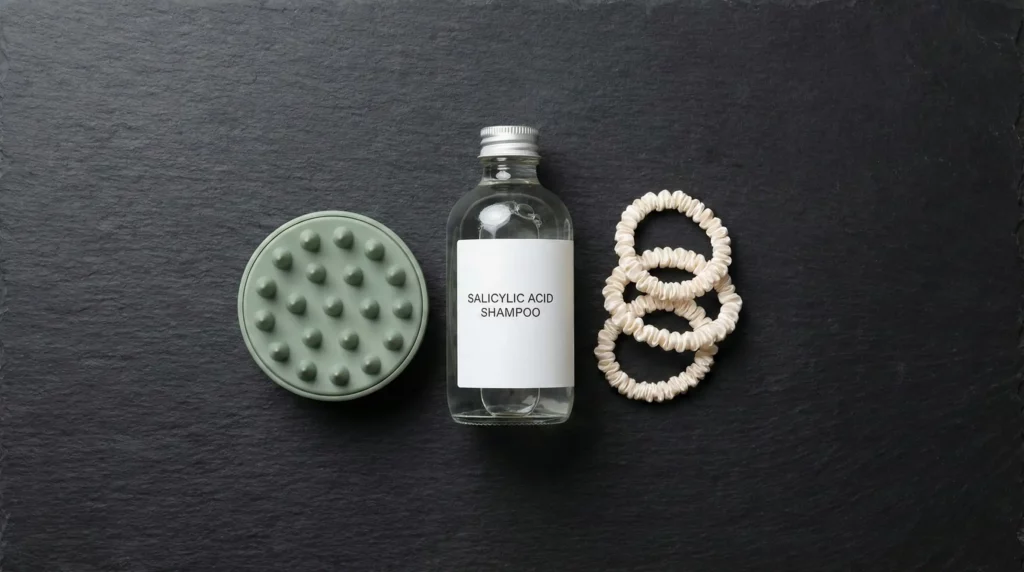
The fungus protects itself with a “biofilm”—a microscopic shield that resists standard washing. To break this down, use a Shampoo containing Salicylic Acid. This ingredient acts as a keratolytic, dissolving the glue between dead skin cells and clearing the fungal food source. According to the Mayo Clinic, medicated ingredients like zinc pyrithione or ketoconazole are also highly effective at slowing the growth of the fungus.
2. pH Management
Fungus thrives in high-pH (alkaline) environments. Your scalp’s natural “acid mantle” should be slightly acidic (around pH 5.5). Using harsh, alkaline soaps or hard water can disrupt this, inviting overgrowth. Look for pH-balanced formulas to maintain your scalp’s natural defense system.
3. The “Dry-Roots” Protocol
One of the simplest changes you can make to your Night Routine is ensuring your roots are bone-dry before bed. Sleeping on wet hair creates a warm, damp environment against your pillow—a literal breeding ground for yeast. Use a hairdryer on a cool setting specifically at the scalp to prevent this moisture trap.
Expert Insight
Dr. Jennifer Smith, a board-certified dermatologist specializing in the skin’s microbiome, has emphasized the importance of balance over eradication:
“We often see patients who try to ‘kill’ the fungus with aggressive scrubbing. This actually damages the skin barrier and triggers more oil production, which feeds the fungus further. The secret to a clear scalp is managing the oil and maintaining a healthy pH so the microbiome stays in harmony.”
Conclusion: Harmony Over Eradication
A healthy scalp is not a sterile one; it is a balanced one. By managing your oil levels, reducing humidity, and using targeted ingredients like Salicylic Acid, you can keep Malassezia in its place. When your scalp microbiome is in harmony, you’ll notice more than just a lack of flakes—you’ll see a visible improvement in Hair Growth and overall hair resilience.
Did you know your scalp had its own microbiome? Have you noticed your “itchy” days correlate with high-stress weeks? Share your thoughts in the comments below!
If you’ve managed to quiet your scalp flare-ups using these tips, show us your healthy roots using #sylvaia_com on social media!