Digital Reading Wrinkles: How Screens Cause Crow’s Feet & How to Stop Them
Table of contents
The Squint Factor: How Digital Reading Ages Your Eyes
For many women over 30, the shift from physical books to e-readers and tablets has been a lifestyle revolution. However, this convenience comes with a hidden cost for the delicate skin around our eyes. Unlike the static page of a book, digital screens—even those with e-ink technology—often cause a subconscious “micro-squinting” response due to glare, font size, or the flicker of OLED screens.
This repetitive muscular contraction is the primary cause of dynamic Wrinkles & Fine Lines, specifically “Crow’s Feet.” Over time, as our natural Collagen levels begin to dip after 30, these dynamic lines become static, meaning they remain visible even when your face is at rest. Understanding the Smartphone Blue Light and Collagen connection is just the first step in protecting your gaze from digital fatigue.
Physical Books vs. E-Readers: The Aging Comparison
While we love the portability of digital libraries, the biological impact on the periocular (eye area) skin is significantly different.
| Feature | Physical Books | E-Readers & Tablets |
| Light Source | External/Reflective. | Internal/Backlit (HEV Light). |
| Eye Strain | Low (if lighting is adequate). | High (due to glare and blue light). |
| Facial Muscle Use | Neutral expression. | Subconscious squinting/frowning. |
| Skin Impact | Minimal. | Accelerated Crow’s Feet development. |
| Sleep Impact | Promotes relaxation. | Can disrupt Sleep Architecture. |
The Science of “Mechanical Aging”
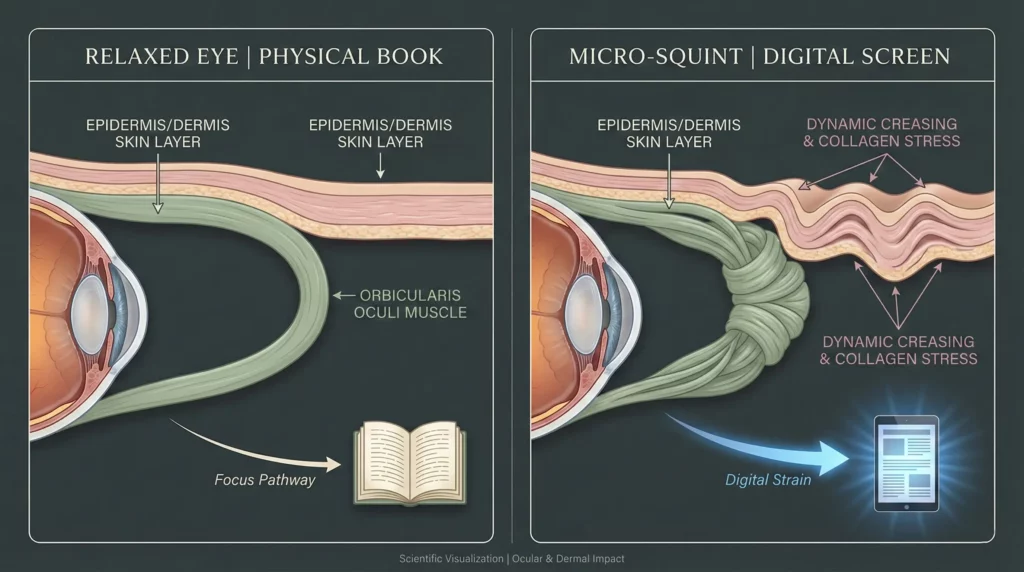
Crow’s feet aren’t just caused by time; they are caused by motion. When you strain to read small text on a screen, the orbicularis oculi muscle (the muscle surrounding the eye) contracts. Because the skin in this area is the thinnest on the entire body—lacking the oil glands found on the rest of the face—it is highly susceptible to “creasing.”
1. The Glare-Squint Reflex
Even if you don’t feel like you are squinting, your eyes are constantly making micro-adjustments to the light intensity of an e-reader. This continuous tension leads to “Digital Eye Strain” (Computer Vision Syndrome). According to a study published in the Journal of Physical Therapy Science, prolonged use of digital devices is directly correlated with increased facial muscle fatigue and tension-related skin changes.
2. HEV Light and “Digital Melasma”
Beyond the squinting, the blue light (HEV) emitted by tablets can cause oxidative stress in the eye area. This triggers the breakdown of the Skin Barrier, leading to the dark circles and puffiness we often associate with Cortisol-Driven Face Puffiness.
3 Strategies to Save Your Skin While You Read
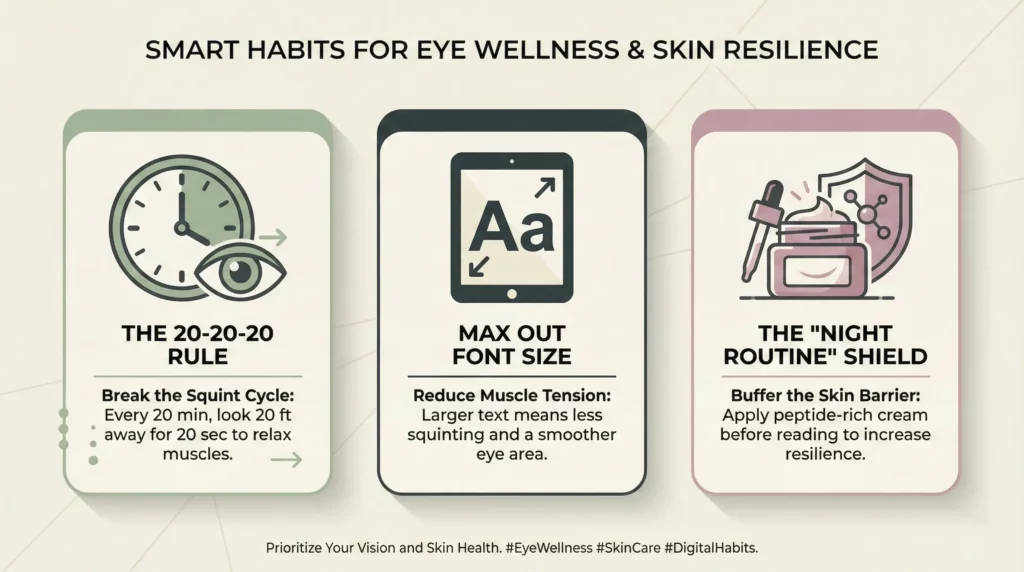
You don’t have to give up your digital library to maintain your youth. Use these high-tech skin-saving habits:
- The “20-20-20” Rule for Wrinkles: Every 20 minutes, look 20 feet away for 20 seconds. This relaxes the eye muscles and prevents the permanent “setting” of squint lines.
- Max Out the Font Size: Don’t let your ego dictate your font size. Larger text reduces the need for muscular contraction, keeping your eye area smooth and relaxed.
- The “Night Routine” Shield: Before a late-night reading session, apply an Eye Cream rich in Peptides or Ceramides. This provides a “buffer” for the skin, making it more resilient to the physical creasing caused by squinting.
Expert Insight
“The skin around the eyes is up to ten times thinner than the rest of the face. Repetitive movements, like squinting at a screen, break down the collagen scaffold much faster than we realize. I tell my patients over 30: if you’re a heavy digital reader, your best anti-aging tool isn’t a cream—it’s a larger font size and a pair of blue-light blocking glasses.”
— Dr. Shereene Idriss, Board-Certified Dermatologist and founder of Idriss Dermatology.
Conclusion: Reading Without the Residue
Your love for literature shouldn’t leave a permanent mark on your face. By being mindful of your digital reading environment—adjusting brightness, increasing font size, and prioritizing your Night Routine—you can enjoy your stories while keeping your Crow’s Feet at bay. Protecting your Mental Health through reading is vital, but protecting your skin’s integrity ensures you feel as good as the books you read.
Do you find yourself squinting at your e-reader even with the lights on? Have you noticed your ‘Crow’s Feet’ looking more prominent after a long reading binge? Share your memories and observations in the comments below!
Show us your “Skin-Safe” reading nook—extra points for Sage Green cushions—using #sylvaia_com on social media!