Dry Scalp vs. Winter Dandruff: How to Tell Which One is Flaking in the Cold
Table of contents
The Winter Flake Dilemma: Why the Cold Clouds Your Diagnosis
As the temperature drops and the indoor heating turns up, many of us notice a sudden dusting of white “snow” on our shoulders. The natural instinct is to reach for a medicated shampoo, assuming that any flake is automatically dandruff. However, winter presents a unique biological dilemma: the cold air and low humidity can cause your scalp to become as dehydrated as your hands or face.
Using aggressive antifungal treatments on a scalp that is simply thirsty will strip away the remaining Skin Barrier, leading to more irritation and even potential hair thinning. To protect your Scalp Health, you must determine if you are dealing with a lack of oil (Dry Scalp) or an inflammatory reaction to oil (Winter Dandruff).
Dry Scalp vs. Winter Dandruff: The Comparison Table
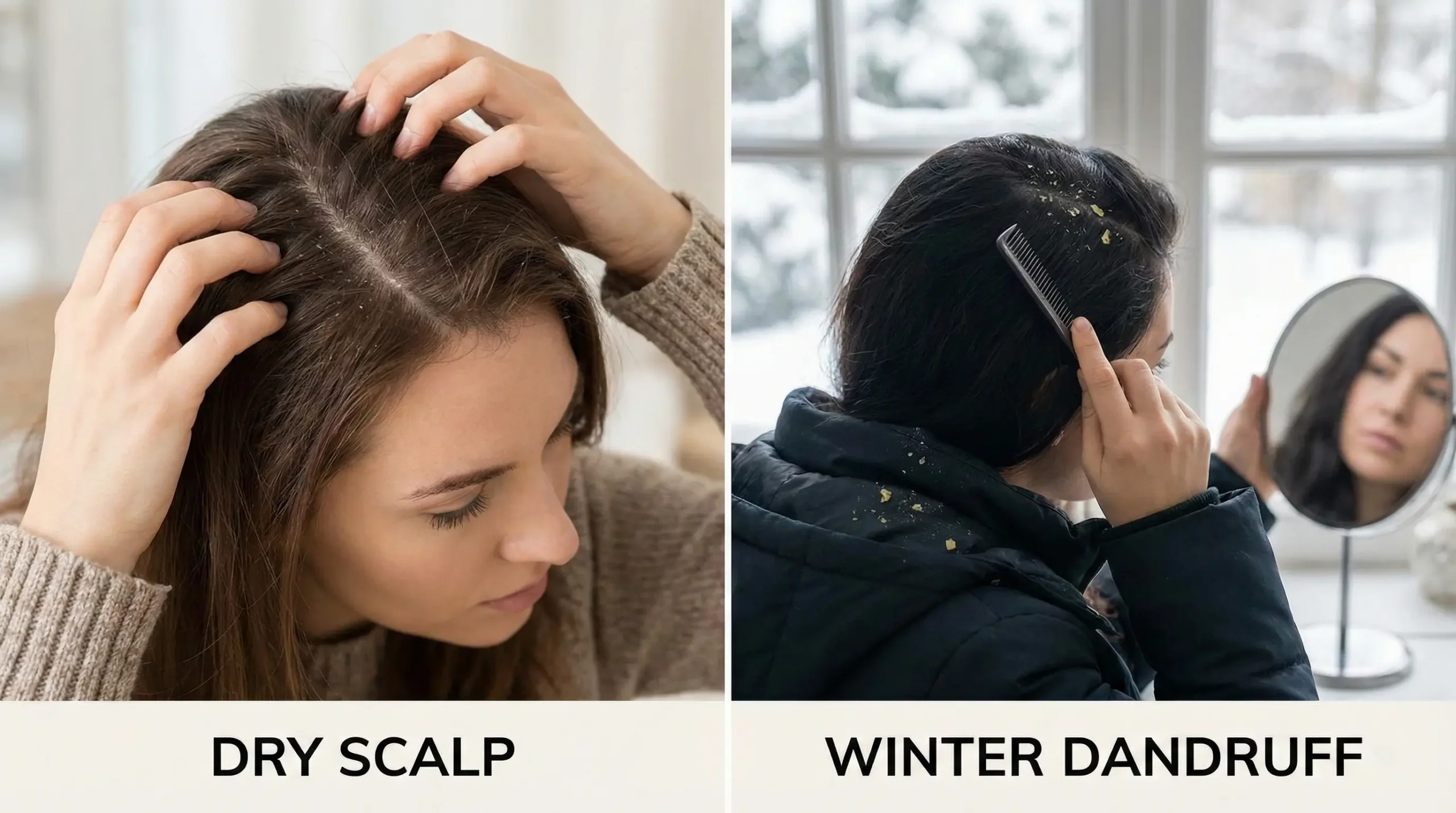
Identifying the physical characteristics of your flakes is the first step in a successful Scalp Health 101 diagnosis.
| Feature | Dry Scalp (Dehydration) | Winter Dandruff (Fungal Flare) |
| Flake Appearance | Small, dry, and white. | Large, waxy, and yellowish. |
| Scalp Sensation | Tight, “stretchy,” or prickly itch. | Deep itch, often with oily residue. |
| Hair Texture | Generally dry or frizzy. | Often oily or greasy at the roots. |
| Reaction to Cold | Worse after hot showers/indoor heat. | Worse after wearing hats or sweating. |
| Recovery | Responds quickly to moisture/oil. | Needs active ingredients to clear. |
Decoding the Environmental Triggers
The Moisture Thief: Dry Scalp
In winter, the atmospheric humidity plummeted. When you step from the freezing outdoors into a heated office, your scalp experiences “trans-epidermal water loss.” This evaporates the moisture within your skin cells, causing them to shrink and flake off. This is a common part of Is It Dry Scalp or Dandruff? confusion, where the skin is simply too brittle to stay intact.
The Greenhouse Effect: Winter Dandruff
Ironically, winter can also trigger an Oily Scalp. Wearing thick beanies or hats for long periods creates a warm, humid environment. This “greenhouse effect” is the perfect incubator for The Hidden Fungus on Most Scalps, known as Malassezia. When you wash your hair less frequently to avoid the cold, the sebum builds up, providing a feast for this fungus and triggering an inflammatory flare-up.
The “60-Second Moisture Test”
If you are still unsure, perform this quick check: Apply a single drop of a lightweight hair oil or Moisturizer to a small, flaky patch on your scalp before bed.
- If the flakes disappear and the area feels calm the next morning, you have a Dry Scalp.
- If the area remains flaky or feels more irritated and “boggy,” you are likely dealing with Winter Dandruff.
This test helps you stop the guessing game and prevents you from aggravating your Scalp Psoriasis vs. Dandruff risks.
Targeted Recovery Strategies
According to the American Academy of Dermatology (AAD), how you treat your scalp depends entirely on the source of the flake.
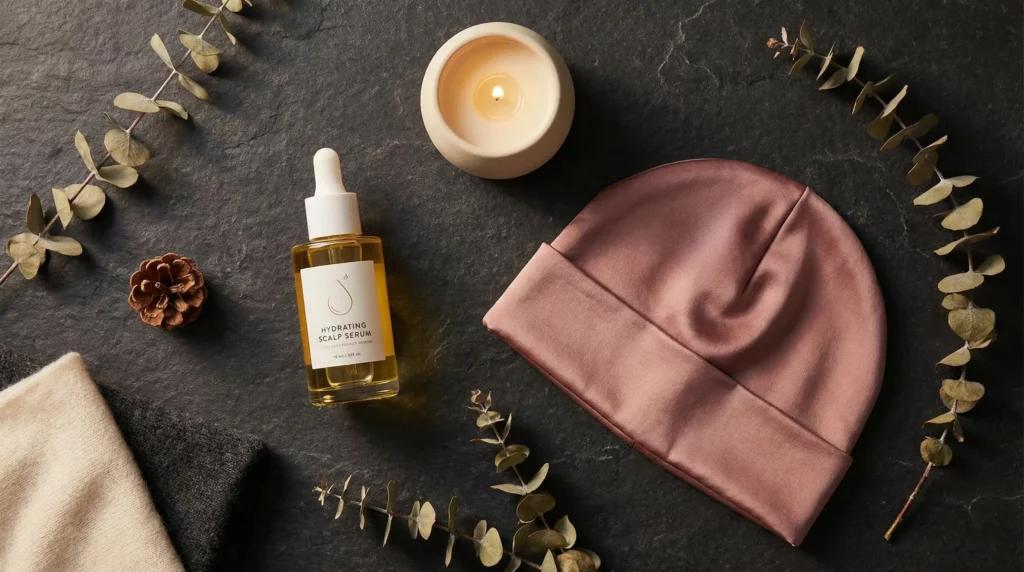
- The Hydration Protocol: If your scalp is dry, switch to a sulfate-free Shampoo and apply a scalp-specific serum containing hyaluronic acid. Avoid scalding hot water, which further damages the lipid barrier.
- The Clarifying Protocol: If it’s dandruff, use a formula with Salicylic Acid or Zinc Pyrithione to break down the waxy buildup. Ensure you are rinsing thoroughly after every workout to remove trapped sweat.
- The Systemic Support: During the colder months, Seasonal Hair Loss can be exacerbated by internal stress. Ensure you are managing Cortisol levels to keep your skin’s immune response stable.
Conclusion: Protecting Your Roots Through the Frost
Winter shouldn’t be a season of discomfort. By recognizing whether your scalp is thirsty or congested, you can choose the right products to maintain Hair Strengthening and shine. Correct identification ensures that your Autumn Fallout doesn’t turn into a year-round struggle.
What’s the one product that saves your scalp when the temperature drops? Have you noticed your flakes change when you wear a hat? Share your tips in the comments below!
If you’ve found the perfect winter balance, show us your results using #sylvaia_com on social media!