Is It Dry Scalp or Dandruff? The 60-Second Check That Stops Guessing
Table of contents
The Flake Frustration: Why Your Treatment Might Be Backfiring
There is a specific kind of frustration that comes with seeing white flakes on your favorite Charcoal blazer. Most people immediately reach for the strongest anti-dandruff shampoo they can find, hoping for a quick fix. However, if your scalp is actually just “dry” and not suffering from dandruff, those aggressive antifungal shampoos will strip away what little moisture you have left, making the itching and flaking significantly worse.
The biological reality is that Dry Scalp and Dandruff are two entirely different conditions. One is a lack of moisture, while the other is often a reaction to excess oil and a specific type of fungus. To achieve true Scalp Health and maintain Hair Shine, you must stop guessing and start diagnosing.
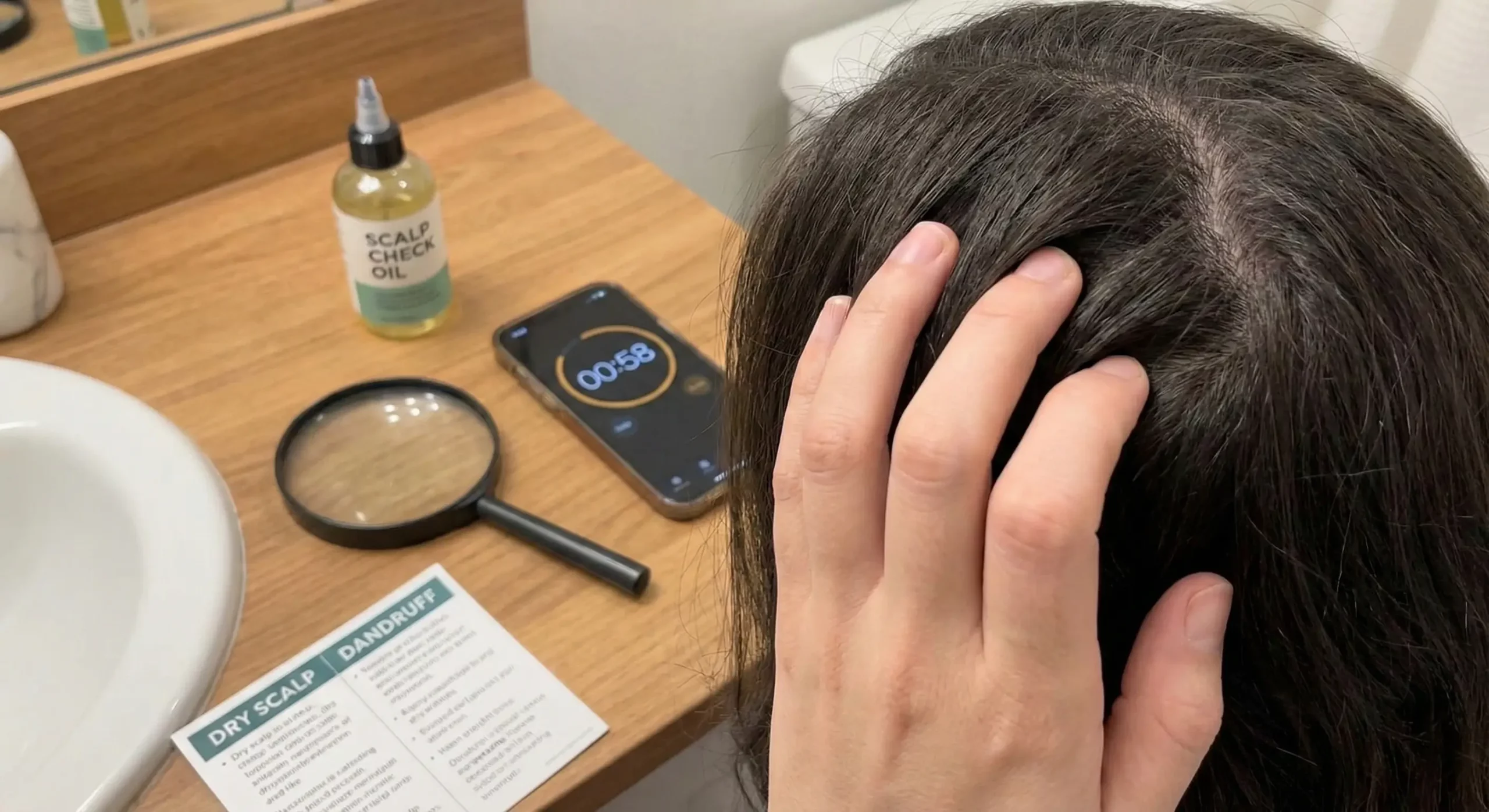
The 60-Second “Pinch & Peep” Test
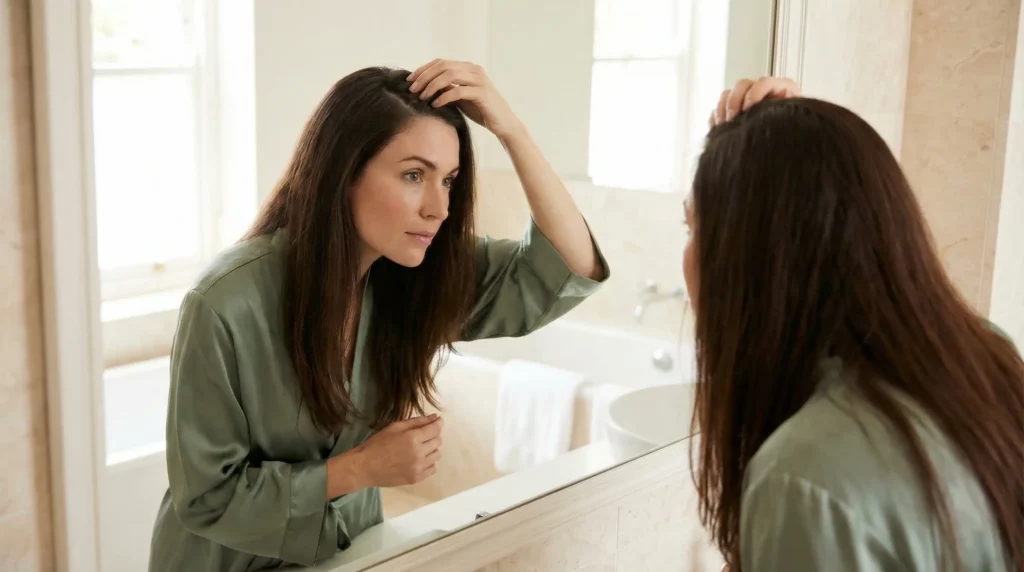
You don’t need a microscope to figure out what’s happening on your head. Perform this quick check in front of a well-lit mirror:
- The Pinch: Gently pinch a small section of the skin on your scalp (near the hairline is easiest). Does it feel tight and look “shiny” or crinkled?
- The Peep: Use a fine-tooth comb to lift a few flakes. Examine them closely under a light.
- The Rub: Rub a flake between your thumb and forefinger. Does it disappear into a dry powder, or does it feel slightly waxy/oily?
The Result: * If the skin feels tight and the flakes are tiny, white, and powdery, it’s a Dry Scalp.
- If the flakes are larger, yellowish, and feel waxy or stick to the hair shaft, it’s Dandruff.
Dry Scalp vs. Dandruff: The Diagnostic Breakdown
Understanding the root cause is the only way to choose the right Shampoo or treatment.
| Feature | Dry Scalp (Dehydration) | Dandruff (Seborrheic Dermatitis) |
| Flake Appearance | Small, dry, and snow-white. | Large, waxy, and often yellowish. |
| Scalp Condition | Tight, dry, and sometimes red. | Oily Scalp with possible inflammation. |
| Itch Level | Persistent “tight” itch. | Intense, “crawling” itch. |
| Hair Quality | Often Dull Hair and frizzy. | Can look greasy even after washing. |
| Root Cause | Loss of moisture/barrier damage. | Overgrowth of Malassezia yeast. |
The Science Behind the Flakes
1. Dry Scalp: The Moisture Barrier Crisis
Just like the skin on your face, your scalp has a protective barrier. When you use harsh sulfates, wash with water that is too hot, or live in a cold, dry climate, this barrier cracks. Moisture escapes, and the top layer of skin sheds prematurely in small, dry dust.
2. Dandruff: The Malassezia Factor
Dandruff is a more complex inflammatory response. A yeast-like fungus called Malassezia lives on everyone’s scalp, feeding on the natural oils (sebum). In some people, the fungus grows out of control, causing the skin cells to renew too quickly and clump together into oily flakes. According to the Mayo Clinic, managing this requires balancing the microbiome rather than just “scrubbing” away the flakes.
It is also important to consider your internal environment. Because your immune system and skin barrier are closely linked to your nervous system, a sudden flare-up of dandruff can often be a physical manifestation of unaddressed daily stressors and hidden anxiety. Managing these internal triggers is just as vital as choosing the right shampoo.
The Targeted Rescue Plan
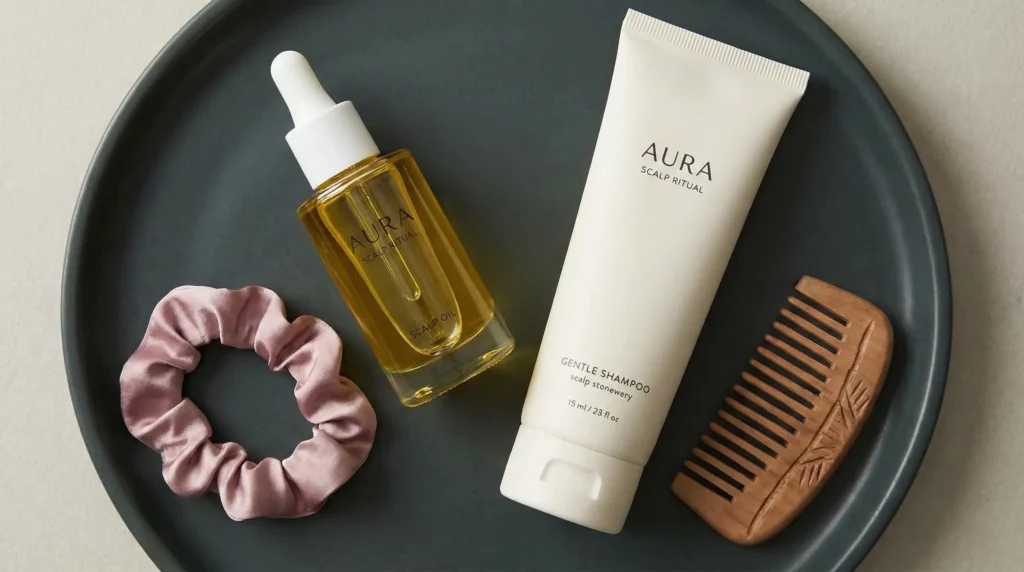
If It’s Dry Scalp: Hydration is Key
- Switch to Sulfate-Free: Use a gentle, creamy Shampoo that doesn’t strip natural lipids.
- Scalp Oil Treatments: Apply a pre-wash oil containing jojoba or squalane to replenish the barrier.
- The Rinse: Always use lukewarm water. Hot water is a primary cause of scalp dehydration.
If It’s Dandruff: Antifungal Intervention
- Active Ingredients: Look for shampoos containing Zinc Pyrithione, Ketoconazole, or Selenium Sulfide to target the yeast.
- Exfoliation: Use a chemical Scrub containing Salicylic Acid to dissolve the waxy buildup without irritating the skin.
- Frequency: Wash more often. Leaving excess oil on a dandruff-prone scalp provides more “food” for the fungus.
Expert Insight
Dr. Anar Mikailov, a board-certified dermatologist and co-founder of Skintensive, has shared his expertise on various medical and skin-health platforms:
“One of the biggest mistakes patients make is treating a dry scalp with harsh anti-dandruff shampoos. These products are designed to remove oil, which is exactly the opposite of what a dry scalp needs. If your flakes are dry and white, you need to treat your scalp like you would dry skin on your face—with hydration and barrier-repairing ingredients.”
Conclusion: Healthy Roots, No Flakes
Your scalp is the “soil” from which your hair grows. Whether you are dealing with seasonal dryness or a fungal flare-up, identifying the correct issue is the only way to achieve long-term Scalp Health. Once the barrier is restored or the yeast is balanced, you’ll see a noticeable improvement in Hair Strengthening and overall shine.
Once you have diagnosed your specific issue, establishing a long-term maintenance plan is the secret to preventing a relapse. You can dive deeper into the biology of your hair follicles by exploring our comprehensive scientific roadmap for permanent scalp health, which covers everything from pH balance to advanced cellular repair.
What have you been using to treat your flakes? Did the 60-second test change your mind about your scalp type? Leave a comment below and share your experience!
If you’ve found the perfect routine for your scalp, show us your healthy hair results using #sylvaia_com on social media!