Cycle-Syncing Skincare: A Weekly Routine for Hormonal Acne & Glowing Skin
Table of contents
- The Monthly Roller Coaster: Why “One Routine” Doesn’t Work
- Week 1: The Menstrual Phase (Days 1–5) — The Great Reset
- Week 2: The Follicular Phase (Days 6–12) — The Golden Glow
- Week 3: The Ovulatory Phase (Days 13–15) — The Sensitivity Peak
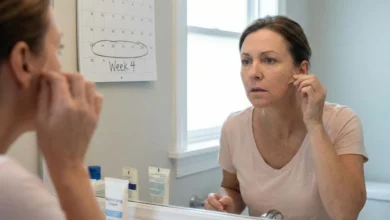
- Week 4: The Luteal Phase (Days 16–28) — The “Breakout” Zone
- The Ultimate Cycle-Syncing Comparison Table
- Managing the Internal Environment
- Wisdom from the Field
- Conclusion: Syncing for Success
The Monthly Roller Coaster: Why “One Routine” Doesn’t Work
Olivia, a 30-year-old architect, noticed a confusing pattern. Her favorite rich Moisturizer made her skin look like glass on a Monday, but by the following Friday, it felt like a layer of “heavy grease” that triggered a breakout. “I thought my skin was just temperamental,” she told us. “I didn’t realize I was fighting a battle that changed every seven days.”
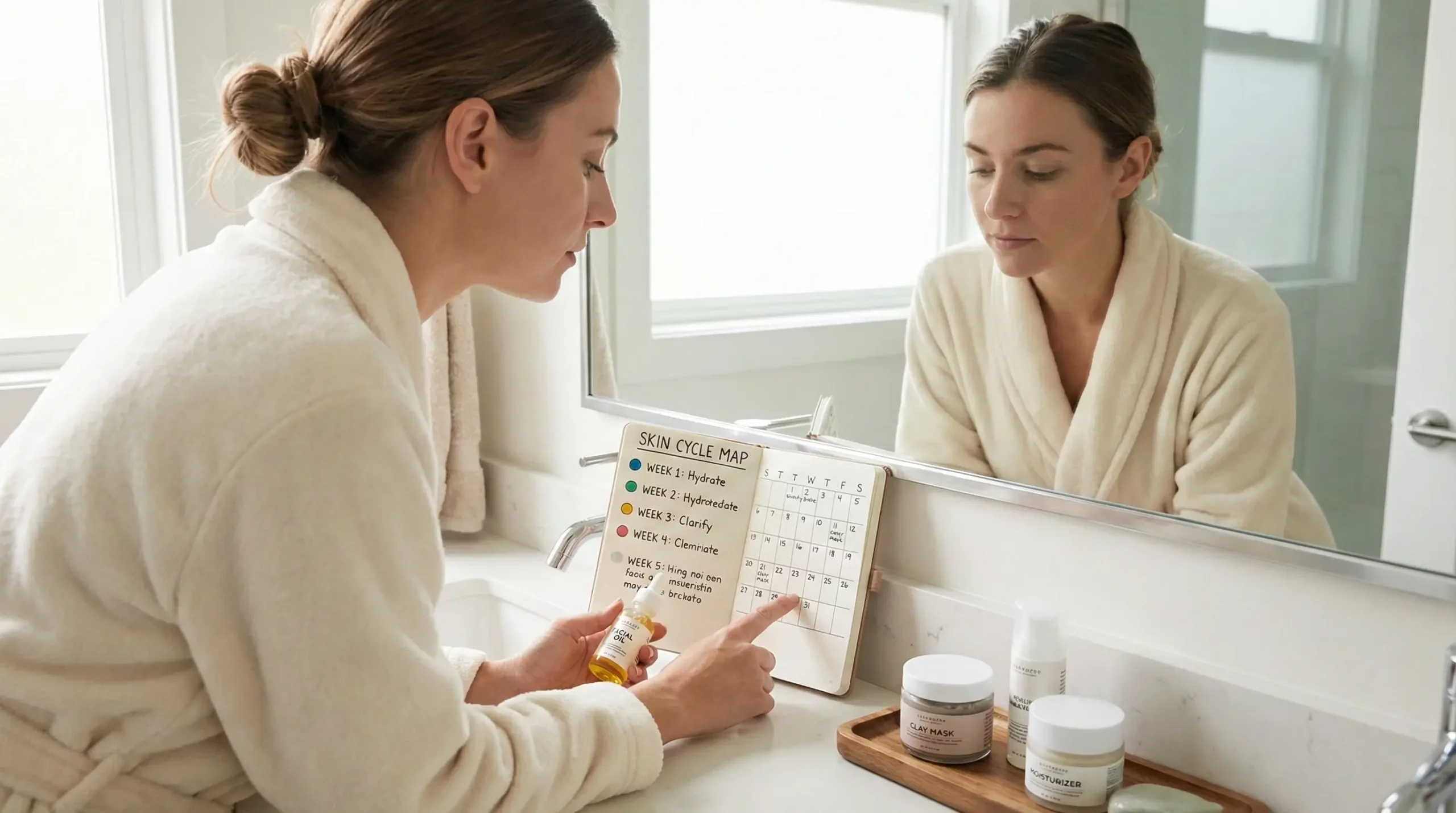
Your skin is a dynamic organ that mirrors your internal hormonal chemistry. In your 30s, these shifts become more pronounced as your body’s baseline levels of Collagen and moisture-retaining lipids begin to fluctuate. Understanding your “Cycle Map” allows you to stop guessing and start giving your skin exactly what it needs, exactly when it needs it.
Week 1: The Menstrual Phase (Days 1–5) — The Great Reset
During this week, your levels of Estrogen and Progesterone are at their lowest. As a result, your skin often feels depleted, dry, and unusually sensitive.
- Skin Behavior: Increased sensitivity, potential for redness, and a lack of “glow.”
- The Action Plan: This is the time to prioritize your Skin Barrier. Focus on soothing ingredients like Ceramides and Hyaluronic Acid.
- What to Avoid: Skip the aggressive chemical peels or new, high-strength Retinol products, as your skin’s defense mechanisms are at their weakest.
Week 2: The Follicular Phase (Days 6–12) — The Golden Glow
As your period ends, Estrogen begins to rise. This is the “sweet spot” for your complexion. Estrogen naturally boosts Collagen production and helps the skin retain moisture.

- Skin Behavior: Smaller Pore Size, increased elasticity, and a naturally radiant “lit-from-within” look.
- The Action Plan: This is your window for Rejuvenation. Use active ingredients like Vitamin C or Peptides to amplify that natural glow. It’s also the best time to try new products or schedule a facial.
Week 3: The Ovulatory Phase (Days 13–15) — The Sensitivity Peak
Around day 14, Estrogen peaks and then drops, while Luteinizing Hormone (LH) surges. This shift can cause a sudden increase in oil production.
- Skin Behavior: High radiance but with an oily T-zone. You might notice your skin becomes more reactive to heavy makeup or thick creams.
- The Action Plan: Shift to a Minimal Routine. Use a gentle Cleanser twice a day and switch to a lightweight, oil-free hydration layer to prevent future clogs.
Week 4: The Luteal Phase (Days 16–28) — The “Breakout” Zone
Progesterone rises during this phase, reaching its peak before crashing right before your period. This is the most challenging time for adult skin. According to research published by the Endocrine Society, these hormonal shifts directly influence sebum production and systemic inflammation.
If you are struggling with persistent breakouts during this specific time, it is essential to determine if they are truly caused by your cycle or by external daily factors. You can use our specific checklist to tell hormonal acne from lifestyle habits to ensure you are treating the right root cause rather than just a surface-level symptom.
- Skin Behavior: Thicker oil, clogged pores, and the onset of painful Hormonal Acne along the jawline.
- The Action Plan: Be proactive. Incorporate Salicylic Acid or Niacinamide into your Night Routine to keep pores clear and calm inflammation before it turns into a blemish.
The Ultimate Cycle-Syncing Comparison Table
| Phase | Dominant Hormone | Skin Vibe | Must-Have Ingredient |
| Menstrual | Low (All) | Dry & Tired | Ceramides |
| Follicular | Rising Estrogen | Strong & Radiant | Vitamin C |
| Ovulatory | Peak Estrogen | Glowy but Oily | Gentle Toner |
| Luteal | High Progesterone | Congested & Reactive | Salicylic Acid |
Managing the Internal Environment
While topical products are vital, your skin’s ability to recover depends on your lifestyle. During the transition into the Luteal phase, your body is more prone to inflammation. Prioritizing Deep Sleep and practicing techniques to lower cortisol—like light yoga or meditation—can significantly reduce the severity of monthly flare-ups.
When your cycle overlaps with a high-pressure week at work, this inflammatory response is often magnified. Understanding why your stress hormones target your chin and jawline can help you implement a “calm plan” that supports your skin barrier when your internal cortisol levels are at their highest.
Wisdom from the Field
“I used to panic and use the strongest acids I owned the moment I saw a PMS pimple. Once I started ‘cycle-syncing’ my shelf, I realized that my skin just needed more hydration and less friction during that time,” says a famous influencer who has spoken with our team about her transition to a hormone-conscious routine.
Conclusion: Syncing for Success
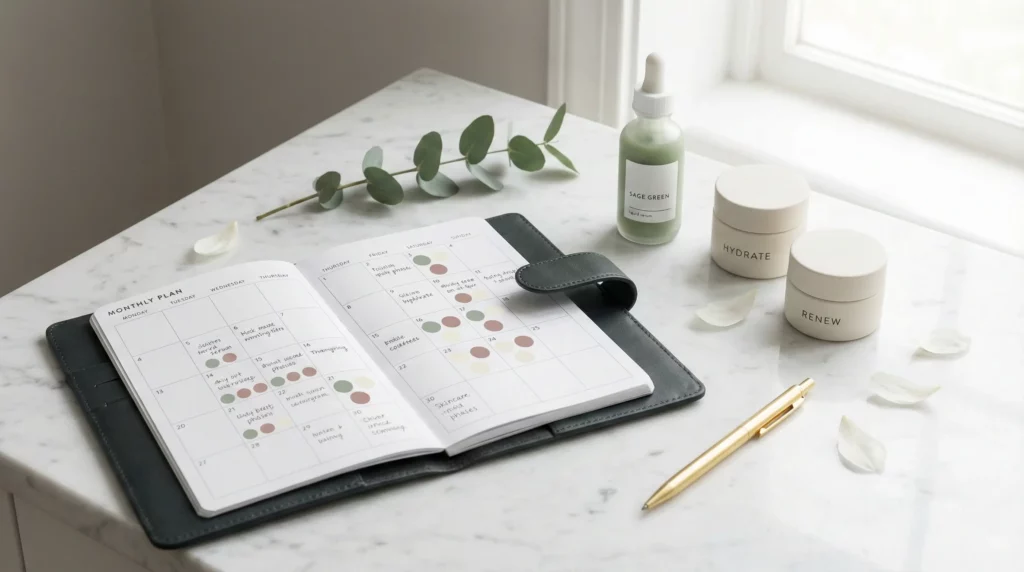
Your skin isn’t “failing” you during the fourth week of your cycle; it is simply responding to a powerful internal rhythm. By following this map, you can work with your biology to maintain a Flawless Base all month long.
Which week of your cycle is the hardest for your skin? Have you tried changing your products based on your period? Share your memories and tips in the comments below!
If you’re starting your cycle-syncing journey, share your “Week 2 Glow” or “Week 4 Rescue Kit” using #sylvaia_com on social media!
Related article: