
Cortisol-driven face puffiness: Why your morning stress makes you look swollen.
Table of contents
The Morning Mirror Shock: Is it Last Night’s Dinner or Your Nervous System?
Many women wake up, look in the mirror, and see a face that feels “heavy,” swollen, or unrecognizable, especially around the eyes and jawline. While a salty meal can cause temporary water retention, persistent morning puffiness is often a physical manifestation of high Cortisol levels. This is the biological “stress face.”
When you are under chronic pressure, your adrenal glands pump out cortisol to prepare you for a “threat.” However, cortisol is also a mineralocorticoid, meaning it influences how your kidneys manage salt and water. High cortisol levels signal the body to retain sodium and dump potassium, leading to fluid accumulation in the soft tissues of the face. Understanding if you are experiencing Hidden Stress in Women is essential to identifying why your face feels “inflamed” even after a clean diet.
Salt Retention vs. Cortisol Swelling: The Comparison Table
Distinguishing between “sodium bloat” and “stress puffiness” helps you choose the right recovery protocol.
| Feature | Sodium-Induced Bloat | Cortisol-Driven Puffiness |
| Primary Cause | Excess salt intake or dehydration. | Chronic stress or Burnout. |
| Duration | Usually clears by mid-day. | Persists throughout the day or weeks. |
| Associated Signs | Thirst and dry mouth. | High anxiety, “wired” feeling, and fatigue. |
| Biological Trigger | Temporary electrolyte imbalance. | Systemic hormonal dysregulation. |
| Skin Texture | Stretched but usually clear. | Prone to Stress Breakouts and redness. |
The Biological Mechanism of “Stress Face”
Cortisol doesn’t just hold onto water; it actively alters your Sleep Architecture. When your cortisol levels spike prematurely—often around 3 a.m.—it disrupts your Deep Sleep. This disruption prevents the lymphatic system from efficiently draining metabolic waste and fluid from your facial tissues.
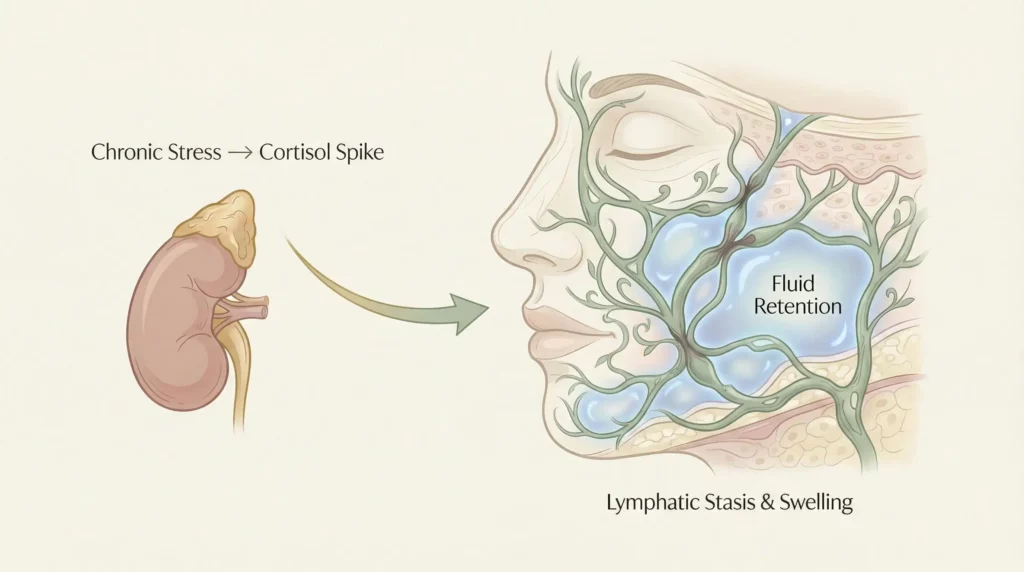
1. The Lymphatic Stasis
The lymphatic system, unlike the circulatory system, doesn’t have a pump (like the heart). It relies on movement and deep, restorative sleep. High stress creates muscle tension in the neck and jaw, which physically constricts the lymphatic channels, causing fluid to pool in the cheeks and under the eyes.
2. The Inflammation Cascade
High cortisol is pro-inflammatory. It weakens the Skin Barrier, making your skin more reactive. This internal inflammation causes the blood vessels to dilate (vasodilation), which leads to the “swollen” and “flushed” appearance often seen in women over 30 who are balancing high-stakes careers and home life.
According to research published in the journal Frontiers in Endocrinology, chronic glucocorticoid (cortisol) exposure is directly linked to changes in adipose tissue distribution and increased fluid retention in the face and trunk.
The 5-Minute “Anti-Puff” Rescue Plan
If you wake up feeling swollen, you need to manually assist your body in clearing the cortisol-induced fluid.
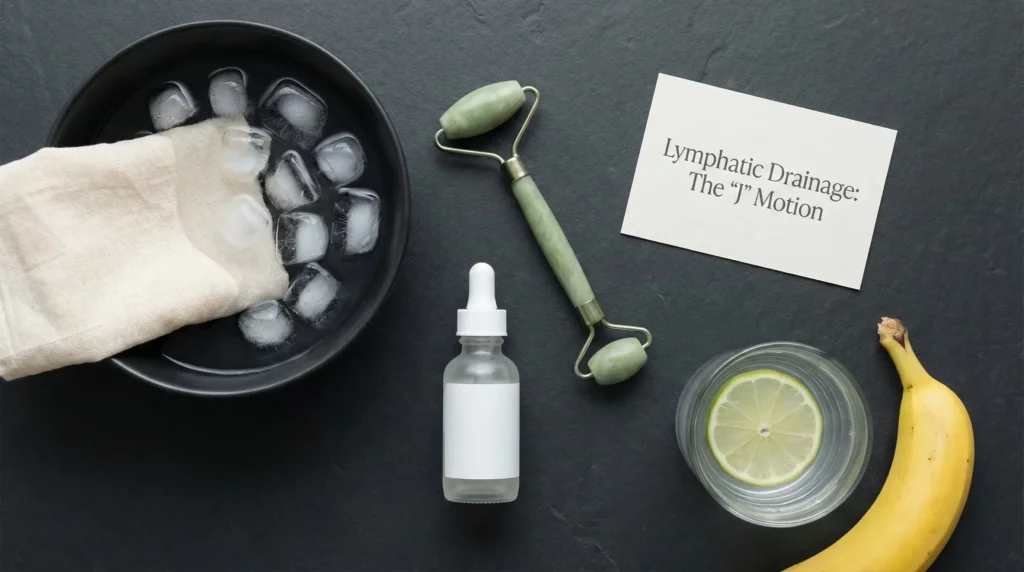
- Temperature Shock: Splash your face with ice-cold water for 30 seconds. This causes “vasoconstriction,” forcing the excess fluid out of the facial tissues and back into the circulatory system.
- Lymphatic Drainage (The “J” Motion): Using a lightweight Moisturizer, use your fingertips to gently “sweep” from the center of your face outward toward your ears, then down the neck. This manually clears the stagnant lymph.
- Hydrate with Potassium: Instead of just plain water, opt for a drink high in potassium (like coconut water or a banana smoothie). Potassium helps your kidneys flush out the excess sodium that cortisol is trying to hold onto.
- Grounding Breathwork: High cortisol keeps you in a sympathetic state. Taking 2 minutes for deep, diaphragmatic breathing signals the vagus nerve to switch to the parasympathetic (rest) state, which naturally lowers blood pressure and swelling.
Expert Insight
“We often treat puffy skin with expensive topical depuffing eye creams, but if the root cause is cortisol, you’re only treating the symptom. Morning facial swelling is the body’s alarm system. It’s telling you that your nervous system spent the night in ‘survival mode’ rather than ‘repair mode.’ You have to calm the mind to clear the face.”
— Dr. Amy Shah, double board-certified MD and author of I’m So Effing Tired.
Conclusion: Cooling the Internal Fire
Morning puffiness is more than an aesthetic inconvenience; it is a biological data point. By recognizing the link between your stress levels and your facial volume, you can move toward a more sustainable Managing Stress for Women’s Health protocol. Reclaiming your Deep Sleep and managing your morning cortisol spikes will do more for your jawline than any contouring kit ever could.
Do you wake up feeling ‘swollen’ on days when you have a big meeting? Have you tried a cold-water splash to reset your face? Share your memories and results in the comments below!
If you’ve found a ritual that clears your “stress face,” show us your results using #sylvaia_com on social media!