Autumn Hair Shedding: Is It Normal? Causes & How to Manage It
Table of contents
The Autumn Drain Scare: Is This Normal?
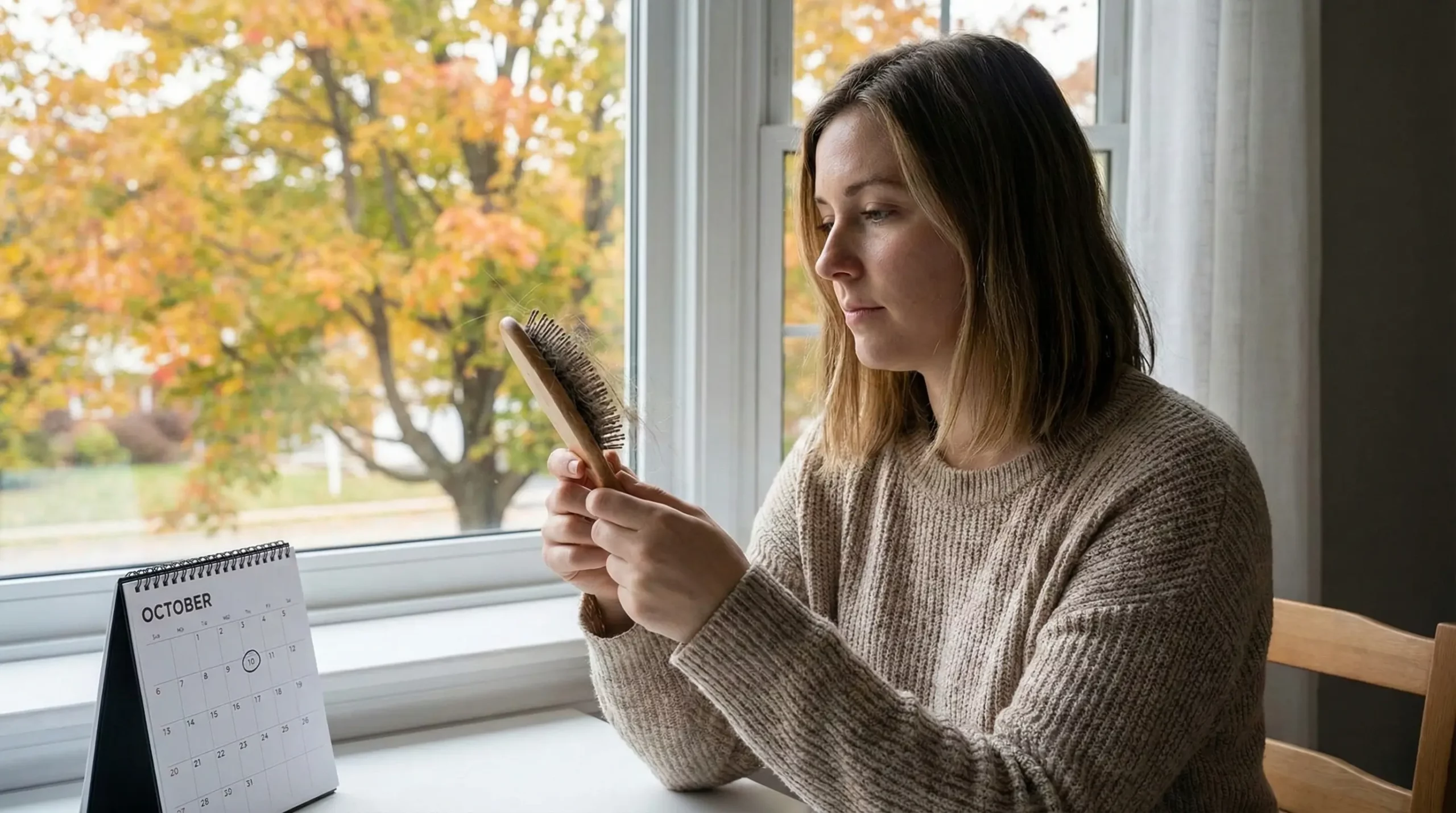
Emma, a 29-year-old teacher, started her morning with a minor panic. As she ran her fingers through her hair while rinsing out her conditioner, a significant clump came away in her hand. By the time she finished brushing, the bristles were “twice as full” as they were in July. “I thought I was losing my hair for good,” she recalled.

If you’ve noticed more hair on your clothes or in the shower lately, take a deep breath. While humans don’t “shed” like pets do, we are subject to evolutionary cycles. Seeing that extra hair in your brush during autumn is a documented biological phenomenon that affects thousands of women every year.
The Biology of the “Autumn Shed”
1. The Telogen Shift
Your hair grows in cycles: Anagen (growth), Catagen (transition), and Telogen (resting/shedding). Research suggests that humans tend to keep more hair in the resting phase during the summer months to protect the scalp from intense UV radiation. When autumn arrives, those hairs have reached the end of their “rest” and fall out simultaneously.
2. The 100-Day Lag
The hair you are losing in October actually stopped growing about three months ago. This “lag” means that the physiological stressors of mid-summer—heat, dehydration, or increased sun exposure—are only manifesting as Seasonal Shedding now.
3. Sunlight and Melatonin
As the days get shorter, the change in light exposure affects your pineal gland. This shift influences melatonin and prolactin levels, hormones that play a subtle but key role in the regulation of Hair Growth.
Is It Seasonal or Something More?
It is vital to distinguish between a temporary phase and a deeper issue like loss of volume over time. Use this checklist to narrow it down:
| Feature | Seasonal Shedding | Telogen Effluvium (Stress) | Permanent Thinning |
| Duration | 4–6 weeks | 3–6 months | Progressive/Ongoing |
| Pattern | Diffuse (all over) | Sudden, heavy clumps | Widening part or temples |
| Root Cause | Light and temperature shifts | Fever, surgery, or major stress | Genetics or hormones |
| Recovery | Self-correcting | Recovers once stress ends | Requires active treatment |
5 Ways to Support Your Strands During a Transition
1. Prioritize Scalp Health
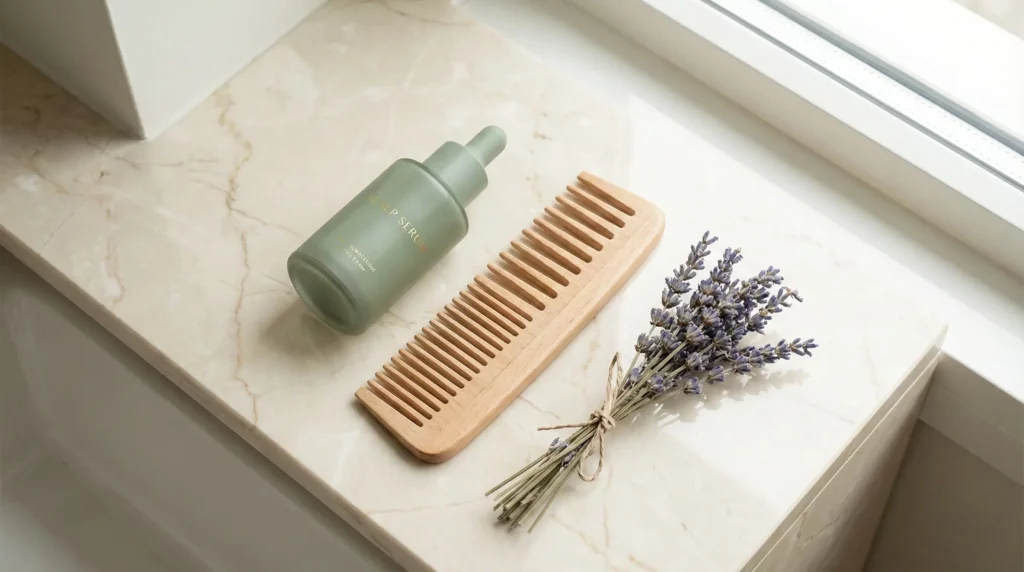
A healthy “soil” produces healthy “grass.” Focus on keeping your roots clean and healthy by using a clarifying Shampoo once a week. This removes sebum and environmental pollutants that can suffocate the follicle.
2. The Internal Support System
Your hair is the last part of your body to receive nutrients. Ensure you are taking high-quality Supplements rich in Iron, Vitamin D, and Zinc. According to the American Academy of Dermatology, nutritional deficiencies are one of the most common “hidden” reasons for prolonged shedding.
This internal approach to beauty is a long-term commitment. Just as your hair requires specific building blocks to survive the autumn shed, you may notice that focusing on your nutrition also helps in building resilience in your other keratin-based features, ensuring your overall aesthetic remains strong and polished from head to toe.
3. Lowering the “Stress Spike”
The transition from summer to a busy work season can spike your Cortisol levels. High stress forces even more hair into the telogen phase. Practicing Deep Sleep hygiene and meditation can literally help you keep your hair.
4. Gentle Handling & Product Layering
Avoid excessive heat styling during peak shedding months. Use a Hair Mask once a week to improve elasticity and prevent breakage. When the hair is fragile, Product Layering should focus on lightweight moisture rather than heavy waxes.
While managing the quantity of your hair is a priority during the fall, managing the quality of the strands that remain is equally important. When hair is thinner or more fragile, it becomes more susceptible to environmental changes. You can protect your existing volume by choosing the right protective barriers for your hair that shield against static and texture changes without causing breakage.
5. Professional Intervention
If you see no improvement after two months, it may be time to consult a specialist about Laser Therapy or Microneedling for the scalp to jumpstart the follicles back into the growth phase.
A Perspective from the Pros
“I used to freak out every October until I realized my body was just making room for new, stronger growth. Now, I treat my autumn hair shedding like a ‘detox’ for my scalp,” says a famous influencer who has spoken with our team about her journey with Hair Strengthening and seasonal changes.
Conclusion: Embracing the Cycle
Losing hair is emotional, but in the fall, it is often just your body’s way of hitting the “reset” button. By focusing on a Minimal Routine that supports your scalp and managing your internal stress, you can navigate this season with confidence.
Have you noticed a change in your hair thickness this month? What’s your go-to “emergency” hair treatment? Share your memories or tips in the comments below!
If you’re trying a new routine to combat the shed, show us your progress using #sylvaia_com on social media!
Related article:


