Perfume Concentration

Shopping for a new fragrance often feels like a gamble when you don’t understand the cryptic labels on the bottle. For women in their 30s to 50s, a perfume is an investment in their personal brand, yet many find themselves frustrated when a beautiful scent—purchased at a premium price—either fades within an hour or feels far too aggressive for a closed-door meeting. This confusion makes it difficult to align your fragrance with your environment, leading to a mismatched presence that doesn’t reflect your actual sophistication.

This issue is frequently ignored because the fragrance industry relies heavily on emotional marketing rather than technical education. Brands often prioritize the “story” of a scent over its chemical composition, leaving the consumer to guess how long a fragrance will actually last on the skin. Because the technical differences between labels like Eau de Parfum and Eau de Toilette are rarely explained at the counter, many women end up with bottles that don’t suit their lifestyle, simply because the concentration levels weren’t transparently discussed.

In this section, we pull back the curtain on the chemistry of concentration. You will learn exactly what those French terms mean for your skin and your wallet, from the high oil content of Pure Parfum to the light, refreshing lift of a Cologne. We provide a practical framework for choosing the right intensity for your specific needs, helping you understand how sillage and longevity change with each category so you can shop with the confidence of a true connoisseur.

To master the technical side of fragrance and find the perfect intensity for any occasion, read the full details here: Perfume Concentrations Explained: Parfum vs. EDP vs. EDT.

  • A photograph of three classic Eau de Cologne bottles—4711 Original, Acqua di Parma Colonia with its yellow tube, and Guerlain Eau de Cologne Impériale—arranged on a rustic wooden table next to an open notebook with handwritten review notes

    We Reviewed 3 Classic and Popular Eau de Colognes (From 4711 to Acqua di Parma)

    Table of contentsThe Science of Volatility: Why Colognes FadeThe Classic Cologne Comparison TableThe Timeless Three: A Deep Dive1. 4711 Original Eau de Cologne2. Acqua di Parma Colonia3. Guerlain Eau de Cologne ImpérialeThe Verdict: Which Freshness Should You Choose? In the modern world of “Extrait de…

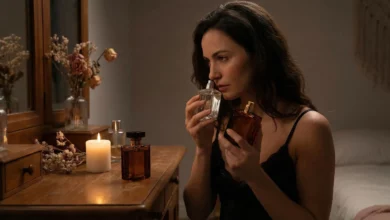
  • A woman thoughtfully comparing the scent of a perfume from a clear bottle against a dark amber bottle in a dimly lit room, illustrating how light exposure affects fragrance

    Beyond the Label: Why Your Favorite Scent Smells Different in the Darker Bottle

    Table of contentsThe Physics of Fragrance: How Alcohol “Pushes” the ScentThe Performance Breakdown: EDT vs. EDP vs. ParfumNote Shifting: The “Top-Heavy” vs. “Base-Heavy” RealityWhy Brands Tweak the Formula It is a common disappointment at the beauty counter. You’ve loved your “Eau de Toilette” for years,…

  • Side-by-side view of Dior Sauvage Eau de Toilette and Eau de Parfum bottles arranged on a stylish vanity table

    Dior Sauvage Battle: EDT vs. EDP — Which One Actually Gets More Compliments?

    Table of contentsThe Science: It’s Not Just ConcentrationComparison: The “Loudness” TestThe Deep Dive Breakdown1. The EDT (The Party King)2. The EDP (The Date Night Choice)The Verdict It is the blue bottle you see in every airport duty-free shop and on every “Best Seller” list. Since…

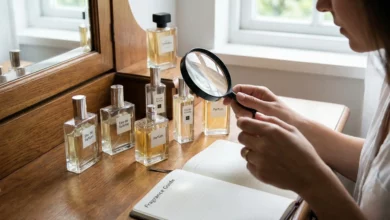
  • A woman using a magnifying glass to examine different perfume concentration labels, such as 'Parfum' and 'Eau de Toilette', next to a fragrance guide

    Beyond the Label: The Smart Woman’s Guide to Fragrance Concentrations

    Table of contentsThe Hierarchy of Scent (The Math)Comparison: The Concentration Cheat SheetDecoding the Categories1. The “Splash” (Eau de Toilette)2. The “Standard” (Eau de Parfum)3. The “Investment” (Extrait de Parfum)Beware the Marketing AdjectivesThe Verdict The era of the “Blind Buy” is over. We are done buying…

  • Candid shot of a woman on a train feeling self-conscious as passengers around her react to her strong perfume

    The Fear That Our Perfume Is So Strong It Bothers Other People

    Table of contentsThe Science: Why You Can’t Trust Your NoseComparison: The Perception GapThe Etiquette Rules: Sillage vs. ProjectionHow to Apply Without “Nuclear” ProjectionThe Emergency Fix: What if You Overdid It?The Verdict We have all been there. You step into an elevator, and suddenly, you see…

  • A hand sprays a single mist from a luxury perfume extrait bottle, alongside three other numbered bottles ranked for longevity on a marble and silk display

    The “One Spray” Rule: Ranking the Top 4 Extraits That Last 12+ Hours

    Table of contentsThe Science: Why Oil Lasts Longer Than AlcoholComparison: The Spritz vs. The DabThe Official Ranking (The 12-Hour Club)4. The Viral Icon: Maison Francis Kurkdjian – Baccarat Rouge 540 Extrait3. The Gourmand Beast: Nishane – Ani2. The Floral Armor: Parfums de Marly – Delina…

  • Split image comparing perfume oils. Left: henna-decorated hand with traditional Middle Eastern perfume (dusty rose/charcoal). Right: hand holding modern Western perfume (sage green/cream), for fragrance comparisons

    Middle Eastern vs. Western Brands: A Comparison of Their Perfume Oils

    Table of contentsTwo Traditions, Two Philosophies of ScentThe Western Approach: Perfume Oil as a “Format”The Philosophy: An Intimate AlternativeThe Scent Profile & StructureThe PerformanceThe Middle Eastern Approach: Perfume Oil as the “Essence”The Philosophy: The Original Art FormThe Scent Profile & StructureThe PerformanceThe At-a-Glance Comparison TablePro-Tips…

  • Woman contemplating a collection of unbranded body mists in a chic bedroom with dusty rose, sage green, and charcoal decor, for fragrance and beauty product reviews.

    Are “Body Mists” Like Those from Victoria’s Secret Worth Buying

    Table of contentsThe Alluring, Affordable Scent: Deconstructing the Body MistThe Science: The Lightest Concentration on the SpectrumThe “PROS”: Why a Body Mist Can Be a Smart PurchasePro #1: Unbeatable Price and VolumePro #2: They Are Perfect for “Scent Layering”Pro #3: They’re Light and InoffensiveThe “CONS”:…

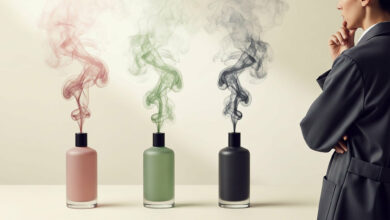
  • Woman contemplates fragrance sillage from three perfume bottles (dusty rose, sage green, charcoal) emitting colored smoke, representing scent concentration and projection.

    Does Higher Concentration Always Mean More Sillage? A Scientific Review

    Table of contentsThe Great Fragrance Misconception: Longevity vs. ProjectionThe Science: Deconstructing How a Perfume PerformsThe Real Driver of Sillage: The Volatility of the MoleculesThe Role of AlcoholThe Nature of the Notes ThemselvesThe “Extrait de Parfum” Paradox: It Lasts Longer, But Sits CloserLess Alcohol = Less…

  • showing a method for making Eau de Toilette last longer. On the left, a person with a disappointed expression smells their wrist against a cream and charcoal background. On the right, the same person smells their wrist with a happy and confident expression against a dusty rose and sage green background. Next to them is a bottle of perfume and a jar of moisturizer, suggesting that moisturizing before applying perfume is the key to longevity.

    The Best Method to Increase the Longevity of an Eau de Toilette (EDT)

    Table of contentsThe EDT Dilemma: You Love the Scent, but It Disappears by LunchtimeThe Golden Rule: Moisturized Skin Holds FragranceThe Ultimate EDT Longevity Ritual: A 5-Step GuideStep 1: Create a Hydrated BaseStep 2: The “Vaseline Hack” for an Occlusive AnchorStep 3: Spray, Don’t MistStep 4:…

  • On the left, a woman in a sage green shirt is in a perfumer's lab, intently studying a small white flower. In front of her is a collection of natural ingredients like cinnamon sticks, star anise, and vanilla beans. On the right, a woman in a dark shirt looks up in awe at a large, glamorous perfume ad on the side of a skyscraper at night. The ad features a sleek perfume bottle against a background of dusty rose and charcoal.

    Is the Price of Pure Parfums Really Due to Their Ingredients or Just Marketing

    Table of contentsThe “Sticker Shock” of the Perfume World’s Highest TierThe Case for “Ingredients”: The Real Cost of Rare MaterialsThe Simple Math of ConcentrationThe World’s Most Precious Raw MaterialsThe Artistry of the PerfumerThe Case for “Marketing”: The Power of the Luxury ExperienceThe Exquisite Bottle and…

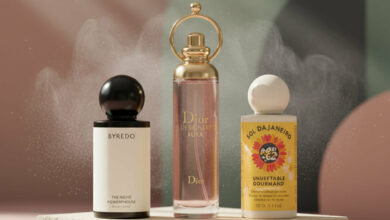
  • A photorealistic image showcasing three popular hair mists, each standing on individual cream-colored stone pedestals against an abstract background of dusty rose and sage green geometric shapes. From left to right: a bottle of Byredo Hair Perfume, a pink bottle of Dior J'adore Hair Mist with a golden ring top, and a yellow bottle of Sol de Janeiro Cheirosa '62 Hair & Body Mist. A fine mist emanates around the bottles, conveying the idea of fragrance.

    Ranking the Best Hair Mists With Good Longevity

    Table of contentsThe Alluring Promise of a Lasting Scent CloudThe Science: Why Hair is a Great (But Tricky) Fragrance CarrierThe Sylvaia Ranking: Our Top 3 Long-Lasting Hair Mists#1 The Niche Powerhouse: Byredo Hair Perfume#2 The Timeless Designer Aura: Dior J’adore Hair Mist#3 The Unbeatable Gourmand:…
  • A guide explaining perfume concentrations, showing three bottles labeled Parfum, EDP, and EDT, with varying liquid color intensity to illustrate the difference between Parfum vs EDP vs EDT.

    Perfume Concentrations Explained: Parfum vs EDP vs EDT

    Table of contentsDecoding the Label: What Do EDP, EDT, and Parfum Really Mean?The Simple Science: Perfume Oil vs. AlcoholA Clear Breakdown of the Most Common ConcentrationsEau de Cologne (EDC)Eau de Toilette (EDT)Eau de Parfum (EDP)Parfum / Extrait de ParfumEDP vs. EDT: Which One Should You…

Back to top button