The Tool Matters: Ranking the Best Brushes to Stop Breakage and Frizz
Table of contents
You can spend hundreds of dollars on bond-building masks and leave-in conditioners, but if you rake through your hair with the wrong tool, you are undoing all that work in seconds.
Many of us use the same brush for everything—detangling in the shower, blow-drying, and styling. This is a recipe for disaster.
Your brush is either a wand or a weapon. Depending on whether your hair is wet or dry, the wrong bristle can snap your strands and roughen the cuticle, creating the very frizz you are trying to fight.
Here is the science of why tools matter and which ones you actually need in your arsenal.
The Science: Why Wet Hair Snaps
Hair is at its most vulnerable when it is wet. Water breaks the hydrogen bonds that give hair its strength and shape.
According to the American Academy of Dermatology (AAD), wet hair is more elastic, meaning it stretches more easily. If you use a dense brush on wet hair, you stretch the strand beyond its “yield point,” causing it to snap instantly. This “mechanical damage” creates short, frizzy flyaways that stick up when your hair dries.
However, your brush isn’t the only source of mechanical damage. The friction caused by rubbing your hair against rough fabrics for eight hours a night can be just as destructive as raking through it with the wrong comb. We explore this often-overlooked culprit in our guide: The “8-Hour” Hack: Why Your Cotton Pillowcase is Ruining Your Hair.
Comparison: Knowing Your Bristles
To stop breakage, you need to match the bristle to the state of your hair (Wet vs. Dry).
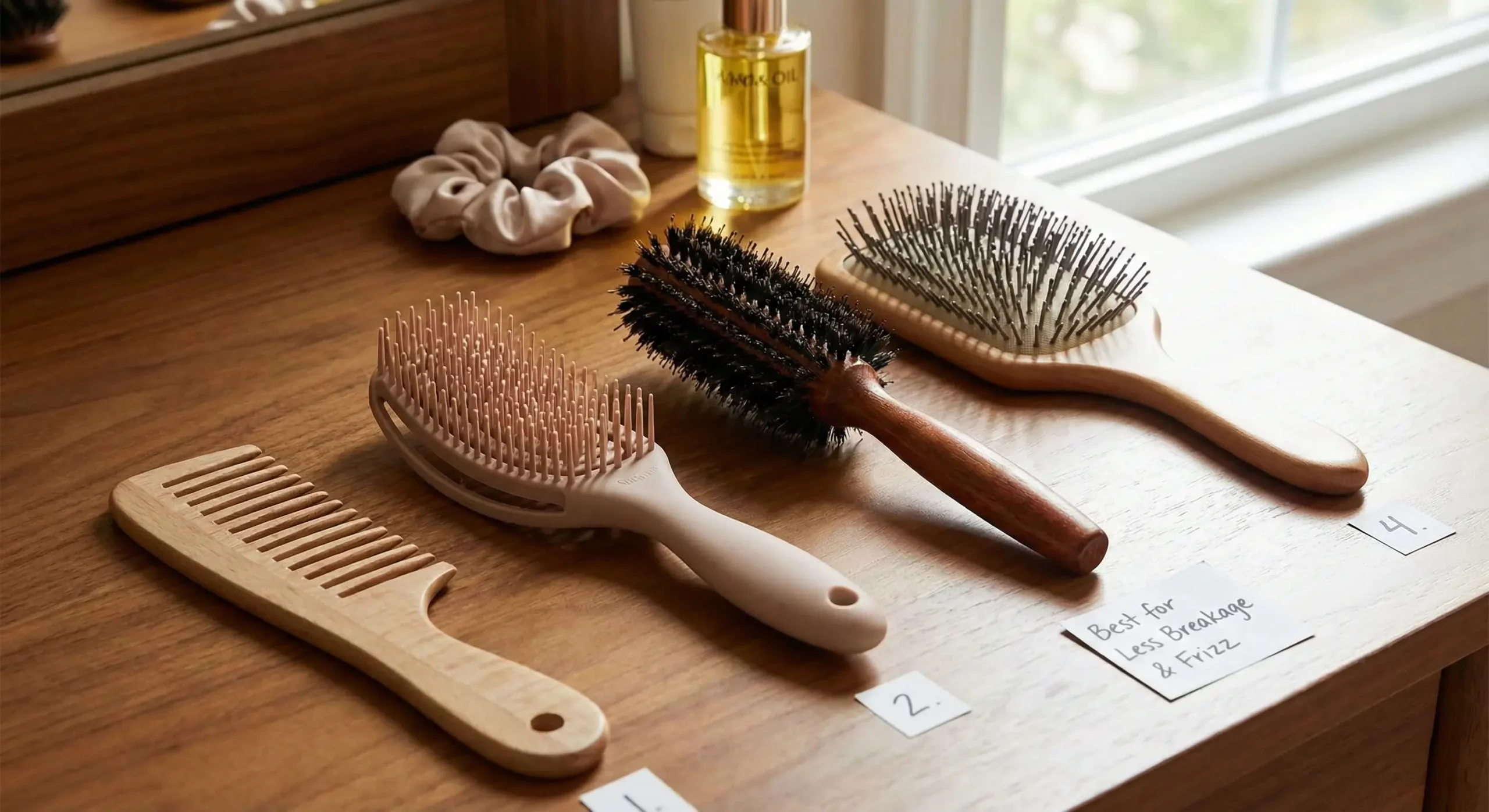
| Tool Type | Bristle Material | Best State | Primary Goal |
| Wide-Tooth Comb | Plastic / Carbon / Wood. | Wet Hair. | Detangling without tension. |
| Boar Bristle Brush | Natural Boar Hair. | Dry Hair Only. | Distributing oils (Shine). |
| Flexible Detangler | Soft, bendy Nylon. | Damp Hair. | Gentle knot removal. |
| Round Brush | Ceramic / Ionic + Nylon. | Damp-to-Dry. | Smoothing and tension (Blow-dry). |
The Official Ranking (By Function)
We tested the top tools to see which ones respect the integrity of the hair shaft.
1. The “Wet” Hero: The Wide-Tooth Comb
- The Winner: A simple, seamless acetate or carbon comb.
- Why it works: The large gaps between teeth allow knots to slip through without forcing them. Unlike a brush, it creates zero tension.
- The Rule: Always keep this in the shower. Use it while your conditioner is on to glide through tangles effortlessly.
2. The Frizz Fighter: The Boar Bristle Brush
- The Winner: A dense brush made of 100% natural boar bristles (like the Mason Pearson style).
- Why it works: This is not for detangling. This is for polishing. The natural bristles have a microscopic structure similar to human hair. They pick up the sebum (natural oil) from your scalp and drag it down to your dry, frizzy ends.
- The Result: It acts as a natural “anti-frizz serum,” smoothing the cuticle and adding immense shine. Never use this on wet hair.
3. The Smoother: The Ionic Ceramic Round Brush
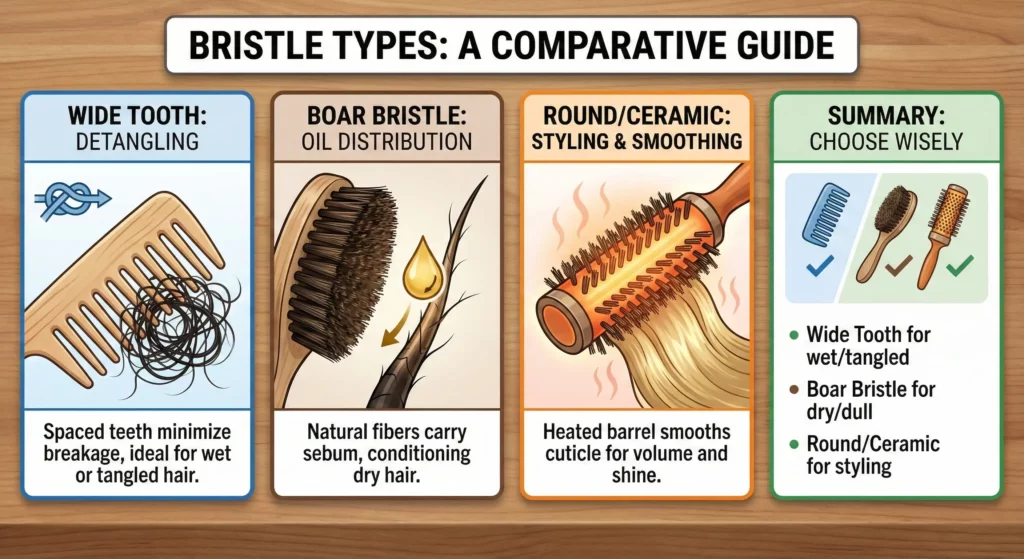
- The Winner: A vented ceramic barrel brush.
- Why it works: If you blow-dry, you need heat and tension to seal the cuticle flat. The ceramic core heats up to mold the hair, while the ionic bristles reduce static electricity, preventing that “balloon” look.
While the right brush helps smooth the cuticle physically, the heat required to mold the hair can still cause thermal damage if you aren’t careful. To ensure your blowout results in shine rather than straw, you must pair your ceramic brush with the right barrier. We tested the top options in our review: We Reviewed the Best Heat Protectants That Don’t Kill Your Hair’s Volume.
The “Bottom-Up” Technique
Even with the best tool, your technique matters.
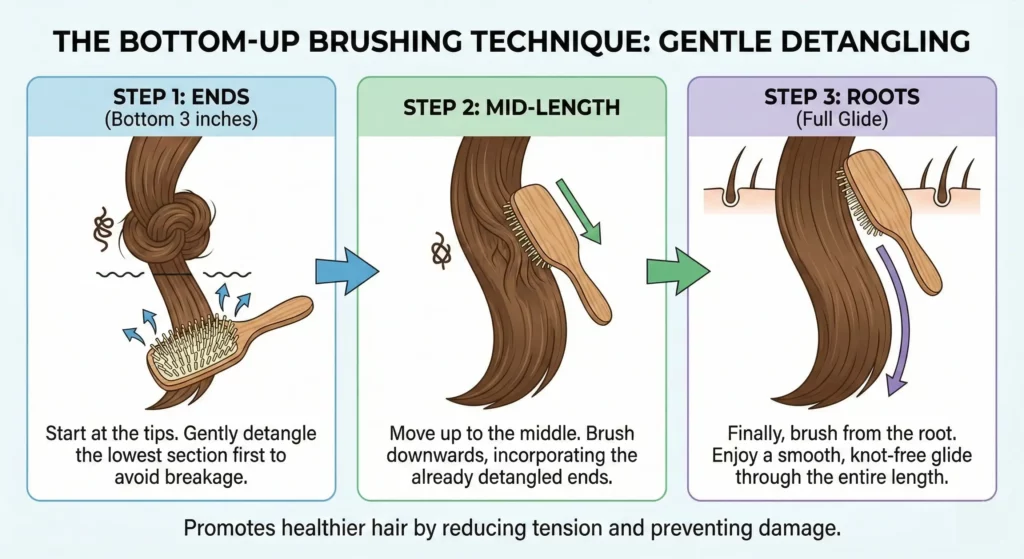
Most people brush from the root down. This pushes all the small knots into one giant knot at the bottom, which you then rip through.
The Fix: Start brushing the bottom 3 inches of your hair. Once clear, move up a few inches. Work your way up to the root.
What is in your bathroom drawer?
Are you guilty of using a round brush on soaking wet hair? Tell us your tool of choice in the comments below!