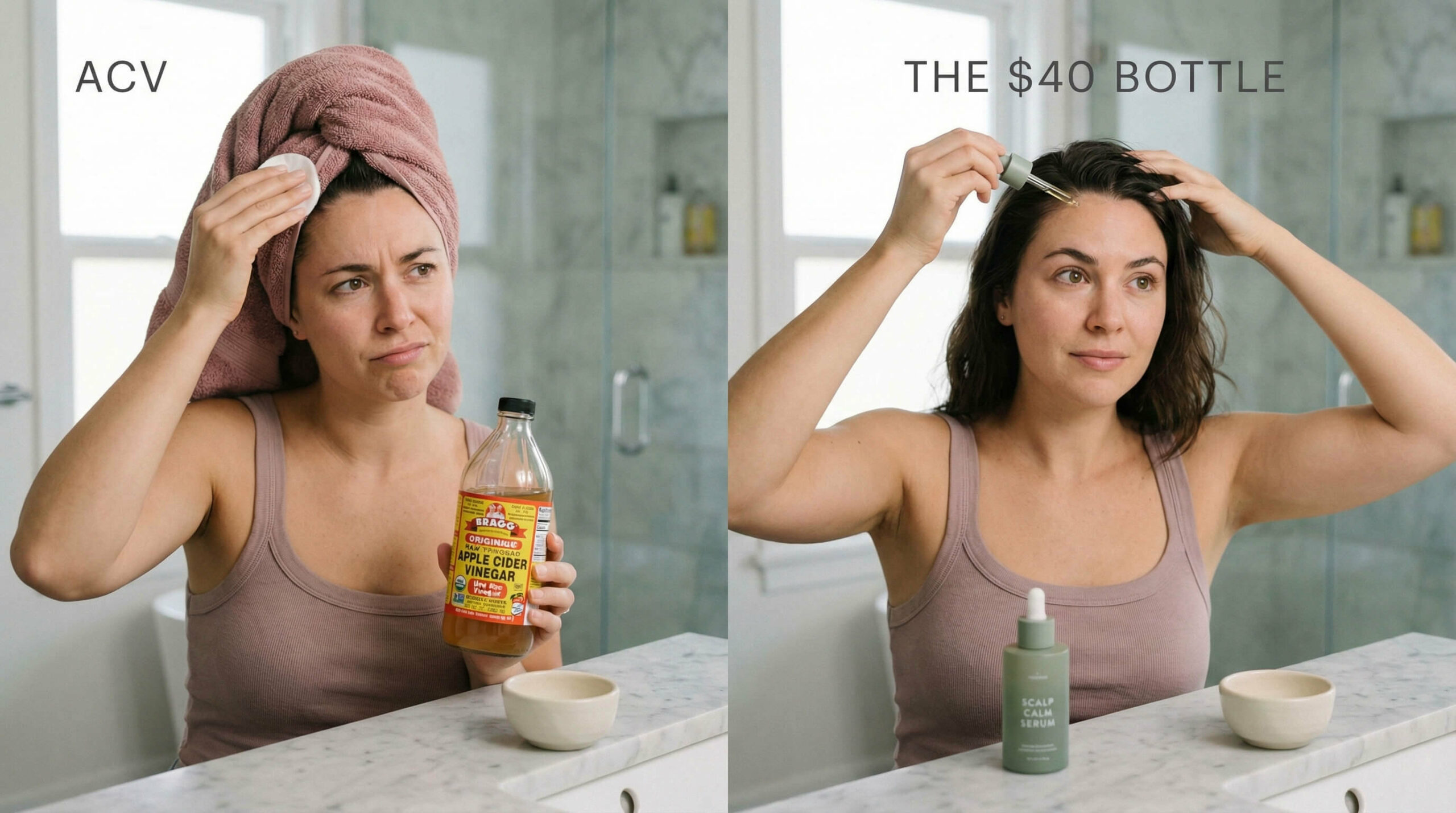
ACV vs. The $40 Bottle: Can Kitchen Vinegar Actually Cure an Itchy Scalp?
Table of contents
ACV vs. The $40 Bottle: Can Kitchen Vinegar Actually Cure an Itchy Scalp?
Chloe had just moved to a new city, and within two weeks, her hair felt like straw. It was waxy, tangled, and dull, and her scalp had developed an unbearable, prickly itch.
She didn’t have dandruff or an infection. She had Hard Water. The mineral-heavy water coming out of her shower was disrupting her hair’s natural chemistry.
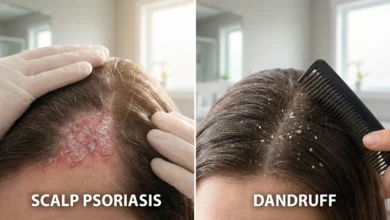
Chloe’s issue was environmental, but sometimes the itch signals a medical condition rather than just mineral buildup. If your scalp is producing actual flakes—whether oily or dry—vinegar might not be enough. We compared the specific clinical solutions for persistent dandruff in our review: The French Pharmacy Fix: Which “Kerium” Shampoo Finally Stopped the Snow?
Chloe stood in the beauty aisle, debating whether to buy a $42 “Clarifying Scalp System.” Instead, she decided to try the internet’s oldest, cheapest hack: Apple Cider Vinegar (ACV).
Could a $5 bottle of salad dressing really outperform luxury science?
The Science: Why Your Scalp Hates Water
To understand why Chloe’s hair was freaking out, you have to look at the pH scale.

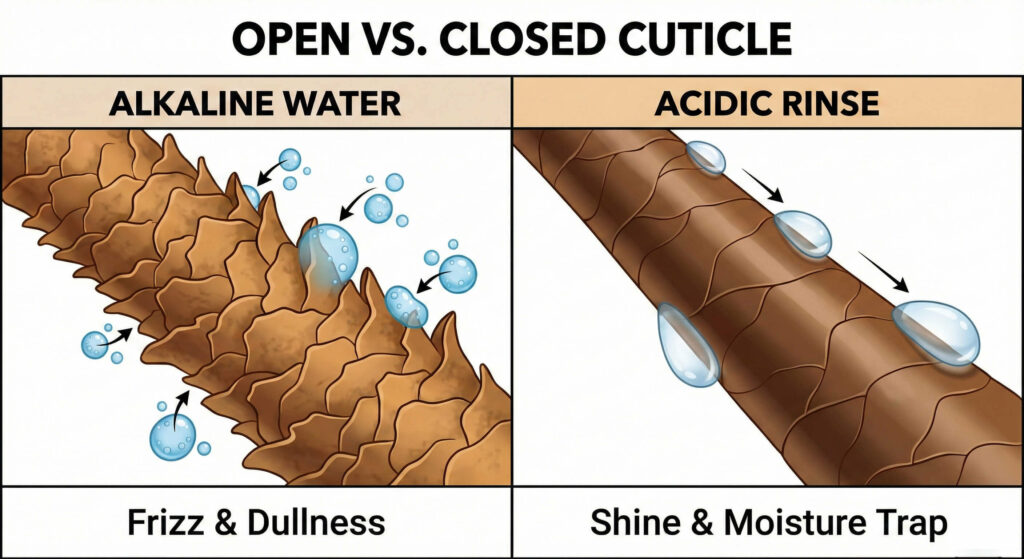
Your scalp and hair are naturally acidic (around pH 4.5 – 5.5). This acidity keeps the hair cuticle (the outer layer) closed and smooth, trapping moisture inside.
Tap water and most commercial soaps are alkaline (pH 7.0 – 9.0).
When alkaline water hits acidic hair, the cuticle lifts up like pinecone scales. This causes friction (tangles), dullness (no light reflection), and creates a breeding ground for bacteria.
According to a study in the International Journal of Trichology, “alkaline shampoos cause the hair fiber to swell,” which leads to cuticle damage and frizz. An acid rinse is the only way to physically close those scales back down.
Comparison: The Kitchen Hack vs. The Luxury Bottle
Chloe tested the DIY method against a popular high-end clarifier. Here is the verdict:
| Feature | Apple Cider Vinegar (The DIY Hack) | Commercial pH Product (The $40 Bottle) |
| Active Ingredient | Acetic Acid (Raw, Unfiltered). | Citric Acid or Lactic Acid. |
| Cost | Pennies per wash. | $30 – $50 per bottle. |
| Scent | Pungent, sour vinegar smell (fades when dry). | Floral, spa-like fragrance. |
| Safety | Risky (Must dilute correctly or it burns). | Safe (Pre-formulated balance). |
| Result | Extreme shine and detangling. | Good shine, softer feel. |
The “Golden Ratio” (Don’t Burn Yourself)
Chloe learned quickly that you cannot pour vinegar straight onto your head. That is a chemical burn waiting to happen.
The Safe Recipe:
- Mix: 1 part ACV to 10 parts cool water.
- Apply: After shampooing (skip conditioner), pour the mix over your scalp and hair.
- Wait: Let it sit for 2-3 minutes. You might feel a slight warming sensation.
- Rinse: Rinse thoroughly with cold water.
When to Buy the Real Thing
While ACV worked miracles for Chloe’s shine and itch, it isn’t for everyone.
If you have Color-Treated Hair, be careful. Unfiltered vinegar can sometimes strip fresh color or turn blonde highlights brassy. In that case, a formulated product like the Kérastase Chroma Absolu (Lactic Acid) is a safer investment because it is stabilized.
The Verdict
For Chloe, the smell was worth the shine. The vinegar instantly dissolved the mineral buildup from the hard water and snapped her cuticles shut. Her itch vanished in one wash.
She saved $37 and fixed her hair with a salad ingredient.
While ACV is a great treatment for the symptoms of hard water, it doesn’t solve the source of the problem. To stop the mineral buildup before it even touches your hair, you might want to treat the water itself. We tested the most effective hardware solutions in our guide: We Reviewed the Best Shower Filters for Removing Color-Stripping Minerals.
Can you handle the smell for the shine?
Or is the “pickle vibe” a dealbreaker for your shower routine? Tell us below if you are Team DIY or Team Luxury!