How Perfume Samples Prevent Wedding Day Fragrance Regret: A $25 Solution
Hannah had found the dress, the shoes, and the venue. But two months before her wedding, she was panicked about one invisible detail: her scent.
She knew the science: Scent is the strongest trigger for memory. She wanted a fragrance that, 20 years from now, would instantly transport her back to the moment she said “I do.”
Standing in a bright, crowded department store, a sales associate aggressively pushed a $350 bottle of a trending floral perfume. “Every bride wears this,” she insisted. Hannah almost bought it.
But she didn’t. Instead, she spent $25 on five tiny samples. That decision saved her from a wedding day disaster.
Hannah’s $25 investment in samples is the single smartest move a fragrance hunter can make. This “try before you buy” model saves money and prevents regret. If you’re inspired by her method and want to know where to find these curated boxes, we’ve reviewed 3 Indie Perfume Discovery Sets That Smell More Expensive Than Designer Brands.
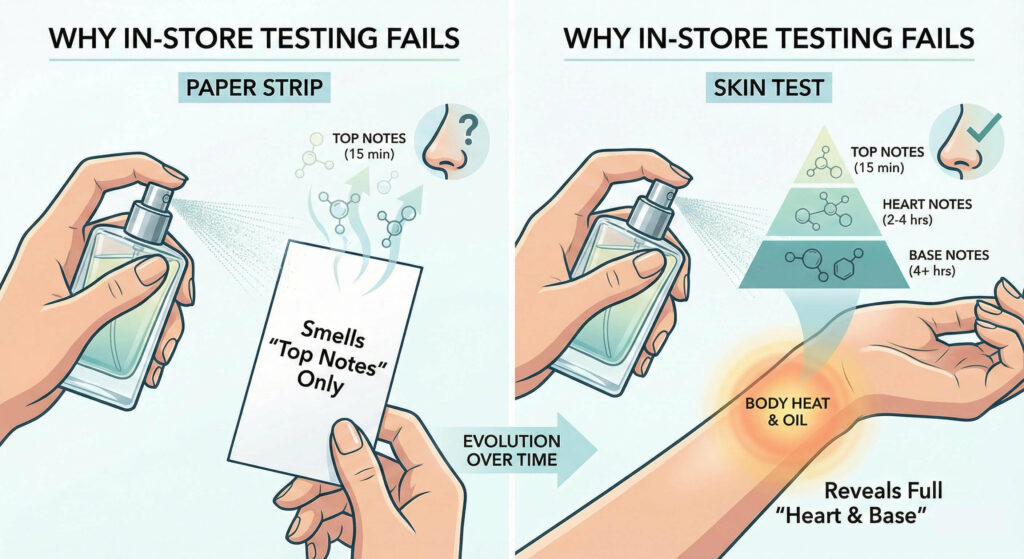
Why You Can’t Trust a Paper Strip
Hannah learned that buying a perfume based on a 30-second spray on a paper strip is like marrying someone after one date.
Perfume is a chemical reaction. It changes based on your body heat, your skin oils, and even your stress levels. According to the Fifth Sense (a charity for smell disorders), the olfactory bulb is directly connected to the Amygdala, the part of the brain that processes emotion and memory. To create a true memory anchor, the scent has to harmonize with you, not just the air.
Comparison: The Store vs. The Sample
Hannah realized that the “Department Store Sprint” was the worst way to choose a forever scent. Here is why the “Slow Sample” method wins:
| Feature | In-Store Spray (The Rush) | At-Home Sampling (The Real Test) |
| Environment | Air is filled with 50 other perfumes. | Neutral environment (your home). |
| Duration | You only smell the “Top Notes” (15 mins). | You smell the “Heart” and “Base” (8+ hours). |
| Chemistry | Sprayed on paper or cold skin. | Reacts with sweat, warmth, and natural oils. |
| Pressure | “Buy it now!” sales tactics. | Zero pressure to decide. |
Hannah’s “Stress Test” Method
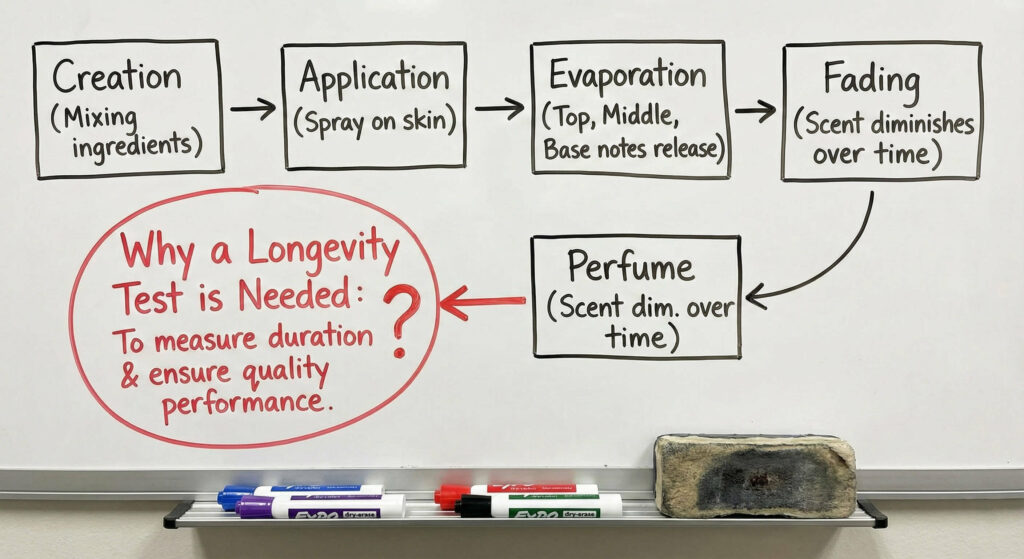
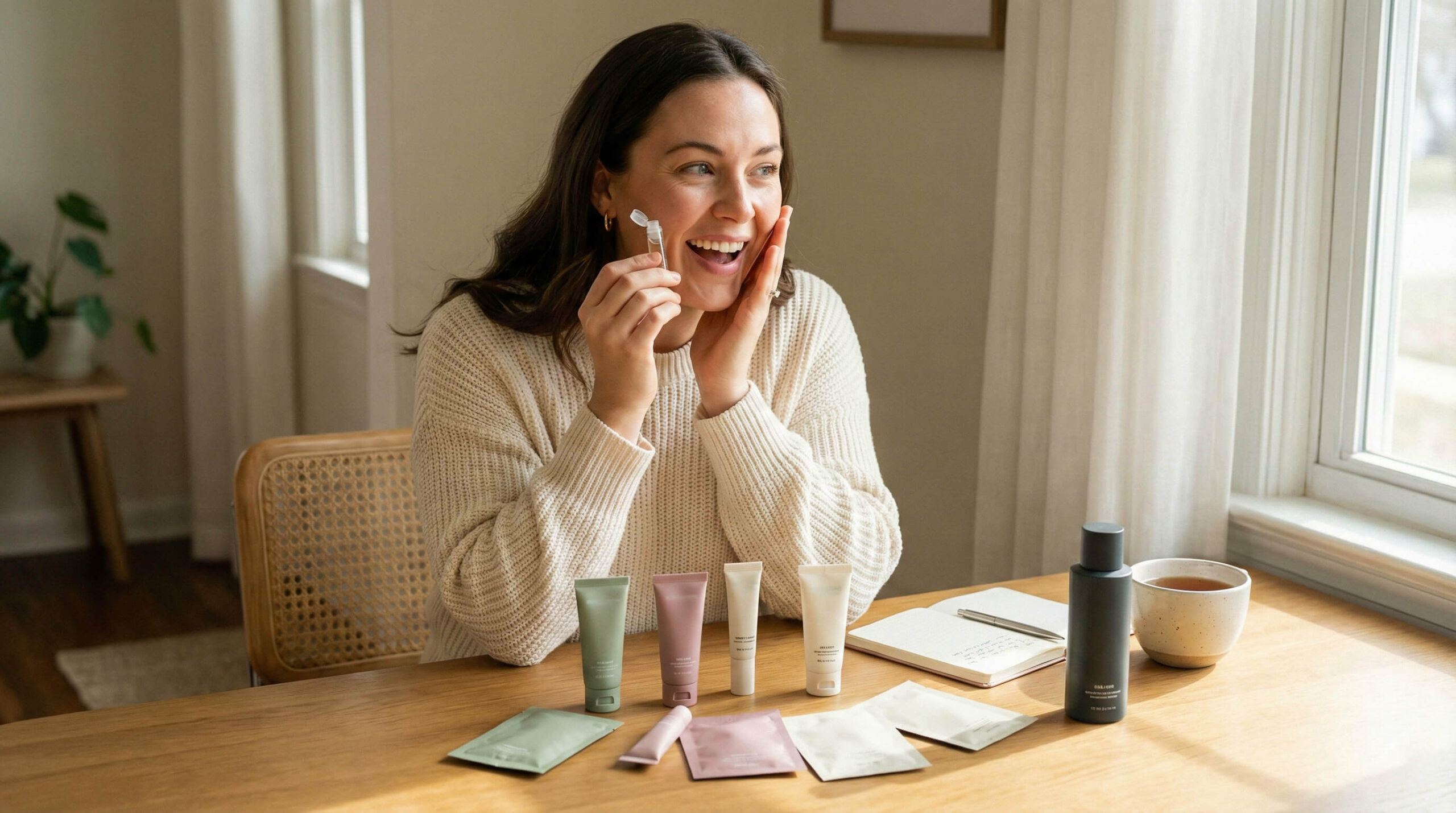
Hannah ordered 2ml samples of five different niche fragrances. She didn’t just wear them; she stress-tested them.
1. The Longevity Test
Weddings are 10-hour marathons. Hannah applied sample #1 at 8:00 AM. By 2:00 PM, it had completely vanished. Result: Rejected. You don’t want to be reapplying perfume in the middle of your reception.
2. The “Sweat” Test
This sounds unglamorous, but it’s vital. Hannah wore sample #2 to a spin class. Why? Because you will sweat on the dance floor.
The Shock: The expensive floral perfume she almost bought in the store turned “sour” and metallic once her body heated up. It clashed with her chemistry.
This “sour” reaction is the number one reason for fragrance disappointment. The way a perfume reacts to your unique pH, hormones, and body heat is a complex science. We explore this phenomenon in-depth in our guide: Is Your Skin Chemistry the Main Reason Perfumes Don’t Last on You? An In-Depth Review.
3. The Partner Test
Sample #3 was a complex, spicy oud. She loved it. Her fiancé? He sneezed every time he hugged her. Result: Rejected. You want your partner to lean in, not pull away.
The Surprise Winner
The winner wasn’t the trendy bottle the salesperson pushed. It was Sample #5—a soft, skin-musk and pear scent she initially thought was “too simple.”
But after wearing it for a full day, it melted into her skin, smelling clean, romantic, and uniquely her. It survived the longevity test and the sweat test, and her fiancé loved it.
Hannah walked down the aisle feeling confident, not headache-y. She found “The One” because she gave herself the time to fall in love with it.
Are you hunting for a signature scent?
Don’t rush the commitment! Tell us your favorite fragrance notes in the comments below, or share your sample haul with #sylvaia_com.
Related article: